
Reviewed · BHAKTAPUR TOURS
Patan and Bhaktapur City Full Day Tour
Patan and Bhaktapur pack two former kingdoms into one outing: one is known for its palace courtyards and metalwork, the other for a medieval town center and carved wood. The appeal is not just the monuments. With a private guide, you can connect their details to the Newari communities and daily life around them.
I like the contrast between Patan’s intricate palace and monastery work and Bhaktapur’s open squares and towering Nyatpole Temple. I also like that the private format leaves room for questions, photo stops, and a relaxed pace rather than a fixed group march.
The main caution is the timing: the tour is described as six hours, but the stop breakdown assigns four hours to each city. Ask the operator to confirm the actual schedule before you book. Monument entrance fees are extra, too.
What to know before you go
- Two UNESCO-listed city centers: Visit Patan Durbar Square and Bhaktapur Durbar Square in one private outing.
- Patan’s Golden Temple: See the richly worked Buddhist monastery, also known as Hiranyavarna Mahabihar, described as dating to the 12th century.
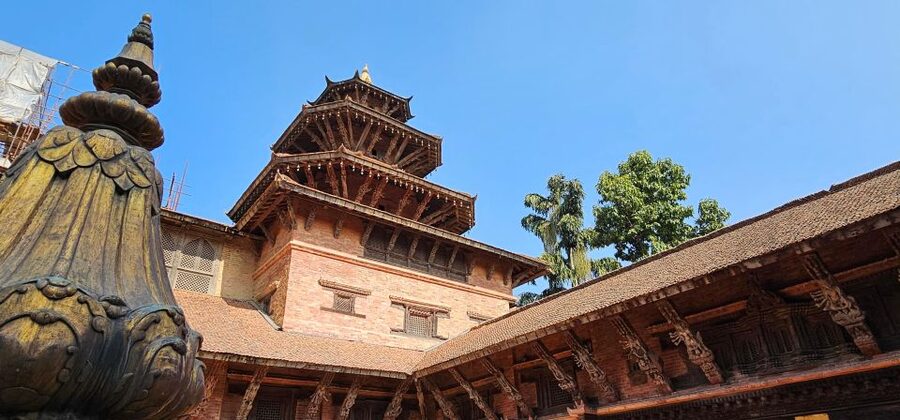
- Bhaktapur’s tallest temple: Taumadhi Square is home to Nyatpole Temple, identified as the tallest temple in town.
- A guide can add useful context: Past tours have been led by Siri and Rajendra, with English and Spanish available. Confirm your guide when arranging the tour.
- Hotel transport is included: Air-conditioned transport picks you up and returns you to your Kathmandu hotel.
- Budget extra for entry: Monument entrance fees are not included in the $50-per-person price.
Two old kingdoms, two different city centers
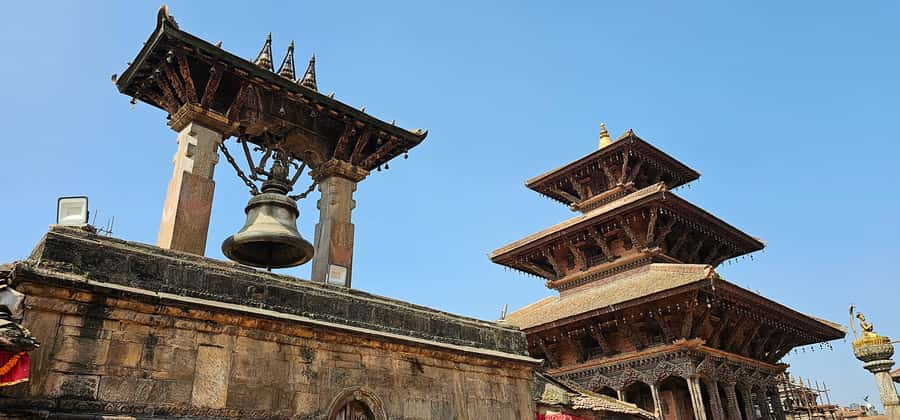
This tour is a practical way to see two historic towns in the Kathmandu Valley without arranging separate transport or trying to piece together the sites on your own. Patan, also called Lalitpur, lies about six kilometers south of Kathmandu. Bhaktapur is described as a medieval town, and its Durbar Square and surrounding squares give the day a different feel from Patan’s palace complex.
Both cities are UNESCO World Heritage sites. Their monuments are not simply isolated photo stops: Patan’s temples, courtyards, and monasteries sit within a living town, while Bhaktapur’s squares link temples and civic spaces. A guide can help you notice the distinctions, from Patan’s metalwork to Bhaktapur’s wood carving, rather than treating both places as a blur of pagoda roofs.
The tour is private, so the pace can be adjusted around your interests. People who have toured with Siri or Rajendra describe time for questions, photographs, side streets, and some shopping. That flexibility is especially useful if you have already visited many Kathmandu Valley sights and want to spend less time on familiar material.
More Bhaktapur tours in Kathmandu:
- Private Bhaktapur and Nagarkot Day Tour From Kathmandu
★ 5.0 · 305 reviews - Day Trip to Bhaktapur and Panauti from Kathmandu
★ 5.0 · 184 reviews - Bhaktapur & Patan Durbar Square Day Tours
★ 5.0 · 122 reviews
Starting in Bhaktapur’s squares
The planned order begins in Bhaktapur, where you have time for a guided visit, sightseeing, walking, and free time. The center of the visit is Bhaktapur Durbar Square, followed by Taumadhi Square and Dattatraya Square. Each gives you a different way to read the town’s history and architecture.
Taumadhi Square is home to Nyatpole Temple, noted as the tallest temple in town. Its height gives the square a clear focal point, and it is one of the tour’s most memorable stops. Dattatraya Square is identified as the first square used by royals. That detail helps put the town’s public spaces into context: a square is not just a pretty setting, but part of how power and civic life were organized.
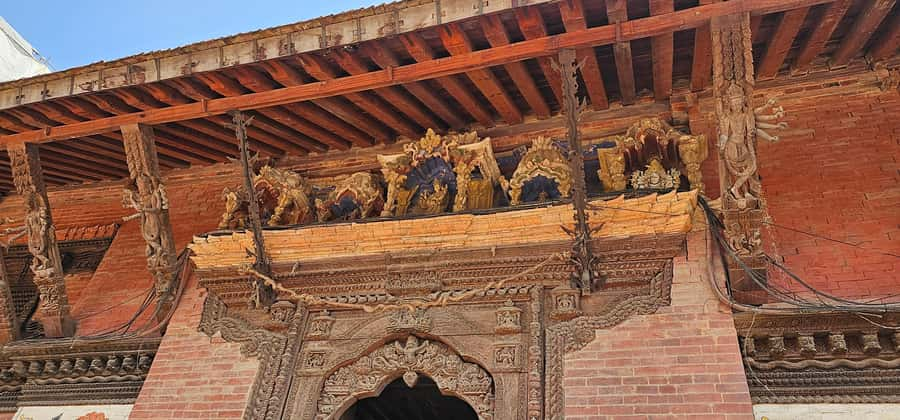
Bhaktapur is also associated with wood carving, a craft distinction worth keeping in mind as you walk. A guide may point out how carved details differ from Patan’s celebrated metalwork. If you like to look closely at the buildings, ask what to notice in the doors, windows, and temple decoration. The value of a guide here is often in turning beautiful surfaces into clues about local craft and use.
The tour allows for free time as well as guided sightseeing. That balance matters. You can pause for photographs or browse without feeling that every minute must be spent listening, while still having someone to explain the main sites. Ask your guide how much time is planned for each square, particularly if you want a slower walk or a chance to shop.
Patan’s palace courtyards and temples
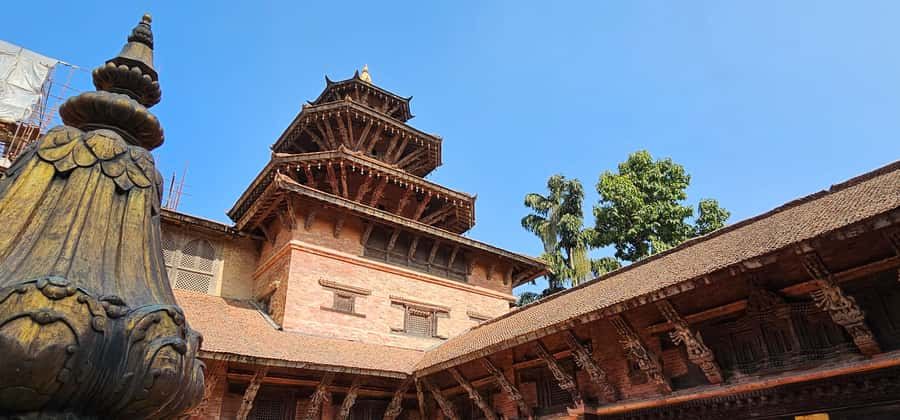
The second city is Patan, whose classical name, Lalitpur, means the beautiful city. Its palace complex is described as one of Nepal’s finest collections of Newari urban architecture. Rather than a single grand building, the complex is organized around three courtyards, each with a distinct role and character.
Sundari Chowk, the southernmost courtyard, was once a royal bath. Near its water fountain, you can see carvings of 72 gods and goddesses. The detail gives the courtyard a personal, devotional quality, as well as a royal one: the king is said to have offered water to favored deities there. Look for the fountain and carved figures instead of simply crossing the courtyard on the way to the next stop.
Mul Chowk served as a gathering place for social and religious occasions. It also houses a temple to Taleju, the royal family’s tutelary deity. Keshav Narayan Chowk, the last courtyard, contains a small Vishnu temple with images of Vishnu, Lakshmi, and Garuda. The former royal living quarters now house a museum described as Nepal’s best-preserved museum. Together, these courtyards make the palace complex more than a string of façades: they show how royal, religious, and public life met in one place.
Beyond the palace, Patan’s temple stops include the Krishna Temple, a major example of Shikhar architecture. A statue of Garuda stands in front, while a nearby Vishnu temple adds another stop for visitors interested in Hindu iconography. Bhimsen Temple is especially associated with the business community, and Bhimsen represents bravery. Its three-story pagoda is richly ornamented; household goods such as pots, pans, brooms, and wooden slippers hang from it. That unusual display gives you a glimpse of how devotion and everyday life can share the same space.
You may also see the octagonal temple, associated with eight symbols of good luck in Hindu belief, and the restored statue of Malla king Yoga Narendra Malla. The statue fell in the 2015 earthquake and has since been restored. These smaller details are easy to miss without someone to explain why they matter.
The Golden Temple: Patan’s metalwork on display
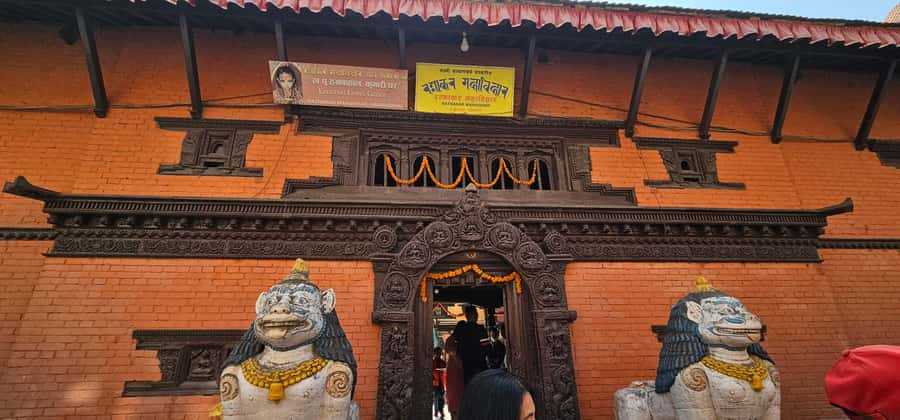
Hiranyavarna Mahabihar, better known to many visitors as the Golden Temple, is a Buddhist monastery and one of Patan’s signature sights. It is described as dating to the 12th century and as one of the city’s richest monasteries. Its ornate metalwork offers a close-up contrast to the scale of Patan’s palace courtyards.
Do not expect the name alone to explain the site. Take time to look at the workmanship and ask your guide about the monastery’s role in local life. Patan has many small Buddhist monasteries, and the Golden Temple gives you a particularly striking example of that tradition. The stop is valuable not only for its decoration, but because it shows how Buddhist and Hindu places of worship exist within the same historic city.
The palace complex, nearby temples, and monastery can make Patan feel dense with detail. A private tour helps you set priorities. If you are most interested in architecture, spend time comparing the Krishna Temple’s Shikhar form, the palace’s courtyards, and the Golden Temple’s metalwork. If you would rather hear about daily life, ask your guide to take you through side streets, where the built heritage sits alongside contemporary activity.
More Patan tours in Kathmandu:
- Kathmandu: Private Patan and Bhaktapur Sightseeing Tour
★ 4.7 · 64 reviews - City tour of Bhaktapur and Patan Durbar Square
★ 4.5 · 20 reviews - Patan Heritage Tour – Private/Small Group
★ 5.0 · 14 reviews - Kathmandu and Patan Heritage and Living Goddess Experience Tour
★ 5.0 · 12 reviews
What a private guide changes
A driver and guide are included, and the tour uses air-conditioned transport between Kathmandu and the two towns. The guide is the more important part of the experience once you arrive. The sites are visually impressive on their own, but their meaning is easier to grasp when someone explains who used a courtyard, why a temple is linked to a particular community, or what craft tradition you are seeing.
Guides Siri and Rajendra have led tours in English and Spanish. Travelers who toured with them describe an attentive, flexible approach, with space for questions, photographs, and a relaxed pace. Rajendra has also taken visitors along side streets to observe daily life and local dress. Siri has been praised for organizing the route and sharing cultural and architectural context. These are useful signs of what the tour can offer, but they do not guarantee which guide you will get. Ask who is assigned when you book.
The private format also lets you discuss lunch timing and food preferences with your guide. One visitor appreciated being able to choose when to stop, while another would have preferred a restaurant serving local Nepali food rather than a place aimed at international visitors. Lunch is not listed as included, so treat it as an extra expense and speak up if trying local food matters to you.
Six hours, two four-hour stops, and the real value
At $50 per person, the tour includes a private group, hotel pickup and drop-off, a live guide, and air-conditioned transport. For a day covering two towns, those inclusions can make the price worthwhile, particularly if you value having someone explain the sites and handle the drive. The cost is less compelling if you plan to skim the main squares quickly and are comfortable arranging transport yourself.
The price does not include monument entrance fees. Those costs can affect your total, so check current admission requirements before setting your budget. No entrance prices are provided here, and I would not assume the $50 covers access to every site.
There is an important scheduling wrinkle. The tour duration is stated as six hours, yet the stop breakdown gives four hours in Bhaktapur and four hours in Lalitpur. That adds up to eight hours before accounting for the drive, so the published timing is unclear. Ask the operator to confirm how long the full outing lasts and how time is divided between the cities. This matters if you have evening plans or want enough time for a meal and unhurried visits.
Who should book this tour
I would consider this tour if you want a guided introduction to Patan and Bhaktapur in one outing, especially if you enjoy architecture, religious sites, and local craft. It is also a sensible choice if you prefer hotel pickup and a private guide who can adapt the pace and answer questions. The strongest part is the contrast: Patan rewards close attention to courtyards, temples, and metalwork, while Bhaktapur’s squares give you a different sense of an old Newari town.
It may be less suitable if you want a very short overview, are trying to keep costs down, or prefer to explore entirely on your own. Remember that entrance fees are extra, and confirm the six-hour versus eight-hour timing before committing. If you book, tell the operator whether you care most about the palace, the Golden Temple, the squares, local crafts, or food. A little direction can help a private tour feel like your day rather than a checklist.
FAQ
What is included in the $50 price?
The tour includes hotel pickup and drop-off in Kathmandu, a live guide, and air-conditioned transport. Monument entrance fees are not included.
How long does the tour last?
The stated duration is six hours. However, the stop breakdown assigns four hours to Bhaktapur and four hours to Lalitpur, so ask the operator to confirm the actual schedule.
Is the tour private?
Yes. The tour is offered for a private group.
What languages are available?
The live guide is listed as available in English and Spanish.
Which places does the tour visit?
The main stops include Bhaktapur Durbar Square, Taumadhi Square and Nyatpole Temple, Dattatraya Square, Patan Durbar Square, and Patan’s Golden Temple.
Are monument entrance fees included?
No. Monument entrance fees are excluded from the tour price.
Can I cancel or pay later?
You can cancel up to 24 hours in advance for a full refund. A reserve-now, pay-later option is also offered.
More full-day trips in Kathmandu
- Kathmandu: Full Day 7 UNESCO Tour with Lunch – Private/Group
★ 5.0 · 415 reviews - Kathmandu: Full Day Top 4 UNESCO Tour with Lunch – Private/Group
★ 5.0 · 269 reviews - Kathmandu: Full-Day 7 UNESCO Tour with Lunch – Private/Group
★ 4.9 · 247 reviews - Kathmandu: Full Day 7 UNESCO Tour with Lunch – Private/Group
★ 5.0 · 101 reviews
Newly listed in Kathmandu
- Traditional Momo Making Class★ 5.0 · 10 reviews
- Walking tour of real Kathmandu through back streets.★ 5.0 · 3 reviews
- Kathmandu 2 Nights 3 Days Chitwan Jungle Safari Tour★ 5.0 · 9 reviews
- Visit Swayambhunath and Bauddhanath Stupa with Guide★ 5.0 · 5 reviews
- Walking tour of Kathmandu with awesome local guides★ 5.0 · 4 reviews
- Kathmandu Street Food Walking Tour – Eat Like a Local★ 5.0 · 3 reviews
- Private Manaslu Circuit Trek at Himalayas★ 5.0 · 3 reviews
- Kathmandu to Pokhara Vip Sofa Bus Ticket★ 4.0 · 4 reviews
Bhaktapur Tours, compared.
Private Bhaktapur and Nagarkot Day Tour From Kathmandu
Read our review →
Day Trip to Bhaktapur and Panauti from Kathmandu
Read our review →
Nagarkot Sunrise & Bhaktapur UNESCO Heritage Private Tour
Read our review →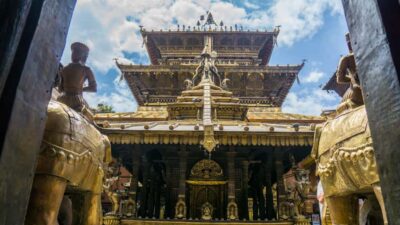
Bhaktapur & Nagarkot Day Tour with Lunch – Private/Group
Read our review →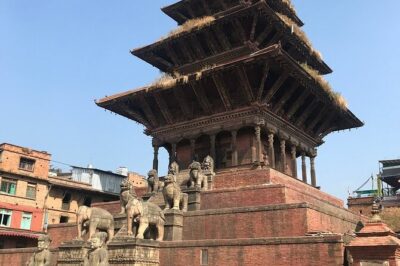
Nagarkot Sunrise & Bhaktapur Heritage Tour -Private Full Day Trip
Read our review →
Browse the lists this tour appears in