
Reviewed · THAMEL TOURS
Kathmandu: Wood Carving Workshop with Local Artisan (Thamel)
In Thamel, trade a few hours of sightseeing for a wooden block, a set of chisels, and a chance to make something with your own hands. This small-group class introduces you to a craft seen across the Kathmandu Valley, from temple details to palace windows, then gives you time to try the tools yourself.
I like two things here: the class connects a practical skill to Nepalese art and architecture, and you leave with a personal keepsake rather than another shop-bought souvenir. A possible drawback: the history may be less detailed than you hope. One participant who carved with Hera would have liked more context about the craft, so ask questions if that matters to you.
At a glance
- Three hours at the workbench: Enough time to learn basic steps and practise them on a wooden block.
- Small group, capped at four: You should have room to ask for help and receive individual guidance.
- A craft with local roots: Learn about Newar wood carving and motifs found in Hindu and Buddhist art.
- Tools and materials included: You do not need to bring carving supplies.
- Your work goes home with you: The finished piece is part of the $42 price.
- English instruction: The class is listed in English, with all government taxes and VAT included.
A Kathmandu craft you can try, not just admire
Wood carving is part of the built character of the Kathmandu Valley. Intricate wooden details appear on temples and palaces, where patterns and figures do more than decorate a wall. They can carry religious and cultural meaning, too.
This class offers a useful change of pace from looking at carved architecture from the street. You get an introduction to the tools and motifs, then try the work yourself under an artisan’s guidance. It is not a long apprenticeship, and three hours will not make you a master carver. But it can help you notice the marks, shapes, and patience behind the details you see around Kathmandu.
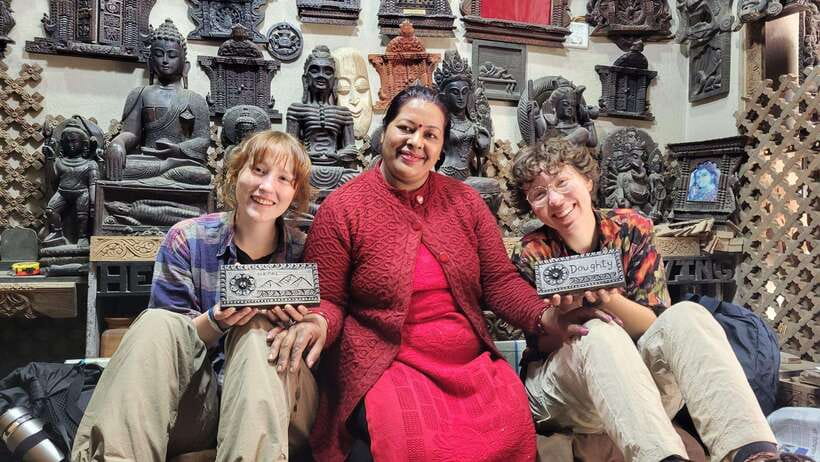
The craft is linked especially with the Newar community, whose artisans have preserved and developed wood carving in the valley. The tradition dates back to the Licchavi period, from the fourth to ninth centuries, and flourished under the Malla dynasty, from the twelfth to eighteenth centuries. Examples include the Kasthamandap, the 55-Window Palace in Bhaktapur, and the Peacock Window.
You do not need to visit every landmark before taking the class. Still, knowing that a small carved motif belongs to a much larger artistic tradition gives the workshop more meaning than a simple souvenir-making session.
More Thamel experiences in Kathmandu:
- Half day cooking class in Thamel kathmandu
★ 5.0 · 607 reviews - Best Nepali Cooking Class in Thamel with Local Market Trip
★ 5.0 · 26 reviews - Private Pickup from Tribhuvan Airport to Thamel
★ 5.0 · 12 reviews
From tools and motifs to your first cut
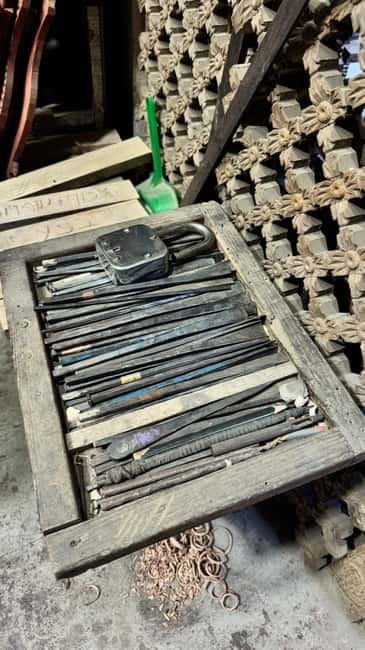
The class begins with an introduction to the tools and materials. Traditional chisels and hammers are part of the process, and the instructor may discuss woods such as sal and teak. The precise wood used for your own carving is not specified, so ask at the workshop if you are curious.
Next comes the design. Nepalese carving draws on Hindu and Buddhist imagery, with motifs such as lotus flowers, mandalas, and mythical creatures. These are not just attractive patterns. They can carry symbolic meaning, and your instructor can explain the examples used in class.
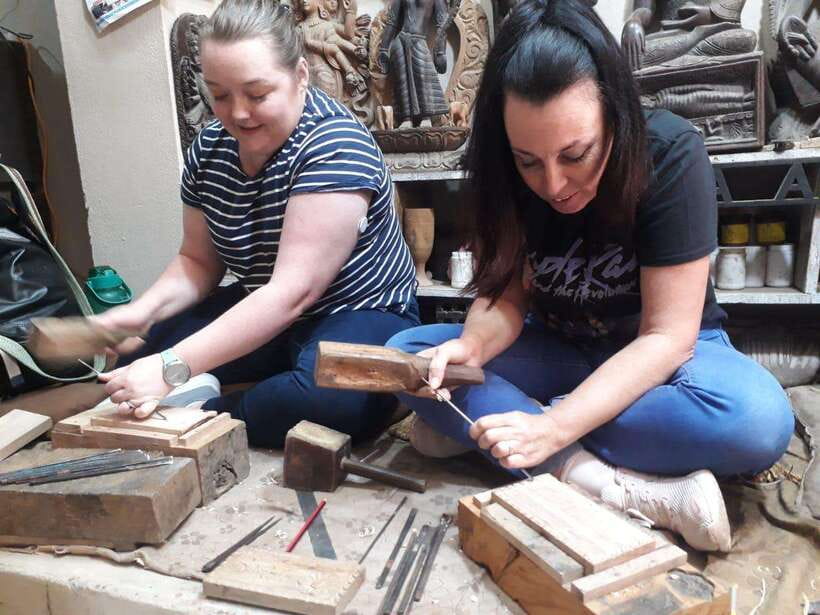
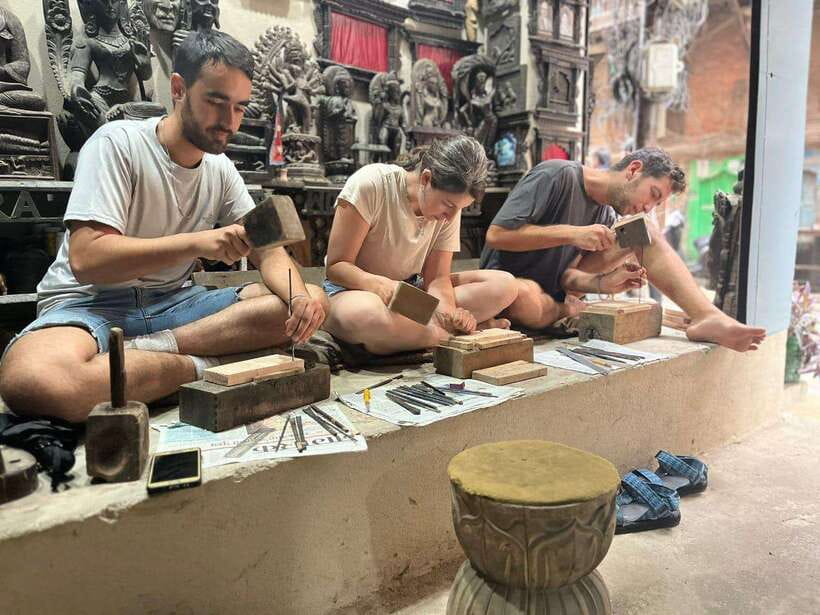
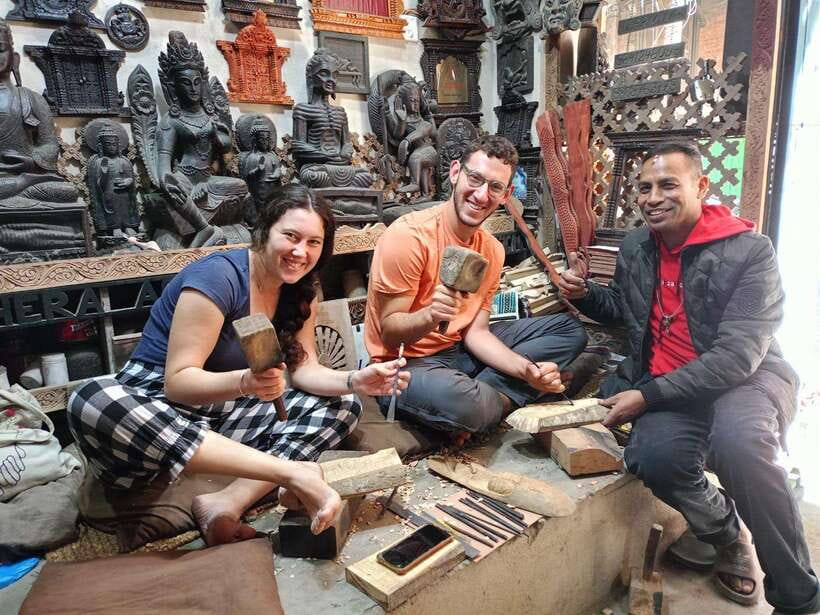
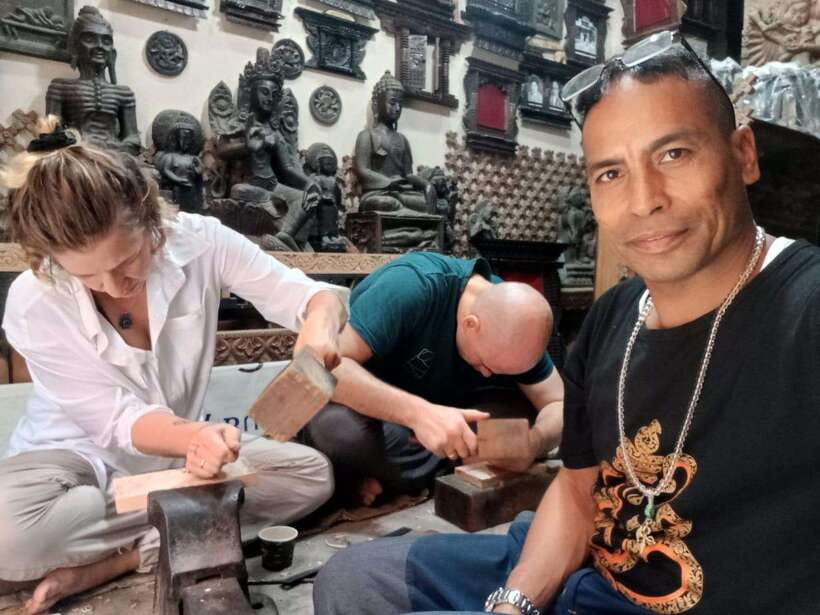
Then you move to a pre-cut wooden block. You practise outlining the design, chiseling away material, and adding detail. The sequence matters: clear lines give you a guide, careful cuts shape the pattern, and smaller marks bring it to life. The artisan demonstrates the techniques and offers corrections as you work.
The block is prepared for carving, which means you can focus on learning rather than shaping a piece of raw timber from scratch. That is a sensible format for a three-hour class, especially if this is your first time holding a chisel. You may make a decorative panel, a small figure, or a symbolic motif. The exact design is not promised, so think of the finished piece as your own interpretation rather than a guaranteed pattern.
A small class makes room for real guidance
With a maximum of four participants, this is a more personal activity than a large demonstration. You should have a better chance to ask for a second explanation, get feedback on your cuts, and work at a comfortable pace.
Hera is named as an artisan who has led sessions, and one participant described learning with Hera and his wife. The account points to a warm, patient teaching style. You should not assume that Hera will lead every class, but the activity is described as guided by local artisans, with English instruction.
The small size can also shape the day. In the off season, one person found the class became a one-to-one lesson. That may give you more direct attention, though it is not a guaranteed private booking. A family with a ten-year-old also took part, and the child was helped patiently through a new skill. That is encouraging if you are considering the activity with an older child, but there is no stated minimum age.
The cultural lesson depends on what you ask
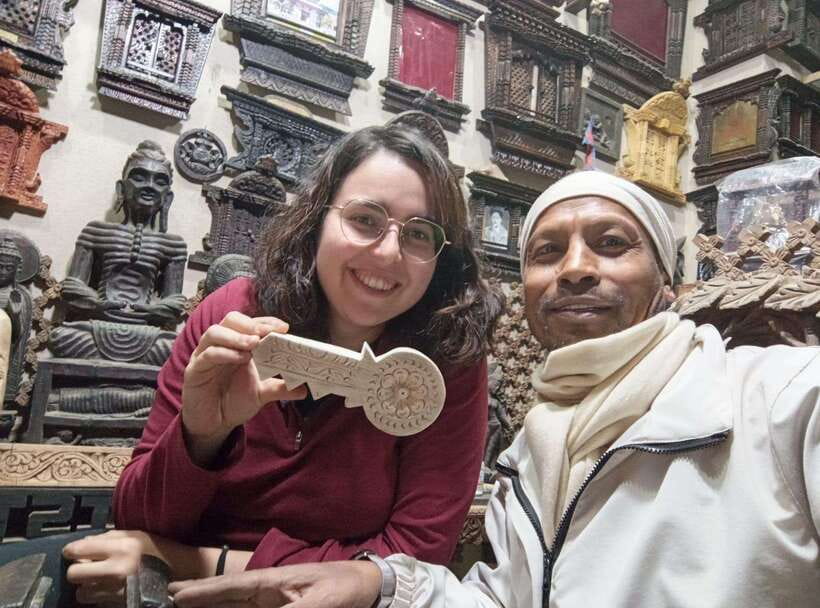
The class includes stories about the craft’s history and cultural importance, and the instructor introduces common patterns and their significance. That context is valuable: you will see why a carved lotus or mythical figure is more than a pretty flourish.
Still, the depth of the history may vary. One participant enjoyed the practical instruction and the company of Hera and his wife but hoped for more historical detail. If you want a fuller account of Newar traditions, temple carving, or the meaning of a specific motif, ask early rather than waiting until the end.
You can prepare a few simple questions: What does this design represent? Which buildings show this kind of carving? How do the tools differ by task? The supplied details do not promise a formal lecture, so treat the historical discussion as an introduction woven into the making, not a substitute for a specialist museum or architecture tour.
That balance may suit you well. You get cultural context while your hands are busy, without spending the whole session listening to a talk. If you are mainly after a deep historical survey, this may feel too light. If you want a craft lesson with stories attached, it is a good fit.
More hands-on workshops in Kathmandu:
- Knife (Khukuri) Making Workshop- Forge of the Gurkhas
★ 5.0 · 143 reviews - Knife Khukuri Making Workshop
★ 4.9 · 38 reviews - Gurkha Knife Making
★ 5.0 · 19 reviews - Women Empowerment Project(Nepali cooking class & jewelry workshop
★ 5.0 · 15 reviews
Is $42 good value for three hours?
At $42 per person, the price covers a three-hour class, an English-speaking instructor, the tools and materials, and the wooden piece you take home. Government taxes and VAT are included. You are paying for instruction and a small-group activity, not just the raw materials.
The value is strongest if you want to try the process and leave with something you made yourself. A purchased carving might be more polished, but it would not give you the same sense of how the design takes shape. The class also gives you a more personal way to connect with Nepalese craft than simply browsing souvenirs.
For a budget-minded day, compare the price with what matters to you. If you want a low-cost activity or a finished artwork made by an expert, this may not be the best use of your money. If you value a few hours of guided practice and a keepsake tied to your time in Kathmandu, the price is easier to justify.
Who will enjoy this workshop most
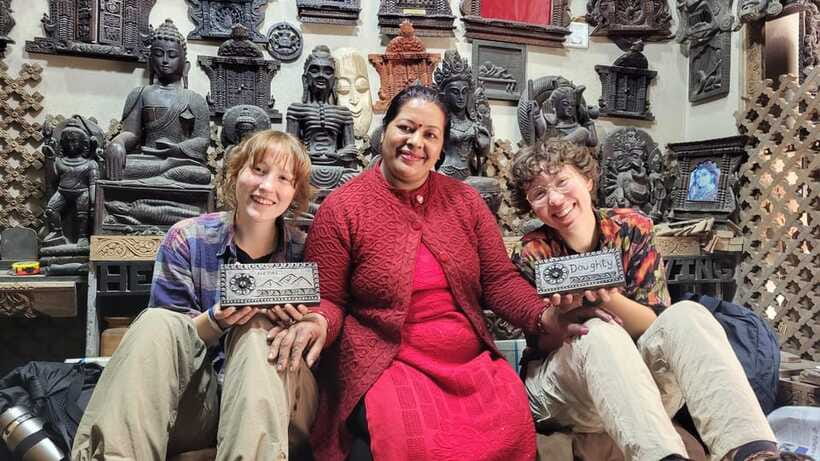
This class suits curious beginners, art enthusiasts, and anyone who likes learning by doing. No previous carving experience is required, and the activity is described as suitable for all skill levels. You do not need to arrive with a design plan or specialist knowledge.
It could also work well as a family activity. A ten-year-old took part with a parent, and the instruction was patient and helpful. Since no age guidance is provided, check with the operator if you are planning to bring a younger child.
You may enjoy it less if you are uncomfortable using hand tools, prefer a polished result with little effort, or expect a long lecture on Nepalese history. Carving takes patience, and your piece will be handmade by a beginner: its charm is in the fact that you made it, not in perfect symmetry.
Wear comfortable clothes, and remember that smoking is not allowed. The activity is in Thamel, Kathmandu, and the meeting-point wording provided is unclear, so confirm the exact place before setting out. The group is small, the language is English, and available starting times depend on the date.
Should you book it?
Book this workshop if you want a quiet, practical way to meet Nepalese craft and do not mind learning a new skill one careful cut at a time. The small group, included materials, and take-home carving make the $42 price reasonable for a hands-on three-hour activity.
Skip it if your main goal is an in-depth history lesson or a professionally finished carving. For everyone else, especially beginners and families with older children, it offers a memorable counterpoint to Kathmandu’s temples and markets: you get to make a small piece of the city’s artistic tradition your own.
FAQ
How long is the wood carving class?
The class lasts three hours.
How much does it cost?
The listed price is $42 per person, with government taxes and VAT included.
Where does the workshop take place?
It is in Thamel, Kathmandu, in Nepal’s Bagmati Zone. Confirm the precise meeting point before you go, as the meeting-point details provided are unclear.
Is the class suitable for beginners?
Yes. It is described as suitable for all skill levels, and no previous experience is required.
What will I learn?
You will learn about the tools, materials, and patterns used in Nepalese wood carving, then practise outlining, chiseling, and detailing.
Do I get to keep what I make?
Yes. You take home the wooden piece you carve during the class.
Are tools and materials included?
Yes. The necessary tools and materials are provided.
What language is the instruction in?
The instructor teaches in English.
How many people can join?
The class is limited to four participants.
What should I bring, and what is not allowed?
Wear comfortable clothes. Smoking is not allowed.
Newly listed in Kathmandu
- Traditional Momo Making Class★ 5.0 · 10 reviews
- Kathmandu 2 Nights 3 Days Chitwan Jungle Safari Tour★ 5.0 · 9 reviews
- Walking tour of real Kathmandu through back streets.★ 5.0 · 3 reviews
- Visit Swayambhunath and Bauddhanath Stupa with Guide★ 5.0 · 5 reviews
- Walking tour of Kathmandu with awesome local guides★ 5.0 · 4 reviews
- Kathmandu Street Food Walking Tour – Eat Like a Local★ 5.0 · 3 reviews
- Private Manaslu Circuit Trek at Himalayas★ 5.0 · 3 reviews
- Kathmandu to Pokhara Vip Sofa Bus Ticket★ 4.0 · 4 reviews
Thamel Tours, compared.
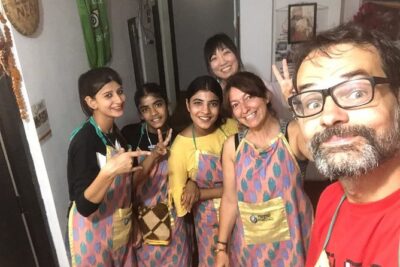
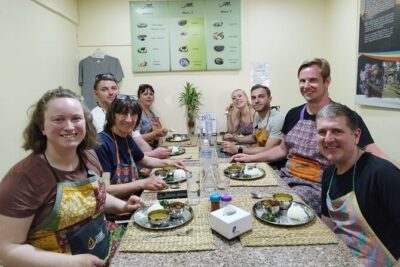
Best Nepali Cooking Class in Thamel with Local Market Trip
Read our review →
Half Day Cooking Class in Thamel with Local Market Visit
Read our review →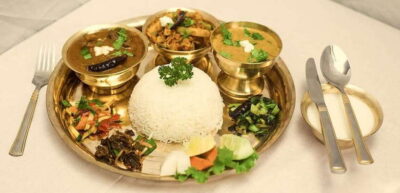
Taste Nepali Food & Drink- Walking Tour in Thamel
Read our review →
About 3-hour Cooking Class Experience near Thamel
Read our review →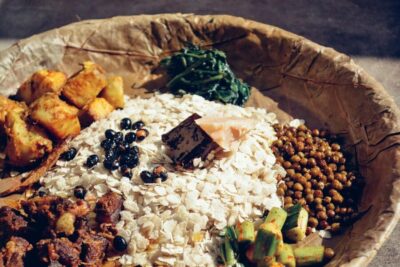
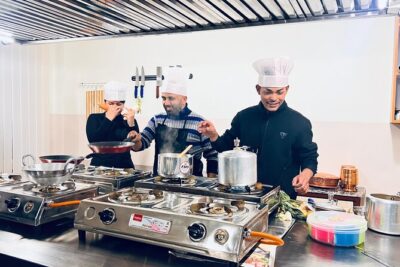
Cook and Eat: Cooking Class in Kathmandu near Thamel
Read our review →Browse the lists this tour appears in