
Reviewed · KATHMANDU WALKING TOURS
Oldest Local Market Walking Tour With Living Goddess Kumari
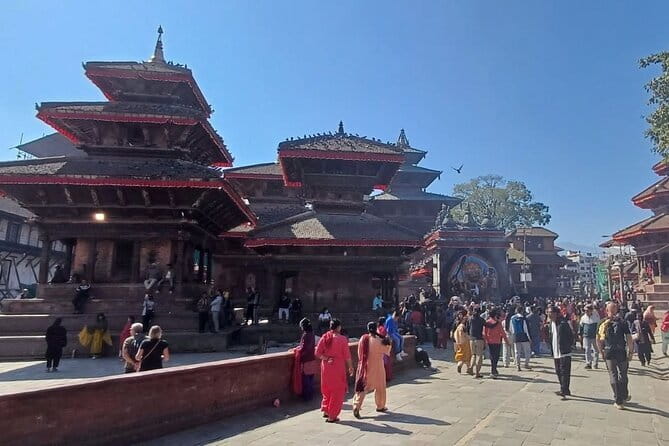
Kumari is the heart of this walk: a young girl revered as the living embodiment of the goddess Taleju. The route pairs that striking tradition with Ason’s working market streets and Kathmandu Durbar Square, giving you a quick introduction to the city’s religious life and historic center.
I like the contrast between Ason’s everyday trade and the ceremonies and beliefs surrounding Kumari. I also like having an English-speaking guide to explain how Hindu and Buddhist traditions meet in Kathmandu, rather than simply passing old buildings without context.
The main consideration is the extra 1,000 Nepali rupees for Durbar Square entry, which is not included in the $39 price. Two hours is also a short window for a market, a major historic square and a visit connected to Kumari, so expect an introduction, not an exhaustive tour.
- Ason is a working market: Look for spices, textiles, souvenirs and traditional architecture among its shops and stalls.
- Kumari is a religious figure, not a staged attraction: The tour focuses on the tradition and an opportunity to witness her.
- Durbar Square adds the architectural context: Palaces, temples and courtyards tell another part of Kathmandu’s story.
- The walk lasts two hours: It starts and ends at Chhaya Center, by the main gate of Chhaya Devi Complex in Thamel.
- The $39 price covers a guide and water: Square entry, meals, drinks and personal expenses are extra.
- Guide explanations are a key part of the appeal: Santos led one tour, and clear, detailed explanations have been a particular strength.
Ason’s market streets are part of the story
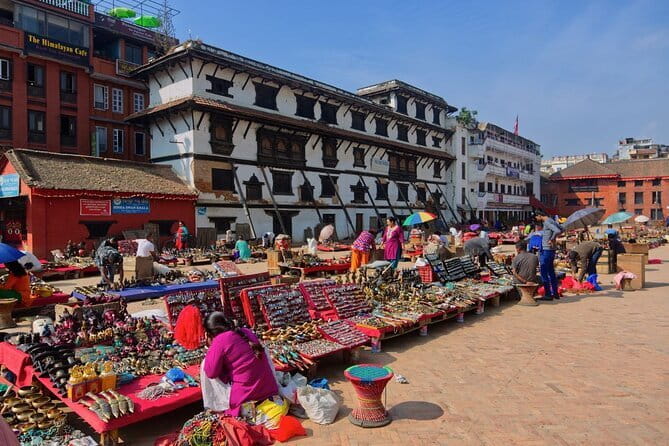
Ason is not simply a place to shop between landmarks. It is an old local market area where you can see the practical side of Kathmandu: streets lined with shops and stalls selling spices, textiles and souvenirs, set among traditional architecture. The scene gives you a useful counterpoint to the formal courtyards and temples later in the walk.
I’d approach Ason with your eyes open and your pace flexible. The point is not to race through a list of stalls, but to notice what the market sells and how it fits into daily life. Your guide can help you read the place, especially if you are new to Kathmandu or unsure which details matter.
The market is one of the tour’s strongest elements because it brings you into a living part of the city rather than keeping the whole outing within a monument. At the same time, the description does not name particular shops or promise time for shopping. Treat any browsing as part of the walk, not a dedicated buying stop.
Ason’s appeal is also its contrast with the Kumari tradition. In one part of the tour, you are among ordinary trade and daily activity; in another, you encounter a religious role shaped by long-standing belief. That shift helps make the walk more than a straightforward sightseeing circuit.
Meeting in Thamel and setting the pace
The meeting point is at the main gate side of Chhaya Devi Complex in Thamel. The tour begins and ends at Chhaya Center, so you are not being dropped at a different part of town at the end. Make sure you identify the main gate side when arranging your arrival, since the complex is the named landmark.
The total duration is two hours. That is convenient if you have a tight schedule or want a guided orientation before exploring more on your own. It also means the guide will need to keep the walk moving. You should expect a compact introduction to the market, the square and the Kumari tradition, rather than long stretches at each stop.
The tour is offered in English, and an English-speaking guide is included. That matters here: Hindu and Buddhist practices, the role of Kumari and the history of the square are easier to appreciate when someone can connect the places to their meaning. A past outing was led by Santos, whose explanations and communication were especially appreciated. Guide assignments can vary, so don’t assume Santos will lead your date.
A bottle of mineral water is included. Meals and other beverages are not, so plan to eat before or after the walk if you need more than a short refreshment. Personal expenses are also yours to cover.
More walking tours in Kathmandu:
- Kathmandu Food and Drink Walking Tour
★ 5.0 · 266 reviews - Kathmandu: Food and Drink Walking Tour
★ 4.9 · 119 reviews - Walking Street Food Tour in Kathmandu
★ 5.0 · 111 reviews
Meeting Kumari through Kathmandu’s living tradition
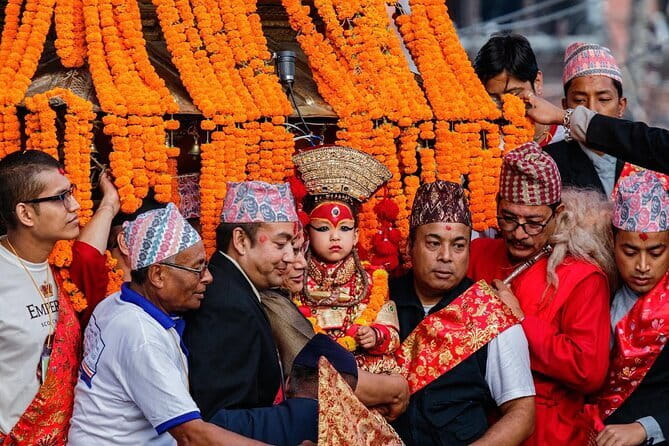
The tour’s most unusual promise is the chance to witness Kumari, often called the living goddess of Kathmandu. In Nepalese culture, Kumari is a prepubescent girl regarded as the living embodiment of Taleju. She resides in the Kumari Ghar, a historic residence in Kathmandu Durbar Square.
That context matters. You are not visiting a performer or a character in a show. Kumari’s role is rooted in religious belief and tradition, and the experience is best approached with respect and a willingness to listen. The guide can explain why this figure holds significance within the city’s Hindu and Buddhist life.
The tour is designed to include an opportunity to see her, but the available details do not explain the viewing arrangements or guarantee a particular kind of audience. If witnessing Kumari is the main reason you are booking, ask the operator what you can expect on your date. That is a sensible question before you build a short Kathmandu schedule around it.
One past visitor was especially struck by Kumari’s gaze. That reaction captures the personal quality of the encounter: it can feel very different from looking at a statue or entering a temple. Still, keep expectations grounded. The value lies in understanding the tradition and its place in Kathmandu, not in treating Kumari as a photo opportunity.
Kathmandu Durbar Square’s temples and courtyards

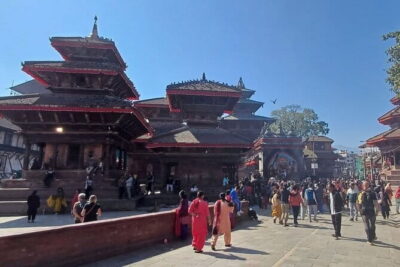
Kathmandu Durbar Square is the historic center of the walk and a major reason to take it with a guide. The square is known for its cultural and architectural importance, with palaces, temples and courtyards that reflect the history of the Kathmandu Valley. A guide can help you connect those buildings with the religious practices and civic life that shaped the area.
The square is also where the Kumari Ghar stands, bringing the historic setting and the living goddess tradition together in one place. That makes this stop especially layered: you are not only looking at old architecture, but also encountering a living religious role within it.
Entry costs 1,000 Nepali rupees per person and is not included in the tour price. Keep that fee in mind when comparing the $39 cost with other activities. The guide, taxes and bottled water are included, but the entry ticket is a separate expense. Meals, beverages and personal purchases are also extra.
The square can be a lot to take in, especially if this is your first visit. Two hours for the whole outing leaves limited time to linger at every courtyard or examine each building closely. I’d think of the guided visit as a way to get bearings and understand what you are seeing. If you want a slower architectural visit, you may want to return independently.
Hinduism and Buddhism in the same city walk
The tour promises an introduction to both Hinduism and Buddhism. That is useful in Kathmandu, where religious and cultural traditions are part of the city’s everyday setting, not isolated topics in a museum. A guide’s explanations can give you a clearer framework for what you encounter in the market and around the square.
The value is not in trying to learn everything in a single outing. Rather, you get a starting point: who Kumari represents, why her role is significant, and how the square’s temples and historic buildings relate to the city’s beliefs. Visitors have found the explanations detailed and informative, and that is the quality I would prioritize when choosing this walk.
You can make the most of the time by asking questions as you go. If a building, symbol or custom catches your attention, ask the guide to explain it in context. The tour’s short duration makes that interaction particularly useful: a well-placed explanation can add more than another few minutes of walking.
More market visits in Kathmandu:
- Kathmandu Secret Food Crawl & Local Market Tour
★ 4.7 · 54 reviews - Kathmandu Food Crawl & Market Tour
★ 5.0 · 26 reviews - Best Nepali Cooking Class in Thamel with Local Market Trip
★ 5.0 · 26 reviews - Oldest Local Market Walking Tour with Living Goddess Kumari
★ 5.0 · 8 reviews
What $39 buys, and what it does not
At $39 per person, the tour includes an English-speaking guide, government taxes and VAT, and a bottle of mineral water. For a two-hour walk through several sites, the main value is the guide’s interpretation. You are paying for a structured introduction to places that might otherwise feel like a collection of crowded streets, historic buildings and religious customs.
The square entry fee is separate at 1,000 Nepali rupees. Add that to your budget, along with any food, drinks or personal purchases. The tour does not include meals or beverages beyond the bottled water, and it does not cover personal expenses.
Whether the price feels worthwhile depends on what you want from the outing. If you value context, especially around Kumari and the relationship between Hindu and Buddhist traditions, an English-speaking guide can make a short visit more meaningful. If you prefer to wander at your own pace and do not need explanation, you may find a guided two-hour walk less essential.
The price also buys convenience: a set meeting point in Thamel, a guide and a route that links the market with the historic square. But the short duration sets a limit. This is a focused sampler, not a full-day exploration of Kathmandu or a substitute for spending more time at the square.
Who will get the most from this walk
This tour suits first-time visitors who want a compact introduction to Kathmandu’s old market and historic center. It is also a good fit if Kumari is a particular interest, or if you want a guide to explain religious and cultural details as you move through the city.
You may appreciate it most if you are comfortable with a brisk schedule and are happy to see several places in one outing. The market, the square and the Kumari tradition offer different perspectives, but the two-hour format means none can take up the whole visit.
It may be less suitable if you want a long shopping stop, a slow architectural study or a guaranteed, extended encounter with Kumari. The information does not specify the exact viewing conditions, and the square entry fee adds to the advertised cost. Ask about those details before booking if either point will determine your decision.
The tour offers free cancellation up to 24 hours in advance, and you can reserve now and pay later. Those terms give you some flexibility, but the more important question is whether you want a guided overview or a longer, self-directed visit.
Should you book the Ason and Kumari walk?
Book it if you want a short, guided introduction to Ason, Kathmandu Durbar Square and the Kumari tradition, and you value clear explanations over an unhurried visit. The combination of a working market and a historic religious center gives the outing a useful range, while the guide helps connect the sights.
Think twice if your priority is extensive time at each site, shopping, or certainty about the exact form of the Kumari viewing. Budget for the separate 1,000-rupee entry fee, and ask the operator about viewing arrangements if seeing Kumari is essential to your plans. For a two-hour orientation in English, the tour is a practical choice, as long as you treat it as an introduction rather than the last word on Kathmandu.
FAQ
How long is the tour?
The walking tour lasts two hours.
Where is the meeting point?
Meet at the main gate side of Chhaya Devi Complex in Thamel, Kathmandu.
Where does the tour end?
The tour returns to Chhaya Center, its starting location.
What language is the tour offered in?
The live tour guide speaks English.
Is Kathmandu Durbar Square entry included?
No. Entry costs 1,000 Nepali rupees per person and is paid separately.
What is included in the $39 price?
An English-speaking guide, government taxes and VAT, and a bottle of mineral water are included.
Are meals and drinks included?
No. Meals and beverages are excluded. A bottle of mineral water is included.
Can I cancel for a refund?
Yes. You can cancel up to 24 hours in advance for a full refund.
Newly listed in Kathmandu
- Traditional Momo Making Class★ 5.0 · 10 reviews
- Walking tour of real Kathmandu through back streets.★ 5.0 · 3 reviews
- Kathmandu 2 Nights 3 Days Chitwan Jungle Safari Tour★ 5.0 · 9 reviews
- Visit Swayambhunath and Bauddhanath Stupa with Guide★ 5.0 · 5 reviews
- Walking tour of Kathmandu with awesome local guides★ 5.0 · 4 reviews
- Kathmandu Street Food Walking Tour – Eat Like a Local★ 5.0 · 3 reviews
- Private Manaslu Circuit Trek at Himalayas★ 5.0 · 3 reviews
- Kathmandu to Pokhara Vip Sofa Bus Ticket★ 4.0 · 4 reviews
Kathmandu Walking Tours, compared.
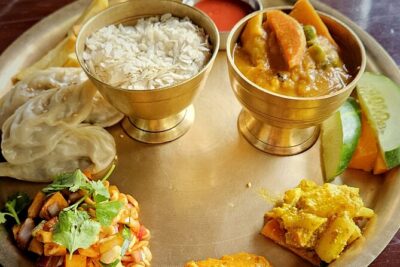


Walking Food Tour in Hidden Local Eateries of Kathmandu
Read our review →
Old Kathmandu Walking Tour, Historic World Heritage Durbar Square
Read our review →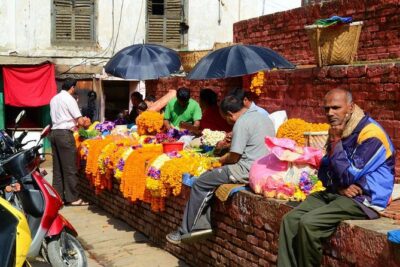
Oldest Local Market Walking Tour with Living Goddess Kumari
Read our review →Browse the lists this tour appears in