
Reviewed · KATHMANDU CITY TOURS
Kathmandu Durbar Square – Private/Small Group
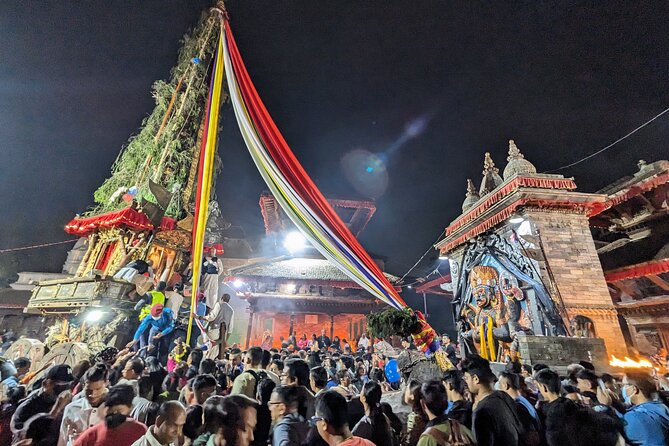
The most memorable part of this walk may be a small wooden idol believed to ease toothaches, not a grand palace. From Thamel, you follow old streets to Wasya Dyaa, Seto Machindranath Temple and the storied courtyards of Kathmandu Durbar Square, where the Kumari may appear at her window.
I like two things in particular: the maximum group size of five, which gives you room to ask questions, and the focus on local belief as well as royal architecture. Guides such as Santosh and Sandip are praised for telling stories about the lanes and buildings, and for pointing out places you could easily pass without noticing.
One caution: the Kumari is not a scheduled performance. You may wait and still not see her, and the $15 tour price does not include the listed $9 per-person fees and taxes. Set aside about $24 per person based on those figures, and treat a glimpse of the Living Goddess as a possibility, not a promise.
Key points
- A short walk from Thamel: Meet at Pumpernickel Bakery on Paryatan Marg and return there after the tour.
- Four planned stops: Wasya Dyaa, Seto Machindranath Temple, Kathmandu Durbar Square and Hanuman Dhoka.
- A tiny group: No more than five people, a useful size for narrow lanes and questions.
- A chance to see the Kumari: She lives in Kumari Ghar, but her appearance at the window cannot be guaranteed.
- Extra cost to budget for: The listed $15 price excludes $9 per person in fees and taxes.
- A good first-day walk: The route pairs major landmarks with local customs and stories that help you read the city.
From Thamel into Kathmandu’s old streets
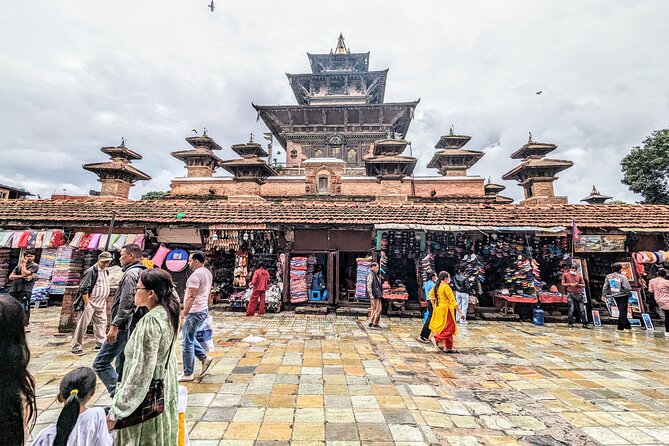
The tour begins at Pumpernickel Bakery on Paryatan Marg in Thamel. That makes it a straightforward starting point if you are staying in or near the area. The activity ends back at the same meeting point, so you do not need to plan a separate ride from the final stop.
From there, the walk heads toward Kathmandu Durbar Square, taking in shrines and lanes along the way. The overview also names Naradevi Temple as a stop on the approach, although it is not listed as one of the four timed itinerary stops. If visiting it matters to you, ask the operator to confirm the route before booking.
The walk lasts about three hours. Each of the four listed stops is allocated roughly 45 minutes, which gives the guide time to explain what you are seeing rather than simply march you from one landmark to the next. The pace and exact time at each place may vary, especially if the group pauses or waits for a possible glimpse of the Kumari.
More city sightseeing tours in Kathmandu:
- Private Kathmandu Sightseeing Tour | UNESCO World Heritage sites
★ 5.0 · 756 reviews - Kathmandu: Private City Guided Tour
★ 4.9 · 174 reviews - Bhaktapur & Patan Durbar Square Day Tours
★ 5.0 · 122 reviews
Wasya Dyaa and the toothache belief
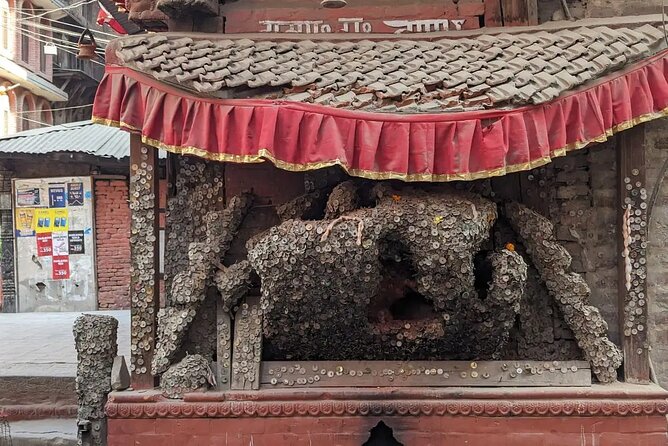
Wasya Dyaa, also called Vaisha Devi or the Toothache Tree, is a wooden idol near Thahiti Tole. The local tradition holds that it can help relieve toothaches. People have hammered coins into its wood as part of that belief, giving this modest object a very different feel from the better-known palace buildings ahead.
This is the kind of stop that helps make a guided walk worthwhile. On your own, you might see the idol but miss the story that gives it meaning. A good guide can explain how everyday concerns, religious practice and local customs meet in the streets of Kathmandu.
Allow about 45 minutes for the stop as scheduled, though that time is part of the broader walking tour rather than a promise that you will spend the full interval at the idol itself. Admission is not included in the tour price, and the operator lists fees and taxes separately. The provided details do not break down which sites those charges cover, so check the current amount and what it includes when booking.
Seto Machindranath, shared by two traditions
The next listed stop is Seto Machindranath Temple, southwest of Asan Tole at the junction of Kel Tole. Its importance reaches across religious traditions: Buddhists identify the figure with Avalokiteshvara, while Hindus worship him as a rain-bringing incarnation.
That shared devotion is a valuable part of the visit. Rather than treating Kathmandu’s sacred places as isolated monuments, you get a glimpse of how different communities can approach the same deity in their own ways. Ask your guide how the temple fits into local religious life, and how the different interpretations shape the rituals and stories associated with it.
The stop is scheduled for about 45 minutes. As with the other sites, the exact time may depend on the walk and what questions come up. The available details do not specify whether there is a separate admission charge at this temple, so budget for the stated $9 fees and taxes without assuming it covers every possible cost.
Kathmandu Durbar Square and the Kumari
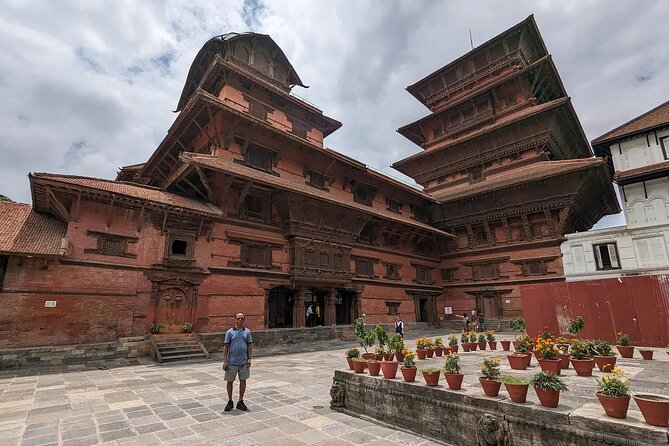
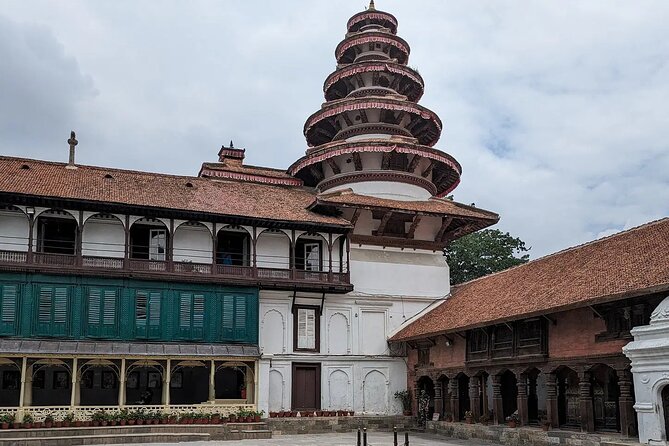
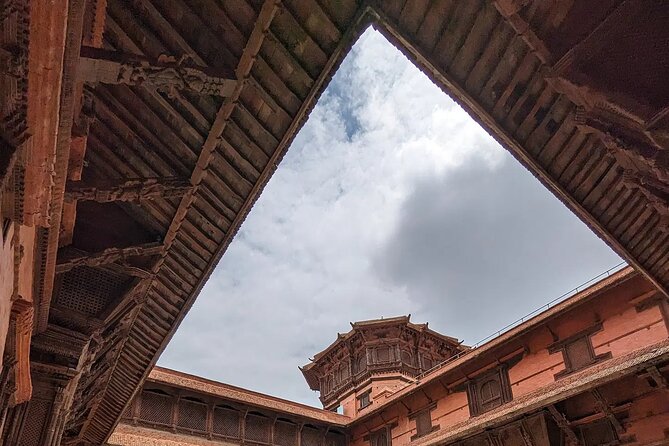
Kathmandu Durbar Square is the heart of the tour, and it rewards a slower look. The square brings together royal buildings, temples and Newar cultural traditions. With a guide, you can connect individual structures and customs to the wider story of the city instead of seeing the square as a collection of photo stops.
The Kumari, known as the Living Goddess, resides in Kumari Ghar within the square. The tour offers a chance to receive her blessing or see her at the sacred window, but do not plan your day around a guaranteed appearance. Her presence is not a timed attraction. One guide has waited with a group for around half an hour without a glimpse, so patience may not pay off.
That uncertainty is worth understanding before you go. If the Kumari appears, it can be a rare and moving moment. If she does not, the square still offers plenty to discuss: the role of the Kumari, the meaning of her residence and the ways Newar traditions continue in the city. Your guide can help you approach the subject with respect, rather than treating it as a spectacle.
The scheduled time here is about 45 minutes. If seeing the Kumari is your main reason for booking, ask the operator how the tour handles waiting and whether the route can continue if she does not appear. The information provided does not promise a visit inside Kumari Ghar or a viewing at a set time.
More private tours in Kathmandu:
- Kathmandu: Full Day 7 UNESCO Tour with Lunch – Private/Group
★ 5.0 · 415 reviews - Private Bhaktapur and Nagarkot Day Tour From Kathmandu
★ 5.0 · 305 reviews - Kathmandu: Full Day Top 4 UNESCO Tour with Lunch – Private/Group
★ 5.0 · 269 reviews - Kathmandu: Full-Day 7 UNESCO Tour with Lunch – Private/Group
★ 4.9 · 247 reviews
Hanuman Dhoka and the royal seat
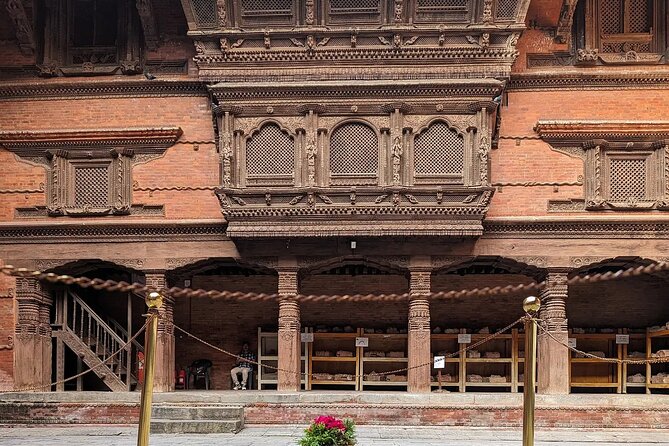
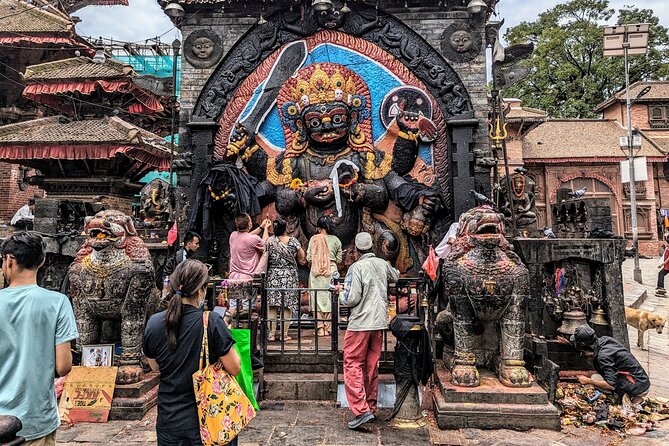
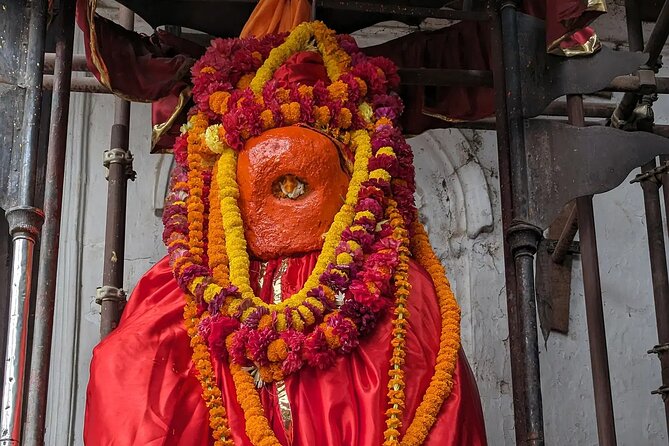
Hanuman Dhoka is a palace complex within Kathmandu Durbar Square. It served as the royal seat of the Malla kings and later the Shah dynasty. Its name comes from the nearby statue of Hanuman, the Hindu deity, an example of how religious figures and royal spaces sit close together in the old city.
A guide is especially useful here because palace walls and courtyards can be hard to interpret without context. Guides associated with Amazing Kathmandu Tours, including Santosh and Sandip, have been praised for linking buildings, side streets and local stories. Sandip has also been noted for showing less obvious alleyways around Durbar Square, which can give the walk a more personal feel than a straight visit to the main monuments.
The Hanuman Dhoka stop is scheduled for around 45 minutes. The tour information does not specify which rooms or buildings are entered, so think of this as a guided visit to the complex and its surroundings rather than a promise of access to every interior. Admission is not included in the $15 base price.
What the small group changes
With a maximum of five people, this is a more personal format than a large walking tour. You can ask questions as they occur, hear the guide without competing with a crowd and move through narrow streets in a compact group. Solo visitors may especially value the company and local orientation without having to arrange a private guide on their own.
The group size is a cap, not a guarantee that the tour will fill. One person has taken the walk alone when nobody else joined. That can mean more direct attention, though the tour still follows the provider’s plan and price rather than becoming a different experience.
The guides are a major part of the appeal. Santosh is associated with practical advice about getting around Kathmandu and trekking in Nepal, as well as stories about streets and buildings. Sandip is noted for a patient approach, humor and time spent exploring side lanes. Shreeya is also named as an upbeat guide who explains culture and history. Your assigned guide may differ, so do not book on the assumption that one particular person will lead your tour.
Is $15 a good value?
At first glance, $15 per person is an appealing price for a three-hour guided walk. The guide’s explanations are the main value: they help you understand the religious details and local customs that are easy to miss when wandering alone. The small group cap adds to that value, especially if you prefer a chance to ask questions rather than trail behind a large crowd.
But the listed price is not the full cost. Fees and taxes of $9 per person are excluded, bringing the stated total to about $24 per person before any other expenses. The available information does not say exactly what the $9 covers, so confirm the final amount and inclusions before you pay.
Admission tickets are also listed as not included at the individual stops. Since the fee description does not explain how charges are divided, do not assume that every entrance or site cost is covered by the extra $9. The tour remains reasonably priced if you value a guide and a small group, but compare the final total, not just the headline price.
Who should take this walk?
I would choose this tour if you are new to Kathmandu and want an introduction that goes beyond the main square. The route combines major landmarks with small-scale local practices, and the guide can give you useful context for exploring the city on your own afterward. It also suits solo visitors who want a compact group and someone to help make sense of the streets.
It is less suitable if you want a guaranteed encounter with the Kumari, a private tour for just your party, or a full interior visit to every palace building. The experience is a walking introduction, not a promise of access to every site. You should also be comfortable with a three-hour outing and the possibility that some of the listed time may be spent moving between stops or waiting.
Wear comfortable walking shoes and bring questions. That advice follows from the format: the value is not only in looking at monuments, but in hearing how the guide explains the customs and stories around them. The operator confirms that most people can participate, but the supplied details do not give specific accessibility information.
Should you book?
Book this walk if you want a manageable introduction to Kathmandu’s sacred and royal center, with a small group and a guide who can explain details you might otherwise walk past. Its strongest points are the personal scale, the blend of major sights and local beliefs, and the chance to see the city through stories rather than just façades.
Skip it if your plans depend on seeing the Kumari, or if you need a fully itemized picture of every admission cost before booking and cannot confirm the $9 charge. For most first-time visitors, though, this is a good-value orientation walk once you account for the additional fee and keep expectations realistic.
FAQ
How long does the tour last?
The tour lasts approximately three hours. The four listed stops are each scheduled for about 45 minutes.
Where does the tour start and end?
It starts at Pumpernickel Bakery on Paryatan Marg in Kathmandu and ends back at the same meeting point.
How many people can join?
The maximum group size is five people.
What is included in the tour price?
A professional guide is included. The listed $15 price does not include fees and taxes of $9 per person.
Which places are included in the route?
The four listed stops are Wasya Dyaa, Seto Machindranath Temple, Kathmandu Durbar Square and Hanuman Dhoka. Naradevi Temple is also named in the tour overview as a stop on the way.
Can I cancel for a full refund?
Yes. You can cancel at least 24 hours before the experience starts for a full refund. Cancellations made less than 24 hours before the start time are not refunded.
Newly listed in Kathmandu
- Traditional Momo Making Class★ 5.0 · 10 reviews
- Walking tour of real Kathmandu through back streets.★ 5.0 · 3 reviews
- Kathmandu 2 Nights 3 Days Chitwan Jungle Safari Tour★ 5.0 · 9 reviews
- Visit Swayambhunath and Bauddhanath Stupa with Guide★ 5.0 · 5 reviews
- Walking tour of Kathmandu with awesome local guides★ 5.0 · 4 reviews
- Kathmandu Street Food Walking Tour – Eat Like a Local★ 5.0 · 3 reviews
- Regular Yoga for all levels of practitioners in Kathmandu★ 5.0 · 4 reviews
- Private Manaslu Circuit Trek at Himalayas★ 5.0 · 3 reviews
Kathmandu City Tours, compared.
Private Kathmandu Sightseeing Tour | UNESCO World Heritage sites
Read our review →
Kathmandu Sunset Tour by Rickshaw Including Durbar Square Visit
Read our review →
Kathmandu Food & Drink and Shopping Rickshaw Tour
Read our review →
Browse the lists this tour appears in