
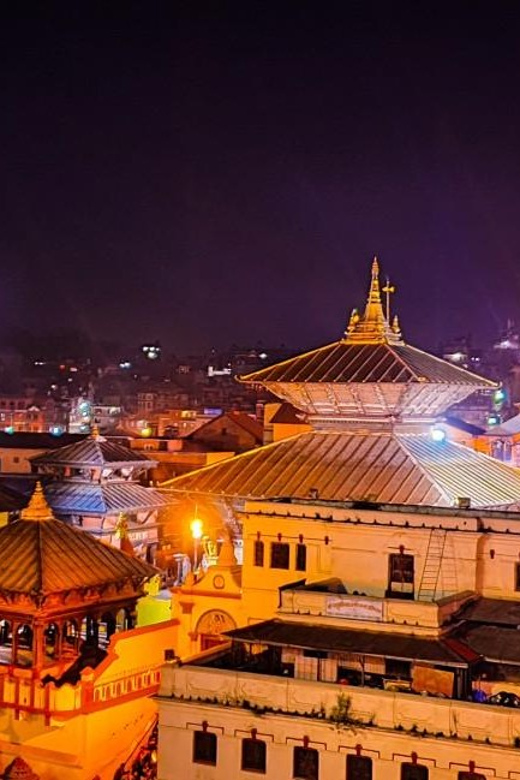
Reviewed · PASHUPATINATH TOURS
Kathmandu: Pashupatinath Temple Evening Aarati Tour
At dusk, the Bagmati River becomes the setting for Pashupatinath’s Aarati: priests chant Vedic mantras, oil lamps sweep through the air, bells ring, and classical instruments accompany devotional hymns. It is a public Hindu ritual, not a show arranged for visitors, and a guide can help you follow what is happening.
I like two things here: the private guide-led visit gives you room to ask questions, and the hotel transfers make an evening outing simpler. One consideration: the ceremony takes place in a busy public setting, so the view and atmosphere can depend on where you stand and how many people have gathered.
What makes this evening worth your time
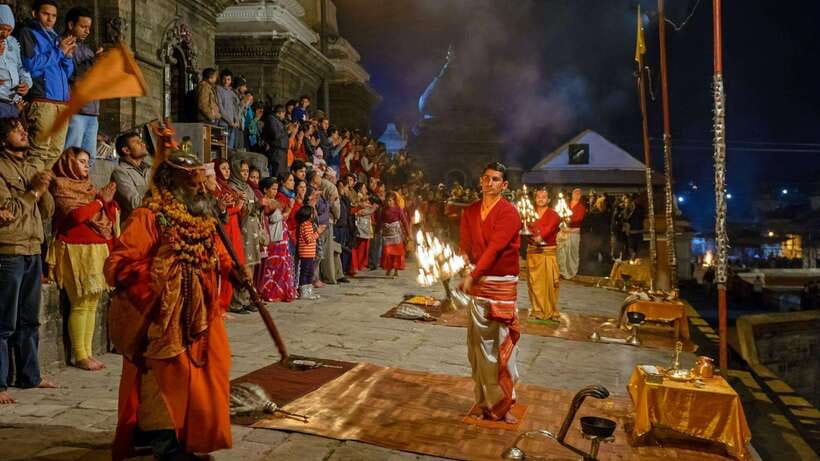
- Aarati by the Bagmati: Watch priests offer prayers with lamps, incense, bells, music, and chanting.
- Temple context before the ceremony: Your English-speaking guide introduces Pashupatinath’s religious and historical importance.
- A private group: The format gives you a more direct chance to ask questions and explore at your own pace.
- A practical three-hour plan: Hotel pickup, temple visit, ceremony, and return transport are included.
- Guides with a personal touch: Ramesh, Rajat, and Anjan are among the guides associated with the tour. Ramesh has been described as patient and helpful with photography requests.
- Photography is possible in permitted areas: Bring a camera if you like, but follow your guide’s advice on where photos are appropriate.
Start with the temple, not just the lamps
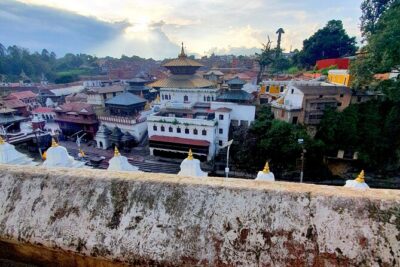
Pashupatinath is one of Nepal’s significant Hindu temples, set beside the Bagmati River. The tour begins with hotel pickup in Kathmandu and a drive to the temple complex. Because transport is included both ways, you can focus on the visit rather than arranging your own ride at the end of the evening.
On arrival, your guide leads a visit around the complex and explains its religious and historical importance. That introduction matters. Without context, a temple visit can leave you watching unfamiliar customs from the edge; with a guide, you can ask what a ritual means and understand why the site matters to Hindu worshippers.
The tour also allows time for independent exploration before the Aarati begins. That pause is useful: you are not rushed straight from the vehicle into the ceremony, and you can take in the temple surroundings before the evening’s main event. The exact time available for this free exploration is not specified, so plan on following your guide’s schedule.
The temple is an active place of worship, not simply a monument to inspect. A respectful, observant approach helps you get more from the visit. Listen to your guide, take cues from people around you, and keep in mind that photography is only appropriate in permitted areas.
More Pashupatinath visits in Kathmandu:
- Kathmandu Spiritual Sites: Bodhnath & Pashupatinath Tour
★ 5.0 · 185 reviews - Kathmandu: Pashupatinath Temple Aarti Night Tour
★ 4.8 · 29 reviews - Pashupatinath Temple, Hindu Crematorium and Aarati in-depth Tour
★ 5.0 · 25 reviews
The Bagmati Aarati, explained as it happens
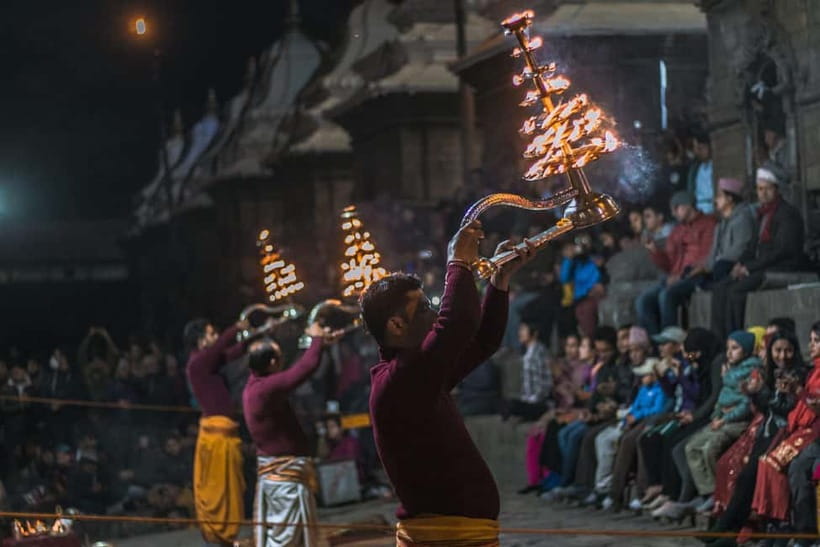
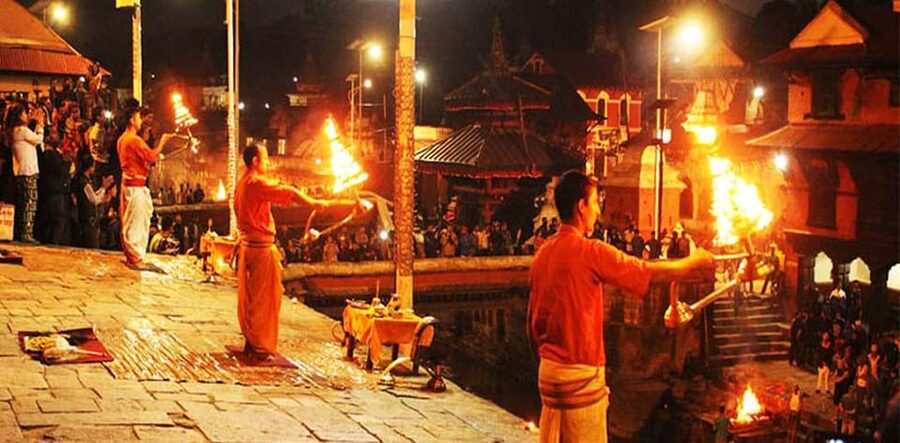
The ceremony is held on the eastern side of the temple, on the banks of the Bagmati River. It generally begins around 6 p.m., after the tour’s late-afternoon start. Priests chant prayers and wave oil lamps as bells sound, incense burns, and musicians play classical instruments while hymns are sung.
The mix of sound and light is what makes the Aarati so compelling. You are not watching one isolated action: the chanting, lamps, bells, incense, and music work together as a ritual of worship. The guide’s explanations help connect those details to Hindu tradition, turning a striking scene into a more meaningful cultural encounter.
Expect a crowd. People gather along the riverbank for the ceremony, and the tour information describes the area as a place where people swarm to watch. A private tour does not mean a private viewing platform or an empty riverbank. Your guide can help you understand where to look, but the precise view may depend on the gathering and your position.
The ceremony is spiritual and communal. Keep your attention on the ritual and be thoughtful with your camera. Photography is allowed only in permitted areas, so check with your guide rather than assuming every part of the complex is open to pictures.
A guide can turn observation into understanding
The strongest reason to book a guided visit is the chance to ask questions as events unfold. The English-speaking guides connected with this tour include Ramesh, Rajat, and Anjan. Their names come up in accounts of the experience, with Ramesh particularly noted for patient explanations and for making time for photography requests.
That personal attention is valuable at a ceremony where small details can carry religious meaning. You can ask about the prayers, the lamps, or the traditions around the temple instead of trying to piece everything together afterward. The guide can also help explain the setting in accessible terms, which is useful if this is your first close encounter with Hindu worship.
The private-group format should suit people who prefer conversation to a large group’s fixed pace. It can also help if you have specific questions or want to spend time taking photographs where permitted. One visitor who booked mainly to take travel photos found the guide accommodating, but that does not mean every viewpoint or photo request can be guaranteed.
English is the stated tour language. Some guides may speak other languages as well, but that is not promised as a standard feature. If you need another language, confirm it before booking.
What the three-hour itinerary feels like
The experience is compact: pickup in Kathmandu, a guided visit at Pashupatinath, time before the Aarati, the ceremony itself, then a drive back to your hotel. The three-hour duration suits an evening when you want a substantial cultural outing without committing to a full day.
The early part of the visit is for orientation. Your guide introduces the temple and its importance, then gives you time to look around independently. The balance between explanation and free time is a useful feature: you get context without having every minute narrated.
The Aarati is the centrepiece. Since it begins around 6 p.m., the late-afternoon departure gives you time to reach the temple and understand the site before the ceremony. Starting times can vary, so check the available options when choosing a date.
Afterward, the vehicle takes you back to Kathmandu. That return ride is more than a small convenience: the ceremony is an evening activity, and having transport arranged means you do not need to sort out your departure from the temple area yourself.
More evening plans in Kathmandu:
- Kathmandu Sunset Tour by Rickshaw Including Durbar Square Visit
★ 5.0 · 73 reviews - 3 night 4 Day Yoga & Ayurveda Retreat to Detox the Body & Mind, Nepal
★ 5.0 · 37 reviews - Pashupatinath Evening Aarati: Few Divinely Hours in Kathmandu
★ 4.5 · 23 reviews - 1 Night 2 Days Chitwan Jungle Safari Tour from Kathmandu
★ 3.5 · 19 reviews
Is $45 a fair price?
At $45 per person, the price covers hotel pickup and drop-off, transport to and from Pashupatinath, a licensed English-speaking guide, the temple entry ticket, taxes, and service charges. Food and drinks are not included.
The value rests mostly on the guide and transport. You are paying for more than a ride to a temple: the guided introduction helps explain what you are seeing, and the return transfer takes care of the practical side of an evening visit. If you would otherwise hire transport and pay for a guide and entry separately, the bundled price may be convenient.
It is a private group, which can make the fee worthwhile for people who value flexibility and the chance to ask questions. If you are mainly looking for a place to watch the Aarati and are comfortable navigating the site independently, you may not need the guided format. The tour’s best value is for someone who wants the ceremony explained, not simply photographed.
Who will get the most from this tour?
This visit suits first-time visitors to Kathmandu who want a clear introduction to Hindu worship and a major temple site. It is also a good fit for curious travellers who prefer to learn through conversation and observation rather than move quickly from one photo stop to the next.
Photographers may appreciate the private format and the guide’s ability to respond to reasonable requests, as long as they respect restrictions on where pictures are allowed. People drawn to spiritual or cultural experiences may find the ceremony moving, though it is best approached as a living act of worship rather than a performance staged for an audience.
The tour may be less appealing if you dislike crowds, prefer a quiet temple visit, or want an entirely self-directed evening. The ceremony attracts a large gathering, and the schedule is built around its start time. Those are not flaws, but they are part of what you are signing up for.
A few practical points: the tour lasts three hours, is offered as a private group, and includes an English-speaking guide. Food and drinks are extra. You can cancel up to 24 hours ahead for a full refund, and the reserve-now, pay-later option allows you to hold a place without paying at the time of booking.
Should you book the Pashupatinath Aarati tour?
Book it if you want a guided introduction to Pashupatinath and the Bagmati River ceremony, with transport and entry taken care of. The combination of temple context and Aarati makes the evening more useful than arriving at the riverbank without knowing what you are watching.
Skip it if you want a quiet, private ceremony or only need transport. The Aarati is a public gathering, and its appeal lies in seeing a communal ritual in its real setting. For a first visit to Kathmandu, especially if you value thoughtful explanation, this is a strong three-hour choice.
FAQ
How long does the tour last?
The tour lasts three hours, including hotel pickup and drop-off, the temple visit, and the Aarati.
How much does the tour cost?
The listed price is $45 per person.
What is included in the price?
Hotel pickup and drop-off, transport to and from Pashupatinath Temple, a licensed English-speaking guide, the temple entry ticket, taxes, and service charges are included.
Are food and drinks included?
No. Food and drinks are not included.
What time does the Aarati begin?
The ceremony generally begins around 6 p.m. The tour starts in the late afternoon, and available start times should be checked when booking.
Is the tour private?
Yes. The tour is offered for a private group.
What language does the guide speak?
English is the stated tour language.
Can I take photographs during the tour?
Photography is possible in permitted areas. Check with your guide about where photos are allowed.
Newly listed in Kathmandu
- Traditional Momo Making Class★ 5.0 · 10 reviews
- Walking tour of real Kathmandu through back streets.★ 5.0 · 3 reviews
- Kathmandu 2 Nights 3 Days Chitwan Jungle Safari Tour★ 5.0 · 9 reviews
- Visit Swayambhunath and Bauddhanath Stupa with Guide★ 5.0 · 5 reviews
- Walking tour of Kathmandu with awesome local guides★ 5.0 · 4 reviews
- Kathmandu Street Food Walking Tour – Eat Like a Local★ 5.0 · 3 reviews
- Private Manaslu Circuit Trek at Himalayas★ 5.0 · 3 reviews
- Kathmandu to Pokhara Vip Sofa Bus Ticket★ 4.0 · 4 reviews
Pashupatinath Tours, compared.

Kathmandu Spiritual Sites: Bodhnath & Pashupatinath Tour
Read our review →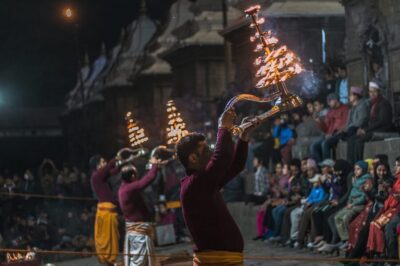
Pashupatinath Temple, Hindu Crematorium and Aarati in-depth Tour
Read our review →
Pashupatinath Evening Aarati: Few Divinely Hours in Kathmandu
Read our review →
Sacred Pashupatinath: Aarati,Cremation Rites & Boudha Stupa
Read our review →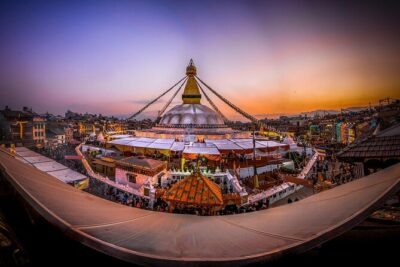
PashupatiNath and BoudhaNath – Private/Small Group
Read our review →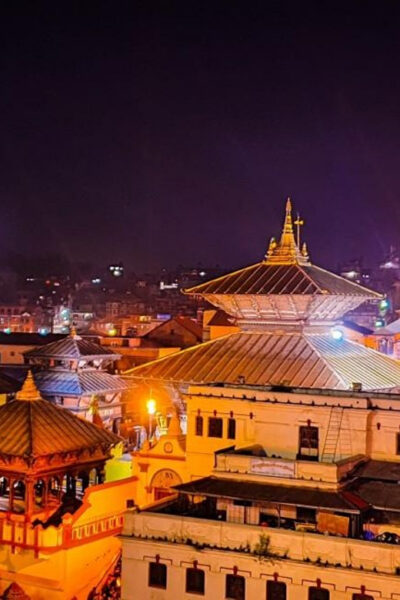
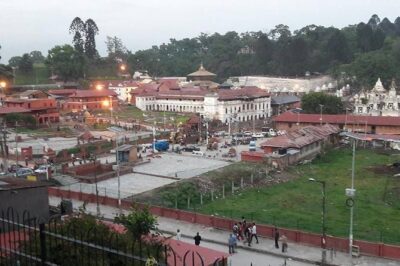
Private Half-Day Tour of Boudhanath and Pashupatinath Temples in Kathmandu
Read our review →Browse the lists this tour appears in