
Reviewed · PASHUPATINATH TOURS
Kathmandu Spiritual Sites: Bodhnath & Pashupatinath Tour
Boudhanath’s white dome draws you into the rhythm of Tibetan Buddhist worship; Pashupatinath’s evening aarti brings you to the river as lamps, music, and prayer fill the air. This tour pairs two of Kathmandu’s most important sacred sites in one afternoon, with a local guide to explain what you’re seeing.
I like two things in particular: the small group, capped at 12, gives you room to ask questions, and the ride on local transport adds a slice of everyday Kathmandu between the monuments. The guide can also help you make sense of the customs at each site, rather than leaving you to guess.
The main consideration is that this is a busy, emotionally charged visit, especially at Pashupatinath, where cremations take place beside the river. You’ll need to be comfortable moving through crowds and observing solemn rituals with care.
What to know before you go
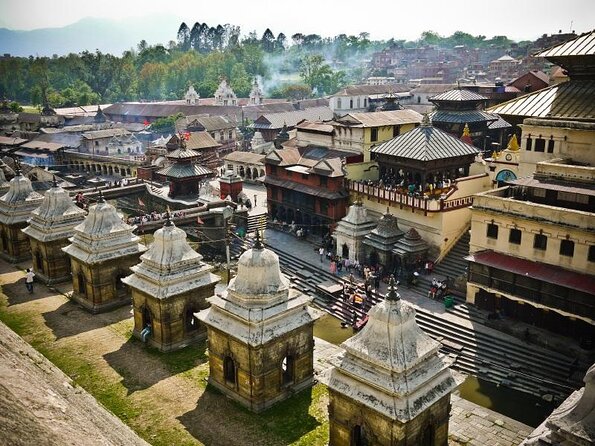
- Boudhanath is a place of active worship: Walk clockwise around the stupa, turn its prayer wheels, and watch local Buddhists make their circuit.
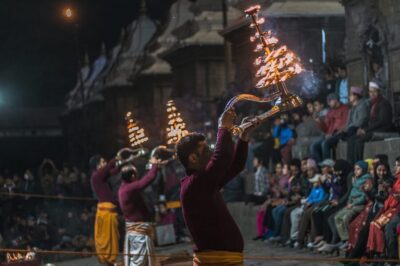
- The aarti is the evening’s focal point: At Pashupatinath, the riverbank ceremony draws a large local crowd as the sun goes down.
- Local transport is part of the experience: Expect a ride on public transport, described by some as a local bus taxi, not just a private transfer.
- You’ll cover about 2 kilometers on foot: The walk between Boudhanath and Pashupatinath is around 15 minutes, with more walking within the sites.
- Some extras cost more: Palm reading, butter lamps, and offerings or interactions with sadhus are not covered by the tour price.
- The guide can make the difference: Guides named by visitors include Rita, Rozit, Amit, Subash, Bipin, and Ramhavi. You may have a different guide on your date.
Two sacred sites, one revealing afternoon
Kathmandu’s religious life is not kept behind museum glass. At Boudhanath and Pashupatinath, you’ll see people praying, making offerings, and gathering with family as part of daily practice. A guide helps you approach these scenes with context and respect, which is especially useful if you have little background in Hinduism or Buddhism.
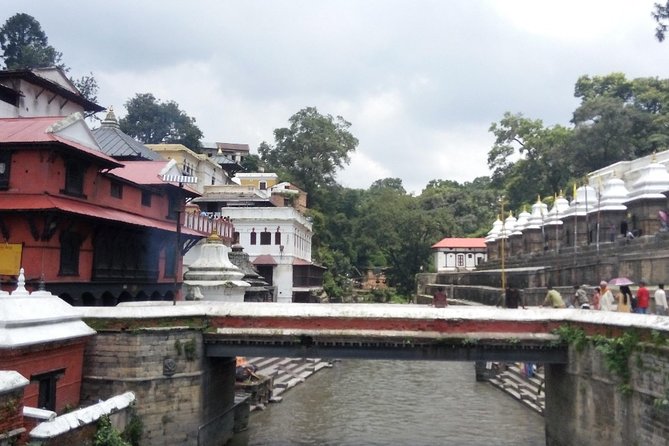
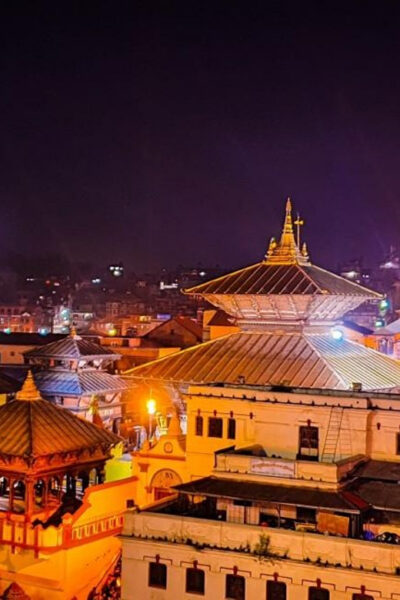
The tour begins at 3 pm at Hotel Marshyangdi in Thamel. From there, you travel to Boudhanath, one of the world’s largest stupas and a major center of Tibetan Buddhism in Nepal. After time at the stupa, you walk about 15 minutes to Pashupatinath, a Hindu temple complex dedicated to Shiva. The evening ends with the aarti beside the Bagmati River, followed by a return to the meeting point.
The tour lasts about four hours. That’s enough time to see both sites without trying to cram in every corner of Kathmandu, though it is still a full afternoon of activity. The group has a maximum of 12 people, and a private option may be available. The small cap matters here: it gives you a better chance to hear the guide and ask questions when the sites are busy.
More Pashupatinath visits in Kathmandu:
- Kathmandu: Pashupatinath Temple Evening Aarati Tour
★ 5.0 · 36 reviews - Kathmandu: Pashupatinath Temple Aarti Night Tour
★ 4.8 · 29 reviews - Pashupatinath Temple, Hindu Crematorium and Aarati in-depth Tour
★ 5.0 · 25 reviews
Boudhanath: prayer wheels and a living Buddhist center
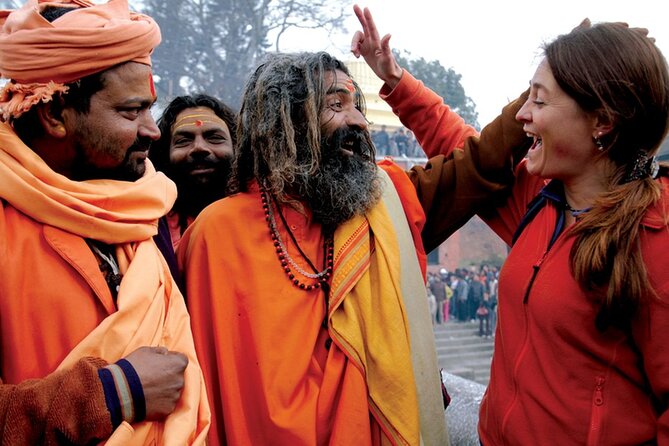
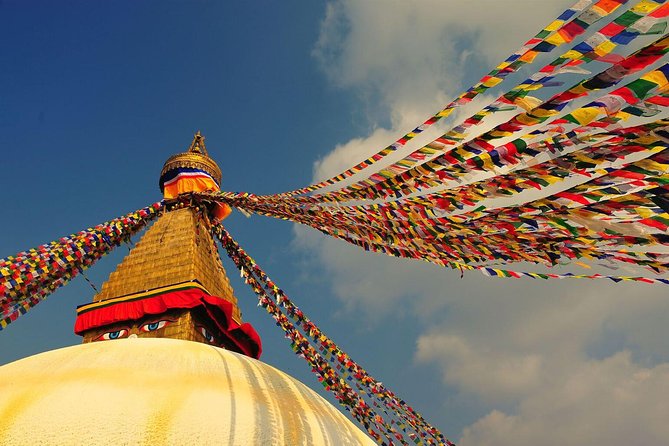
Boudhanath is more than a striking white dome. It is a working religious center, and the most meaningful way to approach it is to follow the local rhythm. Walk clockwise around the stupa with worshippers, turning the prayer wheels as you go. Your guide can explain the Buddhist practices and symbols you encounter, helping you understand why the circuit is an act of devotion rather than simply a loop around a landmark.
You’ll have about an hour and 25 minutes at the site. That gives you time to walk, watch, and take in the scene at a thoughtful pace. You can also light a traditional butter lamp as an offering to the Buddha. It is an optional extra, so ask your guide about the cost before deciding.
The stupa’s scale and daily activity make this a strong first stop. You are not just arriving, taking a photograph, and leaving; the visit gives you a chance to observe how the site is used. Still, the tour keeps to a half-day schedule. If you prefer to linger for a long time, explore the surrounding area at length, or visit at a quieter hour, you may want to return independently.
Boudhanath and the other sights on the tour have been renovated following earthquake damage in 2015. The tour notes significant damage to some sites from the earthquakes in April and May of that year, and says the places visited have since been renovated. The buildings you see today reflect both their religious importance and the work needed to maintain them.
The local ride and the walk between sites
Transport is part of the tour’s character. You travel from the Thamel meeting point to Boudhanath and from Pashupatinath back to the endpoint, with transportation costs included. The route uses public transport, described in one account as a local bus taxi. It is a practical way to get between distant sites, but it also gives you a small taste of moving around the city as locals do.
Expect the ride to feel less polished than a private car transfer. That is the trade-off: a little less control over the journey, and a little more contact with everyday Kathmandu. If you choose this tour mainly for comfort or speed, the public transport element may not be your favorite part. If you enjoy seeing how a city works beyond its monuments, it adds value.
Between Boudhanath and Pashupatinath, you’ll walk for around 15 minutes. The total walking distance is about 2 kilometers, much of it at the sites. Wear comfortable shoes and be ready to keep moving through crowds. Although the tour is described as child-friendly, the walking and busy gathering around the aarti are worth considering if you are bringing young children.
Pashupatinath: sadhus, the Bagmati, and the aarti
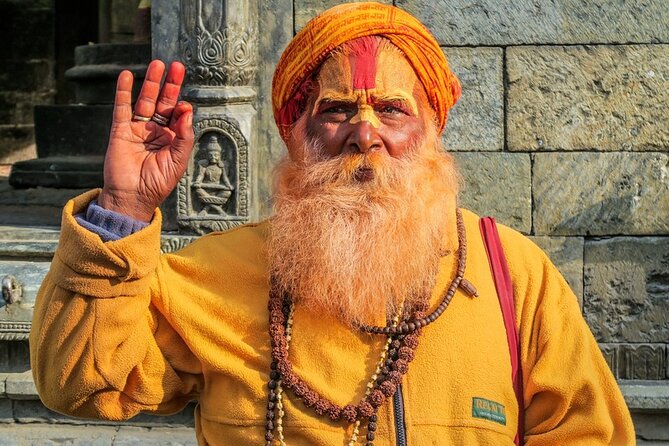
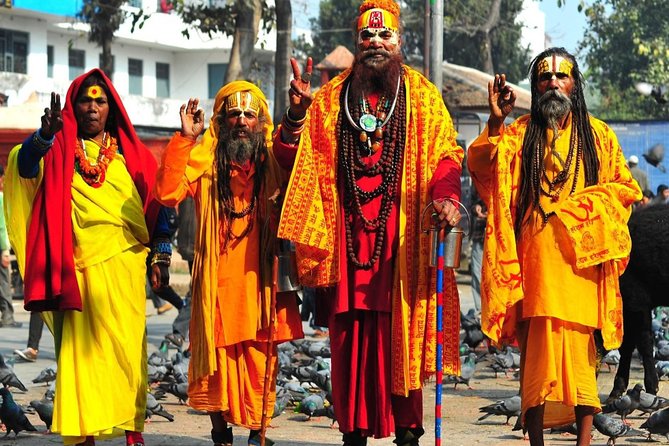
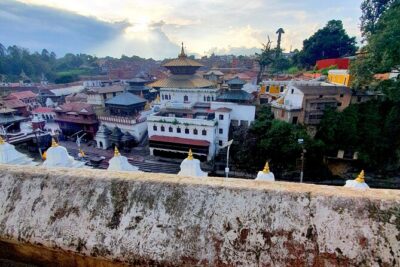
Pashupatinath is one of Hinduism’s holiest shrines, dedicated to Shiva. The temple dates to the 17th century, and the visit offers a close look at Hindu beliefs about life, death, and rebirth. Your guide can explain the role of sadhus, holy men who give up material possessions as an expression of religious devotion. Their dress and presence are striking, but treat them as people at a place of worship, not as props for a photograph.
The tour allows about two hours and 20 minutes at Pashupatinath. Part of that time is spent near the Bagmati River, where cremation ceremonies take place. These are deeply personal rites for families. Keep a respectful distance, do not take photographs, and follow your guide’s advice about where to stand and what is appropriate. The tour includes witnessing the cremation ceremony, but the right approach is quiet observation, not treating it as a spectacle.
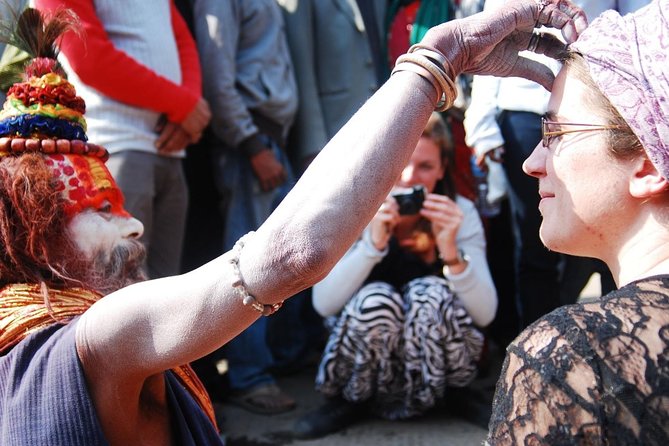
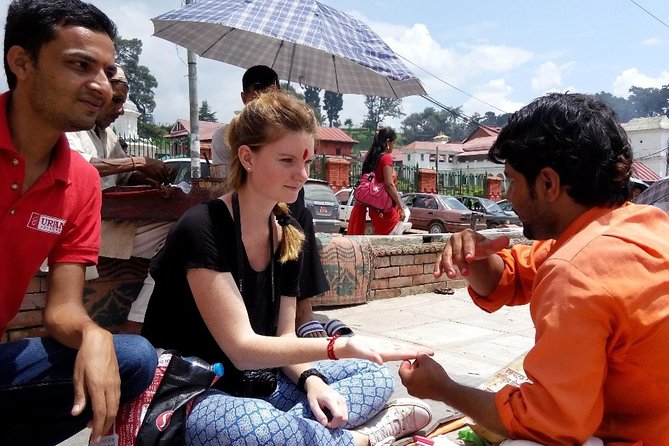
A local palm reader may offer to read your future. This is optional and not included in the price. The listed fee varies from about $7.50 to $9 per person, and your guide can help you discuss the cost. Offerings to sadhus and monks are also extra. If you choose to pay for a photo or interaction with a sadhu, the stated amount is about $7.50. Decide in advance what you are comfortable spending, and do not feel obliged to buy anything.
The evening aarti is the visit’s defining moment. As daylight fades, people gather on the eastern bank of the Bagmati for an offering of lights to Lord Pashupatinath. The crowd can grow large, so stay near your guide and group. The ceremony’s music, lights, and shared focus make it a memorable way to encounter Hindu worship in a public setting. It can also feel intense if you are unused to a dense crowd or prefer quiet visits to religious sites.
More Boudhanath visits in Kathmandu:
- PashupatiNath and BoudhaNath – Private/Small Group
★ 5.0 · 18 reviews - Sacred Pashupatinath: Aarati,Cremation Rites & Boudha Stupa
★ 5.0 · 18 reviews - Kathmandu City in One Day with Bodhnath Stupa
★ 5.0 · 10 reviews - Private Half-Day Tour of Boudhanath and Pashupatinath Temples in Kathmandu
★ 4.5 · 9 reviews
What the guide adds
The tour is built around explanation, not just transport. A good guide can connect the prayer wheels at Boudhanath, the sadhus at Pashupatinath, and the river rituals to the beliefs behind them. That context matters when customs are unfamiliar, and it can help you avoid accidental disrespect.
Named guides in accounts of the tour include Rita, Rozit, Amit, Subash, Bipin, and Ramhavi. Visitors describe guides who were attentive, patient, good at answering questions, and careful about keeping groups together in the crowd. One guide also helped with phone photography, while another tailored the pace to the group. Those details suggest that the tour can feel personal even when you are not booking privately, though your own guide and group will vary.
The group limit of 12 is a sensible fit for these sites. It is small enough for conversation, but not so small that the experience depends on having a private guide. If you want more control over pace or questions, look at the private option when booking.
Is $60.56 good value?
At $60.56 per person, the price buys more than entry to two sites. It includes a local English-speaking guide, admission to Boudhanath and Pashupatinath, the evening aarti, and transport between the meeting point, sites, and endpoint. You also get the benefit of having someone explain religious customs and help you navigate a crowded event.
That is useful value if you have limited time in Kathmandu or want to understand what you are seeing instead of visiting both places on your own. The tour’s practical advantage is its efficient pairing of two major sites in one afternoon. It also offers a local transport experience that a private-car itinerary would not.
Budget for optional costs. Meals are not included, nor are palm-reader fees, alms, or certain offerings and interactions. If you want a butter lamp, a palm reading, or a paid photo with a sadhu, bring extra money and confirm the price before you agree. The tour can still be worthwhile without any of these add-ons.
Who should book this tour?
This is a good choice if you have only a short time in Kathmandu and want an informed introduction to both Hindu and Buddhist practice. It suits curious first-time visitors, solo travelers who want a guide and a small group, and anyone who would rather have help understanding the sites than manage the details alone. Children under six can join free of charge, though families should weigh the walking, crowds, and solemn cremation setting.
It is less suited to you if you want a slow, private visit, dislike crowded ceremonies, or would rather avoid seeing funeral rites. The sites are places of active worship, and the Pashupatinath visit asks for sensitivity as well as curiosity. A private option may suit you better if you want more control over pace, but even then the public character of the aarti remains.
Practical details
The meeting point is Hotel Marshyangdi on Chaksibari Marg in Thamel. The tour starts at 3 pm and returns to the same meeting point after about four hours. Confirmation is provided at booking, and the activity is near public transportation. Most people can participate, and children under six may join free.
Book this if you want two major sacred sites explained in one compact afternoon, and you are comfortable with public transport, walking, and a busy riverbank ceremony. If you go, dress and behave respectfully, keep close to your guide at the aarti, and treat the cremation ghats as places of mourning. That care is part of seeing Kathmandu well.
FAQ
How long is the tour?
It lasts about four hours, starting at 3 pm and returning to the meeting point in Thamel.
Where does the tour start?
The meeting point is Hotel Marshyangdi on Chaksibari Marg in Thamel, Kathmandu.
How many people are in the group?
The maximum group size is 12. A private option may also be available.
Is transport included?
Yes. Transport costs are included from the meeting point to Boudhanath and from Pashupatinath to the endpoint. The tour uses public transport.
Are entrance fees included?
Yes. Admission to Boudhanath Stupa and Pashupatinath Temple is included.
Are palm reading and offerings included?
No. Palm-reader fees, alms to sadhus and monks, and optional offerings are not included. Palm reading is listed at about $7.50 to $9 per person.
Can children join the tour?
Yes. The tour is child-friendly, and children under six can join free of charge.
More spiritual and monastery visits in Kathmandu
- From Kathmandu: 2 Stupas and Kopan Monastery Spiritual Tour
★ 4.8 · 115 reviews - Lunch with Nuns – Monastery
★ 5.0 · 75 reviews - Shirodhara and Sound Healing Spa Experience in Kathmandu
★ 5.0 · 52 reviews - Buddhist Pilgrimage Tour In Nepal
★ 5.0 · 27 reviews
Newly listed in Kathmandu
- Traditional Momo Making Class★ 5.0 · 10 reviews
- Walking tour of real Kathmandu through back streets.★ 5.0 · 3 reviews
- Kathmandu 2 Nights 3 Days Chitwan Jungle Safari Tour★ 5.0 · 9 reviews
- Visit Swayambhunath and Bauddhanath Stupa with Guide★ 5.0 · 5 reviews
- Walking tour of Kathmandu with awesome local guides★ 5.0 · 4 reviews
- Kathmandu Street Food Walking Tour – Eat Like a Local★ 5.0 · 3 reviews
- Private Manaslu Circuit Trek at Himalayas★ 5.0 · 3 reviews
- Kathmandu to Pokhara Vip Sofa Bus Ticket★ 4.0 · 4 reviews
Pashupatinath Tours, compared.
Pashupatinath Temple, Hindu Crematorium and Aarati in-depth Tour
Read our review →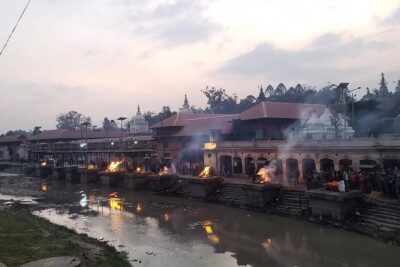
Pashupatinath Evening Aarati: Few Divinely Hours in Kathmandu
Read our review →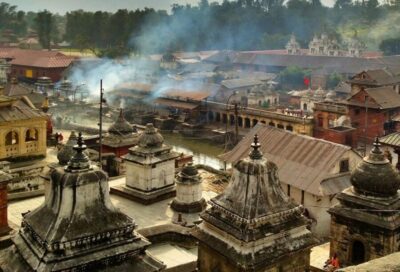
Sacred Pashupatinath: Aarati,Cremation Rites & Boudha Stupa
Read our review →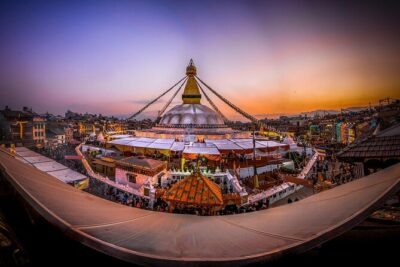
PashupatiNath and BoudhaNath – Private/Small Group
Read our review →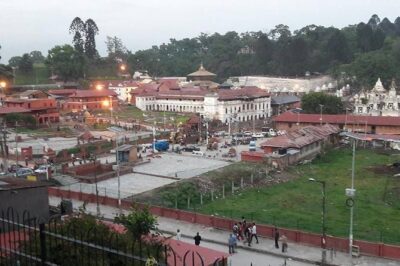
Private Half-Day Tour of Boudhanath and Pashupatinath Temples in Kathmandu
Read our review →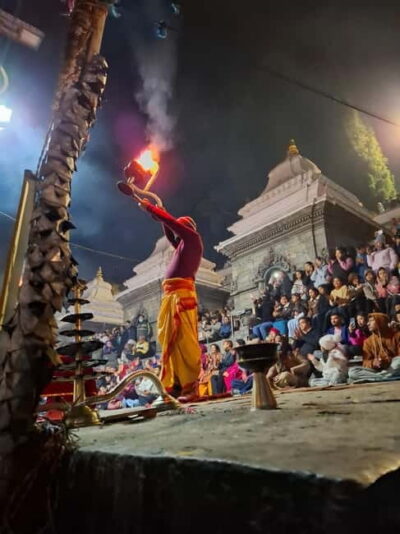
Katmandu: Pashupatinath Open Cremation & Evening Aarati
Read our review →Browse the lists this tour appears in