
Reviewed · KATHMANDU SPIRITUAL TOURS
Buddhist Pilgrimage Tour In Nepal
At Kathmandu’s Buddhist pilgrimage sites, faith is not tucked away behind museum glass. You’ll visit Boudhanath Stupa, Kopan Monastery and Swayambhunath, with an English-speaking guide to help explain Buddhism and Nepal’s mix of religions. The tour begins at 9:15 am and uses private transport, a useful help in a city where distances and traffic can make a day feel longer.
I like two things in particular: the chance to see three important sites in one day, and a small group capped at 10, which should leave room to ask questions. The tour’s one public review praises the guide’s ability to explain culture and Buddhism, a welcome strength for a visit where context matters as much as the architecture.
One point needs checking before you pay: the Swayambhunath stop is listed, but its itinerary description instead talks about lunch in Thamel. The tour overview promises all three pilgrimage sites, yet the timing and lunch details are unclear. Ask the operator to confirm exactly what you’ll visit and whether lunch is only a reserved table or part of the price.
At a glance: three sites, one day
- Boudhanath Stupa: The first stop is one of the world’s largest stupas and a major Buddhist pilgrimage site, about four miles from central Kathmandu. Allow an hour.
- Kopan Monastery: This Tibetan Buddhist monastery belongs to the Gelug tradition. The itinerary allows an hour here, too.
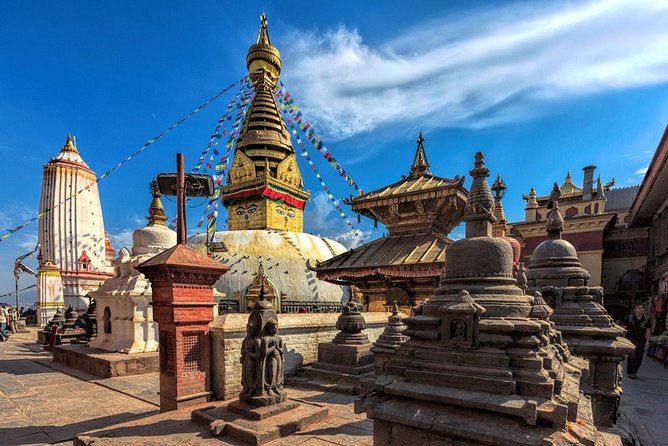
- Swayambhunath: Also known as the Monkey Temple, it is named as the third pilgrimage stop, though the detailed description needs clarification.
- Transport and guide: The price includes ground transport in comfortable private vehicles and a trained, English-speaking professional guide.
- Small group: The tour has a maximum of 10 people, and group discounts are available.
- Price and planning: It costs $150 per person and is booked, on average, 18 days ahead. Meals and accommodation are not included.
Why these pilgrimage sites belong together
Nepal is widely associated with Hinduism, but Buddhism is also part of the country’s religious life and cultural identity. The tour sets out to make that mix easier to understand by taking you to three major Buddhist sites in the Kathmandu Valley. Rather than trying to fit every temple and shrine into one day, it focuses on a few places with distinct roles in Buddhist practice.
The overview describes a pilgrimage experience that includes chanting a mantra with monks. That gives the day a spiritual emphasis, not just a sightseeing checklist. Still, the itinerary does not say where or when chanting happens, or whether it is guaranteed, so ask if that moment is important to you.
A guide can make a real difference here. Architectural details are worth seeing, but an explanation of Buddhist traditions and their place in Nepal can help the sites feel less like a string of stops. The guide is described as a trained English-speaking professional, and the tour’s one written review specifically praises the guide’s ability to answer questions about Buddhism and culture. No guide’s name is provided, so you cannot request a particular person based on the information available.
More spiritual and monastery visits in Kathmandu:
- Kathmandu Spiritual Sites: Bodhnath & Pashupatinath Tour
★ 5.0 · 185 reviews - From Kathmandu: 2 Stupas and Kopan Monastery Spiritual Tour
★ 4.8 · 115 reviews - Lunch with Nuns – Monastery
★ 5.0 · 75 reviews
Boudhanath Stupa: start with a landmark
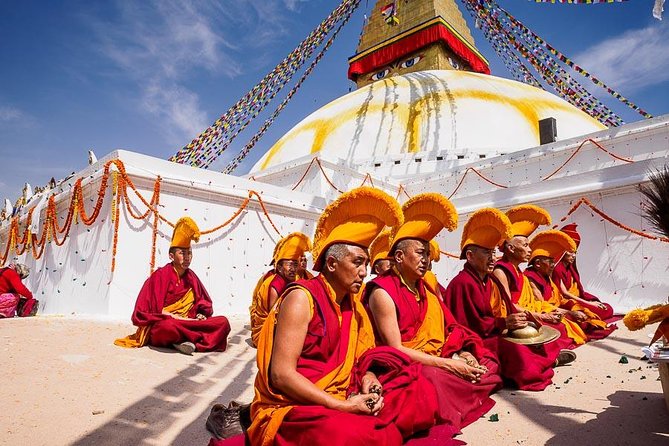
The day begins with pickup from your hotel and a drive to Boudhanath, about four miles from the heart of Kathmandu. The tour allows one hour at the stupa and includes admission. Boudhanath is described as one of the largest stupas in the world and one of the main Buddhist centers in the area, making it a strong first stop for understanding why the valley matters to Buddhist pilgrims.
A stupa is a Buddhist monument, and this one is central to the tour’s purpose: it gives you a place to look closely, ask questions and get a first sense of Buddhist practice in Kathmandu. The tour promises an introduction to the rudiments of Buddhism in Nepal, so use your guide’s time to ask about what the structure represents and how the site is used. Those answers are more useful than trying to race through it for photographs.
One hour is a tidy visit rather than a long, unhurried stay. That may suit you if you want an overview and have several sites to see in a day. If you like to linger, observe worship or take your time around a major monument, the schedule may feel brisk. The tour information does not specify how much of that hour is guided explanation versus free time.
Kopan Monastery: a quieter change of pace
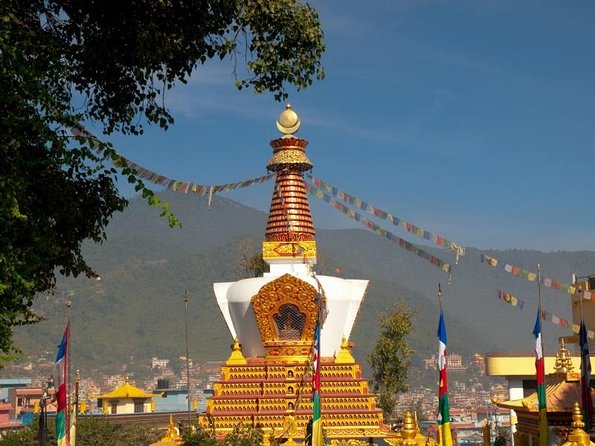
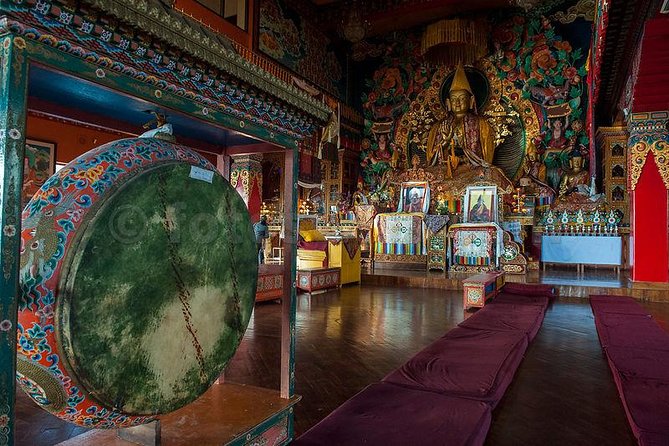
From Boudhanath, the tour continues to Kopan Monastery, another major Buddhist pilgrimage site in the valley. The description identifies it with the Gelug tradition of Tibetan Buddhism and sets aside an hour for the visit. That hour gives the day a different kind of stop from the large stupa: a monastery where the focus is on religious life and teaching.
The site is a good reason to choose a guided tour over simply arranging a car. A guide can help explain what the Gelug tradition means and how Kopan fits into the broader picture of Buddhism in Nepal. The tour’s stated aim is to help you understand the basics, and this is a natural place to ask questions that came up at Boudhanath.
The itinerary mentions cutting across daytime traffic to get there. In Kathmandu, traffic is a practical factor, not a footnote: the drive between sites can take time, and the day’s pace depends partly on the roads. Private transport means you are not piecing together separate rides yourself, but it does not guarantee a quick journey. There is no exact return time, so avoid scheduling a tight commitment immediately afterward.
Swayambhunath: confirm what the third stop includes
Swayambhunath, often called the Monkey Temple, is presented as the third major pilgrimage site in the tour overview. It is a compelling part of the promised route because it completes the day’s look at Buddhist landmarks in the Kathmandu Valley. But the detailed stop description does not clearly describe a visit there. Instead, it says the group will head to Thamel for lunch at The Ship Restaurant and Bar, where a table will be reserved.
There is also a mismatch in the listed duration: this stop is shown as one minute, which does not make sense as a visit to a major site. The tour includes Swayambhunath in its overview, but you should not assume the exact sequence or length of the visit from the available details. Before booking, ask whether Swayambhunath is included, how long you’ll spend there and how lunch fits into the schedule.
The restaurant detail is useful, but it does not mean lunch is included. Meals are specifically excluded from the price. A reserved table can take the guesswork out of finding somewhere to eat, while leaving the cost of your meal to you. The description mentions traditional Nepalese dal-bhat, a lentil-based meal, but does not say whether that is the only option or a set menu.
More Kathmandu tours in Kathmandu:
- Everest Base Camp Trek – 14 Days
★ 5.0 · 1,499 reviews - Private Kathmandu Sightseeing Tour | UNESCO World Heritage sites
★ 5.0 · 756 reviews - Everest Base Camp Helicopter Tour landing at Everest View Hotel
★ 5.0 · 668 reviews - Half day cooking class in Thamel kathmandu
★ 5.0 · 607 reviews
What $150 buys, and what it does not
At $150 per person, this is not simply a ride between temples. The price includes a professional English-speaking guide, ground transport in comfortable private vehicles, staff salary and insurance, and government and local taxes. Admission tickets are marked as included for the listed stops. Those inclusions make the tour most attractive if you value having transport and explanations handled together.
The maximum group size of 10 is also worth weighing. It is small enough to make questions easier than in a large coach group, though it is not a private tour for just you and your party. Group discounts are offered, which may improve the per-person value if you are booking with others. The information does not state how much the discount is, so check the total before you decide.
You will need to budget separately for meals and accommodation in Kathmandu. Nepal’s visa fee is also excluded. The tour information advises bringing the visa fee in accurate US dollar cash and two passport photographs. Tips are not included, and any optional activities during free time are extra. If you are comparing the price with arranging transport on your own, remember to account for the guide and admissions as well as the vehicle.
Timing, group size and practical planning
The tour starts at 9:15 am in Kathmandu and ends back at the meeting point. It lasts about one day, with one-hour allocations for Boudhanath and Kopan Monastery. There is no precise end time, and the unclear Swayambhunath and lunch segment makes it especially sensible to ask how the full day is laid out.
The activity is capped at 10 people, and the tour is described as suitable for most participants. It is near public transportation, although the included transport means you do not need to plan the site-to-site journey yourself. Confirmation is provided at booking, and the tour uses a mobile ticket.
It is booked, on average, 18 days in advance. That is a useful planning clue, not a guarantee that every date fills up or that last-minute places are unavailable. If your schedule is fixed, booking ahead is the safer choice. You can cancel for a full refund up to 24 hours before the start; changes or cancellations inside that window are not accepted for a refund.
The rating is 5 out of 5 from 27 reviews, with 100% recommending the experience. That is an encouraging record, but the written review information is limited. The praise that is available focuses on the guide’s ability to answer questions about culture and Buddhism. That is the quality I would value most on a tour like this, and it is a good reason to use the day actively: ask questions rather than treating the sites as photo stops.
Who will get the most from this day
I’d consider this tour if you want a guided introduction to Buddhist sites without arranging your own vehicle, admissions and route. It suits a first visit to Kathmandu, a short stay, or anyone who wants to understand more than the surface appearance of the monuments. The English-speaking guide and the small group limit are useful if you enjoy asking questions along the way.
It may be less suitable if you want a slow, meditative visit at each site or a fully specified schedule. The one-hour stops are short, and the unclear third-stop description makes it hard to judge how much time you will have at Swayambhunath. If you prefer to travel independently, you may also find more value in planning your own visits, though you would need to arrange transport and guiding separately.
Should you book the Buddhist Pilgrimage Tour?
Book it if you want a practical, guided day focused on Kathmandu’s major Buddhist sites, and if you value a guide who can explain the religious and cultural context. The included private transport, admissions and small group make $150 easier to assess as a bundled experience, not just a car fare.
Before paying, get a clear answer about Swayambhunath, the lunch stop and how much time is allocated to each. If the operator confirms all three pilgrimage sites and the schedule suits you, this looks like a useful way to make a day in Kathmandu more meaningful. If those details remain vague, compare it with other options before committing.
FAQ
How much does the tour cost?
The price is $150 per person. Group discounts are available, but the discount amount is not specified.
How long does the tour last?
It lasts approximately one day. The tour starts at 9:15 am and ends back at the meeting point, but no exact finish time is given.
Which sites are included?
The tour overview names Boudhanath Stupa, Kopan Monastery and Swayambhunath. The detailed description of the third stop is unclear, so confirm the Swayambhunath visit with the operator.
Is lunch included in the price?
No. Meals are excluded. The description says a table will be reserved at The Ship Restaurant and Bar in Thamel, but you pay for your own meal.
What is included in the tour price?
Ground transportation in private comfortable vehicles, a trained English-speaking professional guide, staff salary and insurance, government and local taxes, and admission tickets for the listed stops are included.
Can I cancel the tour for a refund?
Yes. You can cancel at least 24 hours before the start time for a full refund. Cancellations or changes made less than 24 hours before the start time are not accepted for a refund.
Newly listed in Kathmandu
- Traditional Momo Making Class★ 5.0 · 10 reviews
- Walking tour of real Kathmandu through back streets.★ 5.0 · 3 reviews
- Kathmandu 2 Nights 3 Days Chitwan Jungle Safari Tour★ 5.0 · 9 reviews
- Visit Swayambhunath and Bauddhanath Stupa with Guide★ 5.0 · 5 reviews
- Walking tour of Kathmandu with awesome local guides★ 5.0 · 4 reviews
- Kathmandu Street Food Walking Tour – Eat Like a Local★ 5.0 · 3 reviews
- Kathmandu to Pokhara Vip Sofa Bus Ticket★ 4.0 · 4 reviews
- Regular Yoga for all levels of practitioners in Kathmandu★ 5.0 · 4 reviews
Kathmandu Spiritual Tours, compared.
Kathmandu Spiritual Sites: Bodhnath & Pashupatinath Tour
Read our review →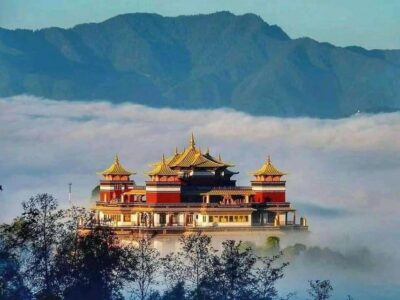

Shirodhara and Sound Healing Spa Experience in Kathmandu
Read our review →
Spiritual Nepal: Expert insight into Multifaith Journey
Read our review →
Namo Buddha and Thrangu Tashi Yangtse Monastery Half-Day Tour
Read our review →
Namobuddha Monastery Hiking Day Tour via Panauti from Kathmandu
Read our review →Browse the lists this tour appears in