
Reviewed · PASHUPATINATH TOURS
PashupatiNath and BoudhaNath – Private/Small Group
Pashupatinath’s cremation ghats and Boudhanath’s prayer-filled stupa offer a rare chance to learn about two living faiths in one compact Kathmandu tour. The guide explains Hindu last rites and the 16 Samskaras, then introduces Buddhist teachings and symbols at Boudhanath.
I like two things in particular: the small group, capped at five, leaves room for questions, and the route brings religious sites, local stories, and thangka art together. Guides such as Santosh are praised for explaining culture as well as religion, and for adjusting the schedule when a visitor wanted to see the aarati ceremony.
One consideration is cost: the advertised price is $15, but the two main site fees add about $13 per person, paid in cash. The tour also visits a cremation ground, a solemn setting that may not suit everyone.
- Pashupatinath’s Aryaghat is the place to learn about Hindu cremation rites and the 16 Samskaras.
- Boudhanath Stupa introduces Tibetan Buddhism through prayer flags, the five elements, and core teachings.
- The group is limited to five, so there should be room to ask questions and follow up.
- Thangka painting and mandala art add a hands-on cultural dimension near the end of the route.
- Plan on about $28 total per person, including the listed entrance fees, and bring cash for those fees.
Two faiths, one Kathmandu outing
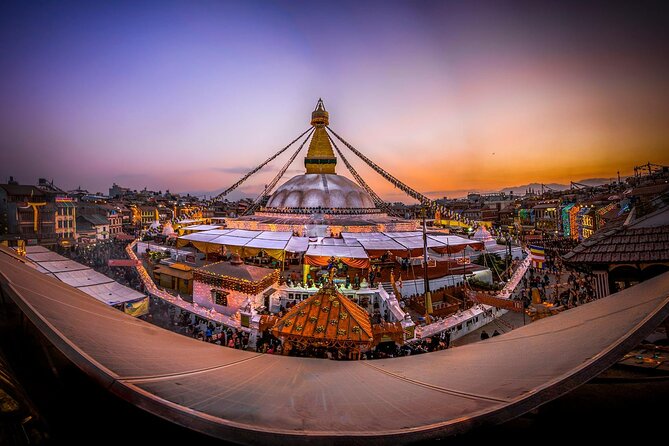
This approximately three-hour tour links Pashupatinath, one of the Kathmandu Valley’s most important Hindu temple complexes, with Boudhanath, a major center of Tibetan Buddhism. Its value lies less in ticking off famous sights than in giving you a guide who can explain what you are seeing, and why it matters to people who worship there.
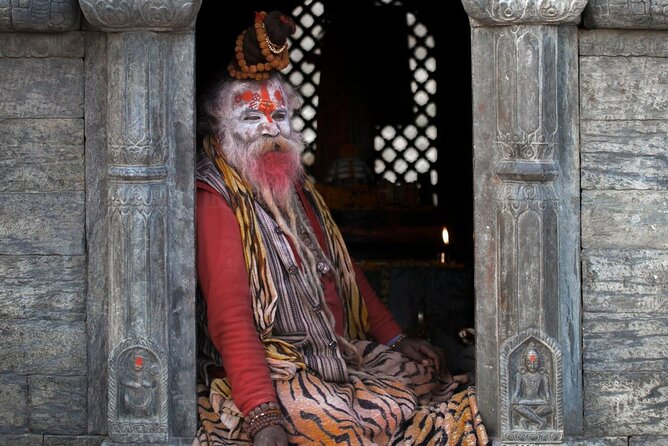
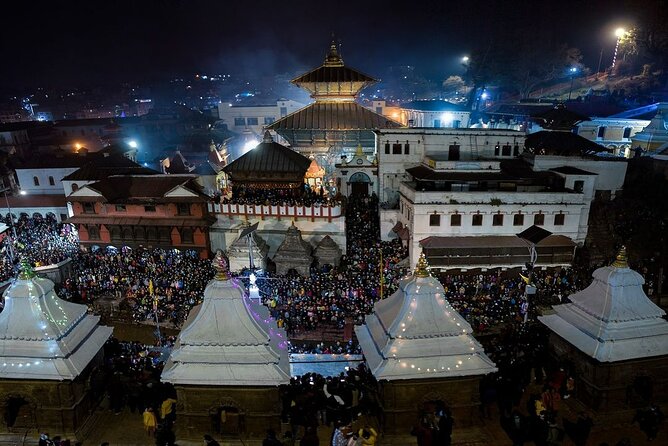
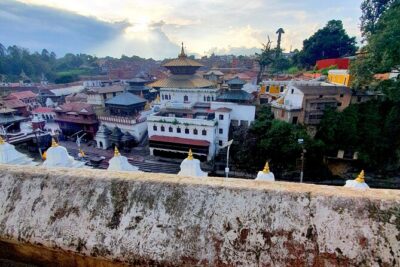
That context is especially useful at Pashupatinath. Non-Hindus cannot enter the main temple, so the visit focuses instead on the surrounding area and Aryaghat, where Hindu last rites take place. At Boudhanath, the guide turns attention to Buddhist teachings and the symbols around the stupa.
The tour is described as a small-group experience, with no more than five people. That is a meaningful limit for a subject full of questions: you can ask about a ceremony, a symbol, or a local custom without trying to be heard over a large crowd. The English-speaking guide is included in the $15 price.
At Pashupatinath, learning beside Aryaghat
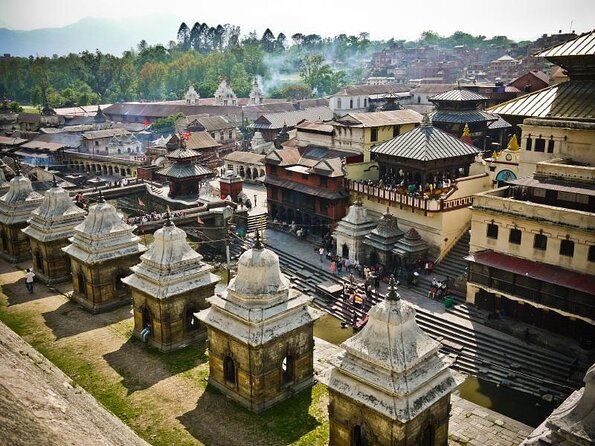
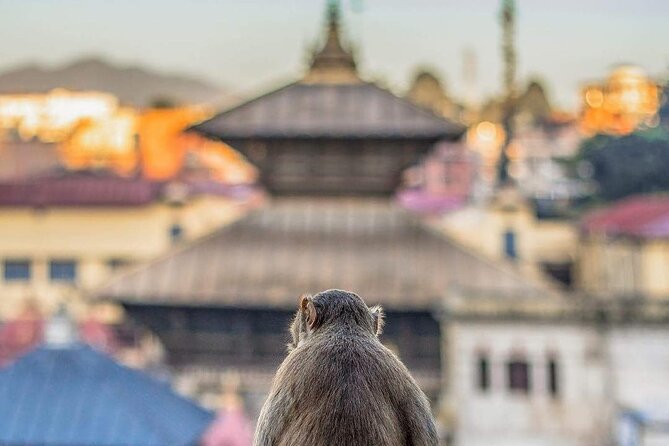
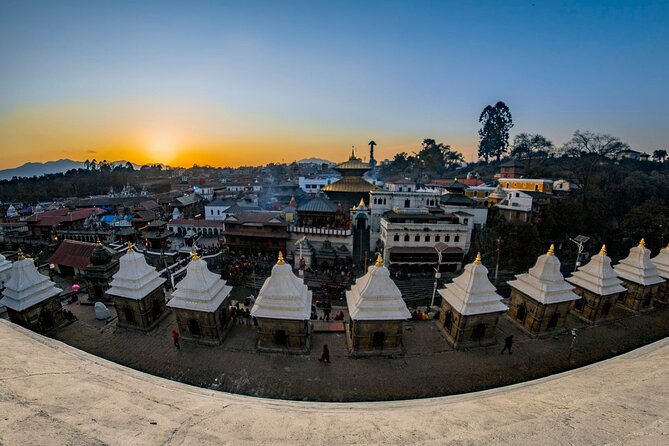
The first stop is Pashupatinath Temple, an important Hindu site and the oldest Hindu temple in the Kathmandu Valley, according to the tour information. You get about 15 minutes here, but the main temple is reserved for Hindus. The guide takes you toward Aryaghat rather than promising entry into the temple itself.
That distinction is worth knowing before you book. This is not a temple-interior visit. It is an introduction to the wider sacred complex and the religious practices that unfold around it. A guide can help make sense of what is happening while keeping the focus respectful.
The next stop, Aryaghat, lasts about 30 minutes. Here, the guide explains Hindu cremation rites and the Shodasha Samskaras, the 16 rites of passage in Hindu life. The subject is intimate and solemn. It is also a powerful way to understand how religious belief shapes a community’s approach to death and remembrance.
Treat this part of the tour with care. You are observing a place where families are carrying out real rites, not a staged demonstration. If you are uncomfortable around cremation or mourning, take that into account when deciding if the tour is right for you.
The guide’s role matters here. One of the tour’s praised guides, Santosh, is described as willing to answer a wide range of questions about religion, culture, and food. That broad perspective can help you understand the setting without reducing it to a spectacle. It is also a good moment to ask questions thoughtfully, rather than assume that one explanation covers every Hindu practice.
More Pashupatinath visits in Kathmandu:
- Kathmandu Spiritual Sites: Bodhnath & Pashupatinath Tour
★ 5.0 · 185 reviews - Kathmandu: Pashupatinath Temple Evening Aarati Tour
★ 5.0 · 36 reviews - Kathmandu: Pashupatinath Temple Aarti Night Tour
★ 4.8 · 29 reviews
Shiva stories, deer, and nearby shrines
After Aryaghat, the route allows about 15 minutes at Mrigasthali Deer Park. The guide tells the story of Lord Shiva’s journey to the area and explains how the place got its name. This stop offers a shift in tone after the cremation grounds, with local religious storytelling and time to explore the surroundings.
The itinerary then allows about 30 minutes at Gorakhnath Mandir, where the group can rest before continuing toward Boudhanath by way of Guhyeshwari Temple. The guide introduces the story of Guru Gorakhnath. These stops show that the tour is not just a two-site transfer: it connects the better-known landmarks with nearby places that carry their own religious associations.
Guhyeshwari Shaktipeeth is scheduled for about 20 minutes. Here, the guide tells the story of Satidevi and explains the idea of a Shaktipeeth. The route then continues to Boudhanath, with the journey between the temple and stupa listed as about 20 minutes.
The brief stops mean you should expect an overview, not a long visit at each shrine. If you already have a particular interest in one temple or story, tell the guide early. Santosh has been praised for adapting the schedule when someone asked to see the aarati ceremony, but a change will depend on timing and what can be accommodated. Ask before the tour rather than counting on a specific ceremony.
Boudhanath, where Buddhist symbols come into focus
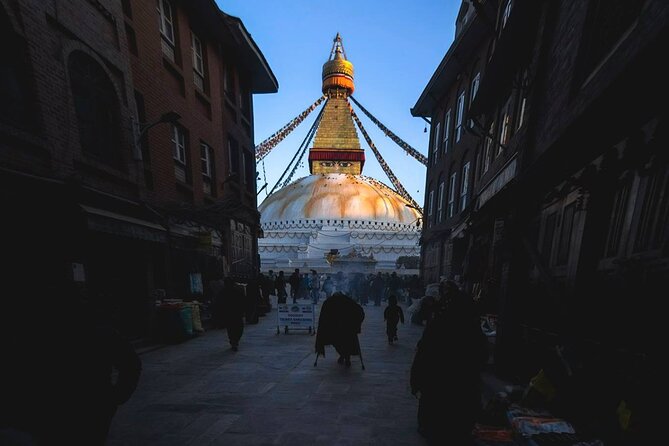
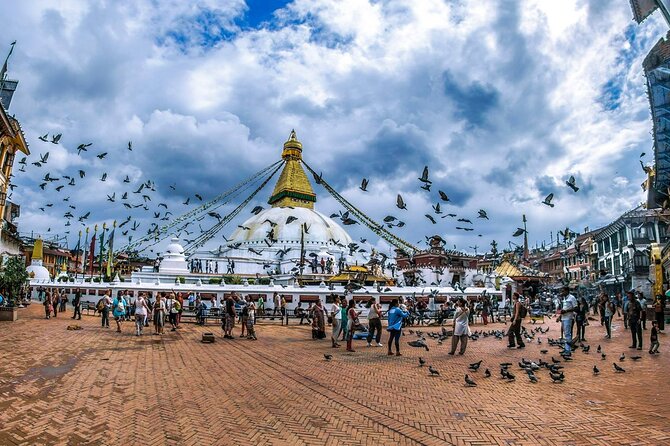
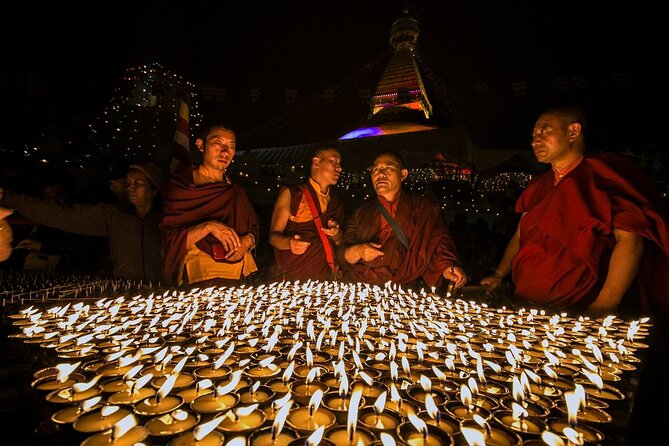
Boudhanath Stupa is the longest stop, at about 45 minutes. It is described as the world’s second-largest stupa of its kind and is closely associated with Tibetan, or Vajrayana, Buddhism. The guide covers prayer flags, the five elements, the Four Noble Truths, and the Eightfold Path.
These subjects can sound abstract in a book. Here, the guide can connect them to the place and the symbols around you. That is the core advantage of taking a guide at a religious site: you get a framework for noticing details and understanding their meaning, rather than simply passing through.
The short visit also has a limit. Forty-five minutes is enough for an introduction, but it is not a leisurely study of every aspect of the stupa and its surroundings. The tour ends at the Boudhanath Gate, so you can stay afterward and explore independently if you want more time. The tour does not include a return to your starting point.
Next comes Guru Lhakhang Monastery, with about 10 minutes to see a typical Buddhist monastery and hear about Guru Padmasambhava and Dharma Chakra Pariwartana. It is a quick look, but it adds a closer view of Buddhist practice beyond the stupa itself.
The final planned stop is a thangka center or school, where you spend about 15 minutes learning about thangka painting, mandalas, and the basics of healing bowls. Thangka is a detailed form of religious painting, and a brief introduction gives you a new way to read the sacred imagery you may have just seen. The tour then finishes at Boudhanath Gate.
A guide who leaves room for questions
The guide is the main reason this tour works as more than a route between landmarks. Santosh is the name most often connected with this experience, and one account spells it Santos. He is described as attentive, engaging, and ready to answer questions about religion, history, culture, and food. Another guide, Shreya, is praised for patient explanations and arranging visits around a person’s interests, though those comments refer to broader Kathmandu and Bhaktapur touring.
The useful point is not just that the guides know the subject. They are also described as flexible. One visitor asked to see the aarati ceremony, and Santosh adjusted the timing to make that possible. If a ceremony or particular topic matters to you, raise it early. The tour is only about three hours, so flexibility has limits.
The small group helps keep the conversation personal. With a maximum of five people, you are less likely to spend the visit listening to a long speech from the back of a crowd. The format suits curious visitors who like to ask questions, though anyone expecting a private, one-to-one guide should note that the tour can include other people.
More Boudhanath visits in Kathmandu:
- Sacred Pashupatinath: Aarati,Cremation Rites & Boudha Stupa
★ 5.0 · 18 reviews - Kathmandu City in One Day with Bodhnath Stupa
★ 5.0 · 10 reviews - Private Half-Day Tour of Boudhanath and Pashupatinath Temples in Kathmandu
★ 4.5 · 9 reviews - Bhaktapur Durbar Square and Boudhanath Stupa
★ 5.0 · 7 reviews
What the $15 price does and does not cover
The listed price is $15 per person, but the two main entrance fees are extra: NRP 1,000 at Pashupatinath, estimated at about $9, and NRP 400 at Boudhanath, estimated at about $4. That brings the stated total to about $28 per person, before any other personal spending. The site fees are paid in cash at the entrances, so arrive prepared.
For that total, the tour provides an English-speaking guide and a structured route through a wide range of religious places and subjects. I see the strongest value in the explanations and small-group format, rather than in the number of stops alone. If you visit these sites without a guide, you will still see them, but may miss the meaning behind the rites, stories, and Buddhist symbols.
Group discounts are listed, though the amount is not specified. The tour accepts mobile tickets, and confirmation is provided at booking. It starts at Gaushala Bus Stop on Ring Road and ends at Boudhanath Gate. Public transportation is nearby, and the tour information says most people can participate; service animals are allowed.
Who will get the most from this tour?
This is a good fit if you want a clear introduction to Hinduism and Buddhism in Nepal, and prefer explanations to a quick, unstructured visit. It also suits visitors who are comfortable encountering a cremation ground and want to learn about its religious context with care.
You may prefer to visit independently if you want a long, quiet stay at either site, or if you would rather avoid the subject of death rites. The schedule moves through eight stops in roughly three hours, so individual visits are necessarily brief. Boudhanath’s endpoint is convenient if you want to stay in the area afterward, but you will need to arrange your own onward journey.
The tour has a 4.8 rating from 18 ratings, with 100 percent recommending it. The most consistent strengths are the guide’s explanations, willingness to answer questions, and flexibility around a visitor’s interests. Those are valuable qualities on a tour where context matters as much as the sights.
Should you book it?
Book this tour if you want an informed, compact introduction to Pashupatinath and Boudhanath, especially if you have questions about Hindu rites, Buddhist beliefs, or local religious life. The small group and the guide’s ability to explain symbolism make the fee worthwhile for a first visit.
Think twice if the cremation ghats would be distressing, or if you want hours at each site rather than a guided overview. Budget about $28 per person for the listed price and entrance fees, carry cash for the admissions, and ask in advance if you hope to see a ceremony such as the aarati.
FAQ
How long is the tour?
It lasts about three hours. The schedule includes eight stops, with time ranging from about 10 to 45 minutes at each.
How many people can join?
The group has a maximum of five people.
What is included in the $15 price?
An English-speaking guide is included. The entrance fees for Pashupatinath and Boudhanath are not included.
How much are the entrance fees?
The stated fees are NRP 1,000, about US$9, for Pashupatinath and NRP 400, about US$4, for Boudhanath. They are paid in cash at the entrances.
Where does the tour start and end?
It starts at Gaushala Bus Stop on Ring Road and ends at Boudhanath Gate. You are free to explore around Boudhanath after the tour.
Can non-Hindus enter Pashupatinath’s main temple?
No. Only Hindus are allowed inside the main temple. The tour goes toward Aryaghat and the surrounding area.
Is the tour available in English?
Yes. An English-speaking guide is included.
Can I cancel for a refund?
You can cancel at least 24 hours before the start time for a full refund. Cancellations made less than 24 hours before the start time are not refunded.
Newly listed in Kathmandu
- Traditional Momo Making Class★ 5.0 · 10 reviews
- Walking tour of real Kathmandu through back streets.★ 5.0 · 3 reviews
- Kathmandu 2 Nights 3 Days Chitwan Jungle Safari Tour★ 5.0 · 9 reviews
- Visit Swayambhunath and Bauddhanath Stupa with Guide★ 5.0 · 5 reviews
- Walking tour of Kathmandu with awesome local guides★ 5.0 · 4 reviews
- Kathmandu Street Food Walking Tour – Eat Like a Local★ 5.0 · 3 reviews
- Private Manaslu Circuit Trek at Himalayas★ 5.0 · 3 reviews
- Kathmandu to Pokhara Vip Sofa Bus Ticket★ 4.0 · 4 reviews
Pashupatinath Tours, compared.
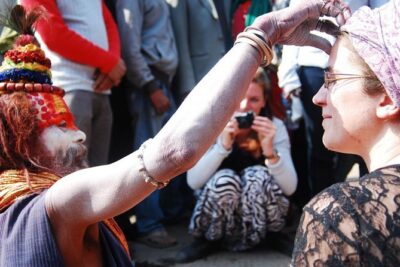
Kathmandu Spiritual Sites: Bodhnath & Pashupatinath Tour
Read our review →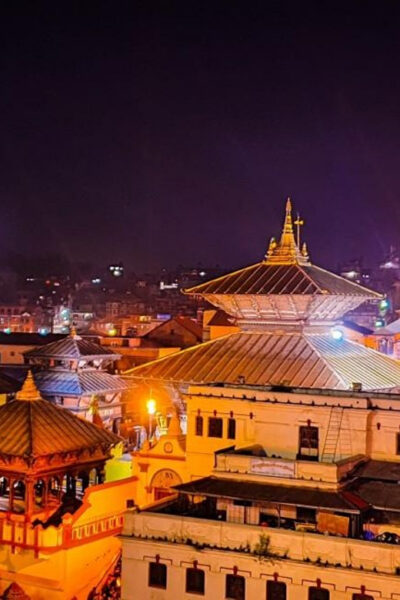
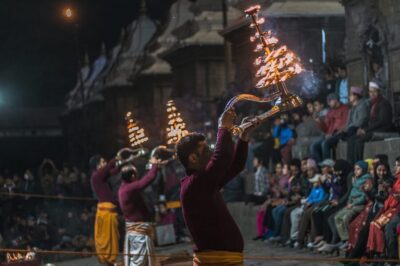
Pashupatinath Temple, Hindu Crematorium and Aarati in-depth Tour
Read our review →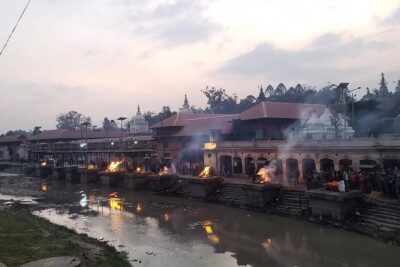
Pashupatinath Evening Aarati: Few Divinely Hours in Kathmandu
Read our review →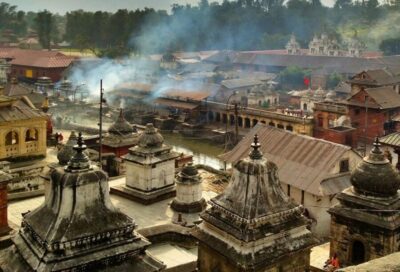
Sacred Pashupatinath: Aarati,Cremation Rites & Boudha Stupa
Read our review →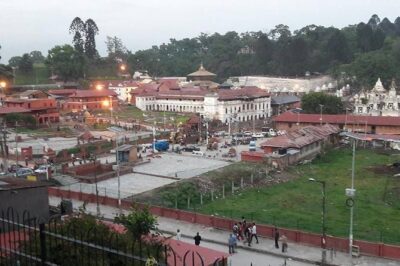
Private Half-Day Tour of Boudhanath and Pashupatinath Temples in Kathmandu
Read our review →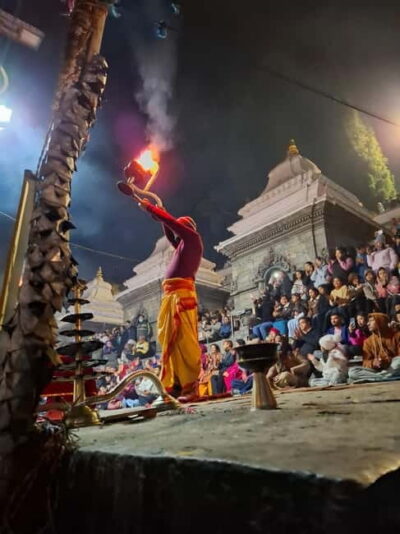
Katmandu: Pashupatinath Open Cremation & Evening Aarati
Read our review →Browse the lists this tour appears in