
Reviewed · PASHUPATINATH TOURS
Kathmandu: Pashupatinath Temple Evening Aarati Tour
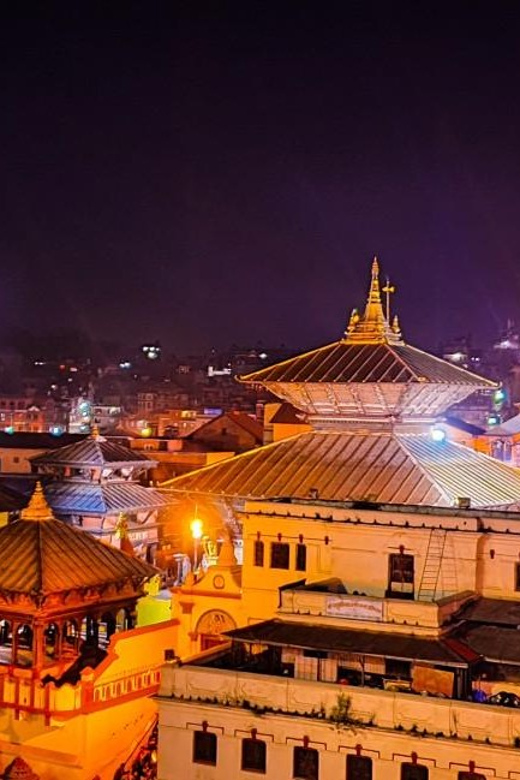
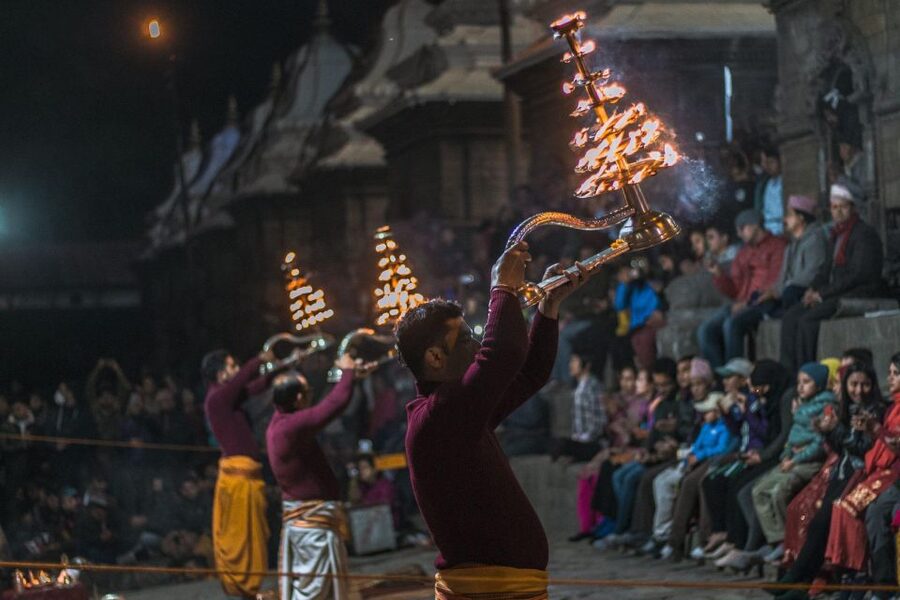
At Pashupatinath, the evening Aarati is not a show set apart from daily life. It is a Hindu prayer ceremony by the Bagmati River, with priests circling lamps, devotional songs, and a crowd gathered to take part. The riverbank setting gives the ritual its force: worship, music, and the flow of a sacred river meet in one place.
I like two things in particular: the guide can explain the meaning behind the prayers and temple customs, and hotel pickup saves you from sorting out transport at a busy time of day. Guides named Razz, Raz, and Shankar have been associated with the tour. One consideration: the NPR 1,000 entry fee is extra, and the riverbank can be crowded, especially on weekends and festival days.
Key points to know before you go
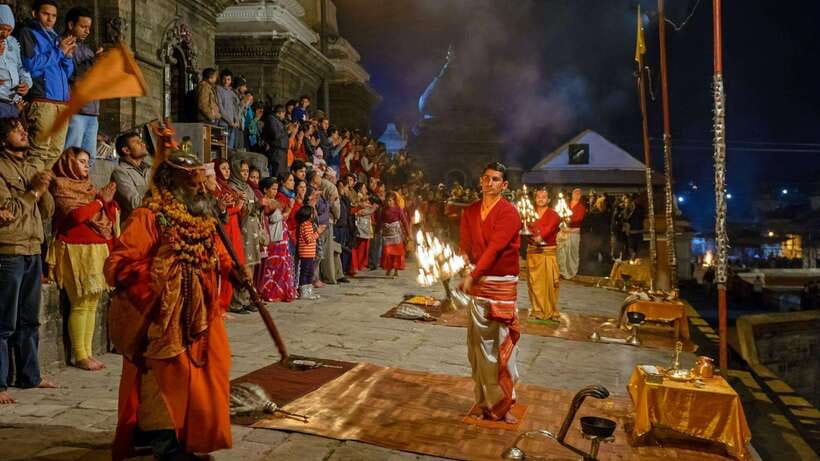
- The Aarati begins around 6:00 to 6:30 PM, with the exact time shifting by season.
- You can watch from the Bagmati River banks, even though non-Hindus cannot enter the main temple.
- The tour lasts three hours and includes hotel pickup and drop-off in a private, air-conditioned vehicle.
- Budget NPR 1,000 per person for monument entry, on top of the $22 tour price.
- Arrive ready for a solemn, sensory ritual: expect chanting and incense smoke, and dress with shoulders and knees covered.
- Use the guide for context, not shopping: if you consider buying rudraksha beads nearby, compare prices and make your own decision.
What the evening at Pashupatinath is really about
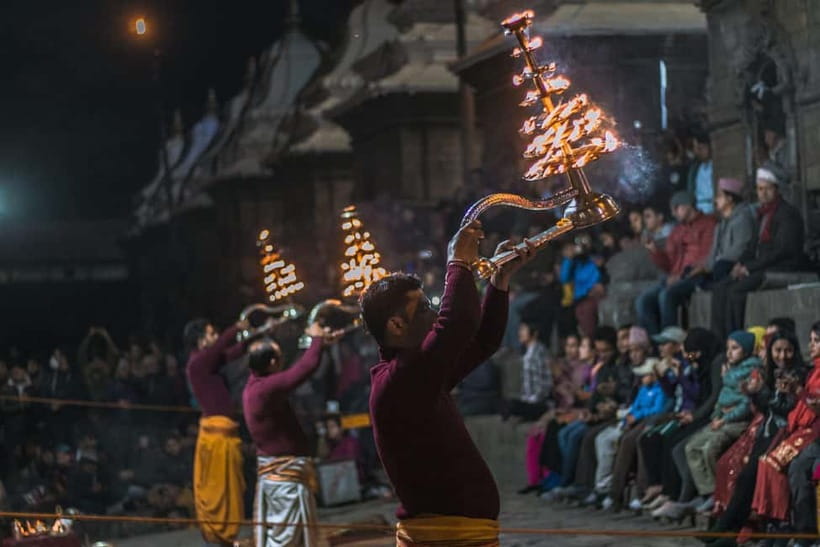
The Pashupati Bagmati Aarati is a Hindu worship ritual held beside the Bagmati River, which runs past the Pashupatinath Temple complex. Priests move oil lamps in circles as they chant sacred words. Devotees join in with bhajans, or religious songs, and the ceremony ends with prayers for the well-being of all souls and thanks to God.
Aarati is regarded in Hinduism as a high form of prayer. At Pashupatinath, it honors both the river and the temple, and the ceremony includes a devotional dance called Tandav, associated with Lord Shiva. That context makes the evening more than a pleasant spectacle. The flames and music are striking, but the ritual has meaning for the people gathered there, so it is best approached as an act of worship rather than a performance staged for visitors.
The Bagmati is considered holy, and Hindu belief holds that bathing in its waters washes away sins. You do not need to share that belief to understand why the river matters here. It helps explain why the ceremony happens on its banks and why the place carries such spiritual weight.
The evening Aarati began in 2000 and became a regular tradition in 2006. It draws large crowds, with especially busy days around Mondays, holidays, and festivals such as Maha Shivaratri and Haritalika Teej. If your visit falls on one of those dates, expect a fuller riverbank and plan to get there early.
More Pashupatinath visits in Kathmandu:
- Kathmandu Spiritual Sites: Bodhnath & Pashupatinath Tour
★ 5.0 · 185 reviews - Kathmandu: Pashupatinath Temple Evening Aarati Tour
★ 5.0 · 36 reviews - Kathmandu: Pashupatinath Temple Aarti Night Tour
★ 4.8 · 29 reviews
The three-hour visit, from hotel pickup to the riverbank
The tour begins with pickup from a hotel in central Kathmandu. The listed pickup areas include Boudhha, Thamel, and Kathmandu. A private, air-conditioned vehicle takes you to Pashupatinath and returns you to Kathmandu, Thamel, or Boudhha at the end. If your hotel is outside the city centre, an additional pickup charge may apply.
That transport is a useful part of the package. You avoid arranging a separate ride for the evening and can focus on the visit rather than the route. It is especially handy if you are staying in Thamel or Boudhha. The vehicle is private transportation, but the available details do not specify the size of your tour group, so ask the operator if that matters to you.
At Pashupatinath, you have time for a guided visit and sightseeing before the Aarati. Use that time to ask about Hindu deities, the temple’s traditions, the symbolism of the lamps, and the river’s role in worship. Guides named Razz, Raz, and Shankar are associated with the tour. Their reported strengths include explaining Hindu customs and, in some cases, relating them to Buddhism or the cremation rites in the wider temple area.
The broader temple grounds are also associated with cremation ceremonies. You may encounter these rites during your visit, but a particular viewing is not guaranteed. If you do, follow your guide’s directions and be discreet. This is a solemn religious setting, not a photo opportunity to chase.
The main event is the Aarati itself, usually starting around 6:00 to 6:30 PM, depending on the season. Your guide can help you understand what is happening as the priests circle the lamps and the chanting builds. One guide has been praised for finding a good place to sit on a busy Saturday evening, but you should not count on an open seat. Crowds gather along the riverbank, so arriving early is sensible.
The tour is listed as three hours, including the guided visit. The exact balance between travel, time around the temple, and waiting for the ceremony may vary. If you have a firm evening commitment afterward, leave some breathing room rather than assuming the outing will end at precisely the same time every day.
What the ceremony feels like from the riverbank
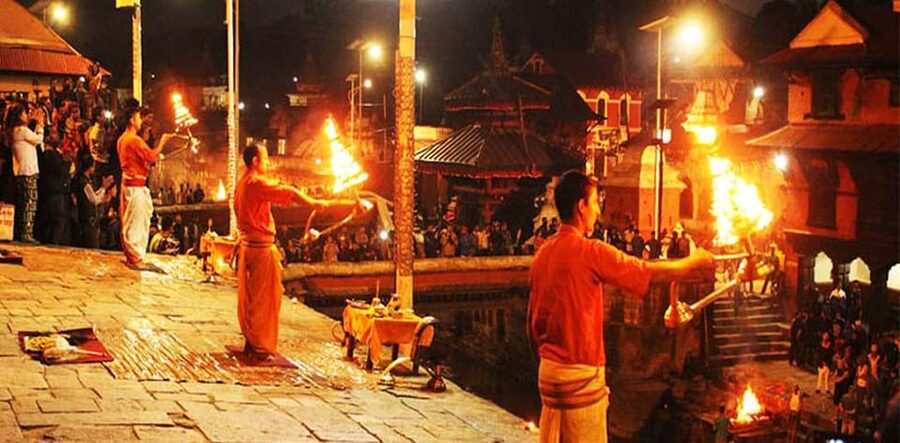
The atmosphere is built from simple elements: rows of people, lamps moving in measured circles, chanting, and bhajans. Incense smoke is part of the setting. If you are sensitive to smoke or prefer quiet, be prepared for a crowded, sensory experience rather than a calm, empty temple courtyard.
You do not need to know Hindu prayers to follow the ceremony. A guide can explain how the lamps express devotion and why the prayers turn toward the welfare of all souls. That explanation is one of the tour’s strongest practical benefits. Without it, you can still appreciate the light and sound, but you may miss what the ritual means to those taking part.
The crowd is part of the experience, but it also affects how comfortably you can watch. Weekends and festival periods can be packed. If you want a better chance of a clear view or a place to sit, go early and stay close to your guide. Avoid pushing forward once the ritual begins; a respectful place at the edge is better than disrupting worship.
Photography is generally allowed, but permission to take pictures is not a reason to photograph every moment. Keep your camera use discreet, especially around worshippers and any cremation activity. A few thoughtful images are more appropriate than treating the riverbank as a stage.
What the $22 price covers, and what it does not
At $22 per person, the price includes hotel pickup and drop-off, private air-conditioned transportation, an English-speaking guide, and taxes. Those inclusions make the tour useful if you value a planned ride and an interpreter who can explain customs as you go. The guided context is the main reason to book rather than simply arranging transport yourself.
The monument fee is not included. Set aside NPR 1,000 per person, payable on the day. That is a significant extra compared with the advertised tour price, so calculate the full cost before booking. Personal purchases, meals, and drinks are also excluded.
The tour advertises skip-the-ticket-line access, but that does not mean entry is free. You still need to pay the monument fee. If you are comparing options, check that any alternative also includes a guide and round-trip transport before judging it by price alone.
Shopping is not part of the stated tour inclusions. Rudraksha beads are sold in the area, but a purchase is entirely separate from the ceremony. If you decide to shop, take your time, compare prices, and do not feel obliged to buy because someone recommends a particular stall.
More evening plans in Kathmandu:
- Kathmandu Sunset Tour by Rickshaw Including Durbar Square Visit
★ 5.0 · 73 reviews - 3 night 4 Day Yoga & Ayurveda Retreat to Detox the Body & Mind, Nepal
★ 5.0 · 37 reviews - Pashupatinath Evening Aarati: Few Divinely Hours in Kathmandu
★ 4.5 · 23 reviews - 1 Night 2 Days Chitwan Jungle Safari Tour from Kathmandu
★ 3.5 · 19 reviews
Dress, access, and respectful viewing
Pashupatinath is a sacred Hindu site, so cover your shoulders and knees. Non-Hindus are not permitted inside the main temple. The Aarati, however, can be watched from the Bagmati River banks, which is where this tour’s main event takes place.
Keep expectations clear: the tour gives you access to the evening ritual and the surrounding temple area, not entry to every sacred space. That distinction matters if you are hoping to see the main temple interior. You can still learn about its significance from the guide and take part in the riverbank ceremony from the permitted viewing area.
The ceremony is open to people who want to observe, but it is rooted in Hindu devotion. A considerate visitor listens, follows local instructions, and gives worshippers room. The experience is at its best when you are curious without treating the ritual as a spectacle.
Who should book this Pashupatinath Aarati tour?
This outing suits you if you want a short, guided introduction to Kathmandu’s Hindu traditions and prefer having evening transport arranged. It is particularly helpful if you would like someone to explain the ritual, the temple, and the Bagmati’s religious role while you are there. The praise attached to guides such as Razz and Shankar points to the value of clear explanations, though guide assignments can vary.
It is also a good fit if you want to see a living religious ceremony rather than only visit a temple during the day. The Aarati offers a direct way to observe communal prayer, music, and ritual practice. If you are interested in the wider religious life of the site, ask your guide about cremation customs as well, while keeping in mind that specific access or viewing cannot be promised.
You may prefer to skip it if you dislike crowds, incense smoke, or the possibility of encountering cremation rites. It is also less attractive if you expected access to the main temple interior or assumed the $22 price included all admission costs. In those cases, the extra fee and access limits may change your calculation.
Booking tips and useful details
The tour offers free cancellation up to 24 hours in advance and a reserve-now, pay-later option. Its listed duration is three hours, and the available start times depend on the date. Confirm your pickup location when booking, particularly if you are staying beyond central Kathmandu, since an extra fee may apply.
If you have a choice of date, avoid a festival or busy weekend if you would rather have more room along the river. If those dates are your only option, ask your guide to arrive early and help you find a suitable viewing spot. Dress modestly, bring patience for the crowd, and keep your expectations focused on the riverbank ceremony rather than temple access.
Should you book it?
Book this tour if the Aarati is a priority and you want transport plus an English-speaking guide to make the evening easier to understand. The ceremony’s lamps, chants, and prayers offer a memorable window into Hindu devotional life, and a good explanation can add real value to the visit.
Skip it if you expect a quiet, private viewing or access inside the main temple. The tour is best for an open-minded observer who accepts the extra NPR 1,000 entry fee, respects the religious setting, and is comfortable sharing the riverbank with a crowd.
FAQ
What time does the evening Aarati start?
It usually starts around 6:00 to 6:30 PM. The timing may vary by season.
How long is the tour?
The tour lasts three hours.
Is hotel pickup included?
Yes. Pickup and drop-off by private, air-conditioned vehicle are included for hotels in central Kathmandu. An additional fee may apply for locations outside the city centre.
How much is the monument entry fee?
The fee is NPR 1,000 per person and is not included in the tour price.
Can non-Hindus enter the main temple?
No. Non-Hindus are not permitted inside the main temple, but they can watch the Aarati from the Bagmati River banks.
What should I wear?
Dress modestly and cover your shoulders and knees, as Pashupatinath is a sacred Hindu site.
Is photography allowed during the Aarati?
Photography is generally allowed. Take pictures respectfully and remain considerate during the rituals.
Newly listed in Kathmandu
- Traditional Momo Making Class★ 5.0 · 10 reviews
- Walking tour of real Kathmandu through back streets.★ 5.0 · 3 reviews
- Kathmandu 2 Nights 3 Days Chitwan Jungle Safari Tour★ 5.0 · 9 reviews
- Visit Swayambhunath and Bauddhanath Stupa with Guide★ 5.0 · 5 reviews
- Walking tour of Kathmandu with awesome local guides★ 5.0 · 4 reviews
- Kathmandu Street Food Walking Tour – Eat Like a Local★ 5.0 · 3 reviews
- Private Manaslu Circuit Trek at Himalayas★ 5.0 · 3 reviews
- Kathmandu to Pokhara Vip Sofa Bus Ticket★ 4.0 · 4 reviews
Pashupatinath Tours, compared.

Kathmandu Spiritual Sites: Bodhnath & Pashupatinath Tour
Read our review →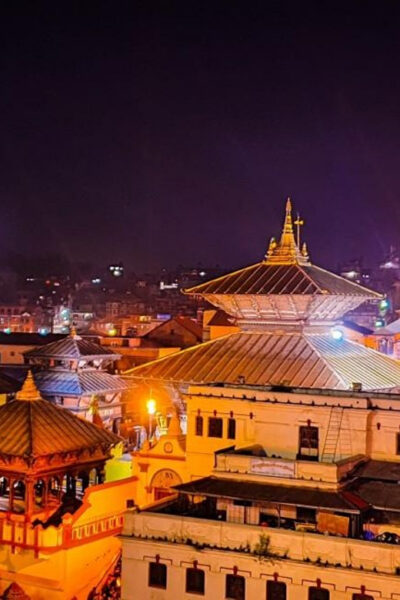
Pashupatinath Temple, Hindu Crematorium and Aarati in-depth Tour
Read our review →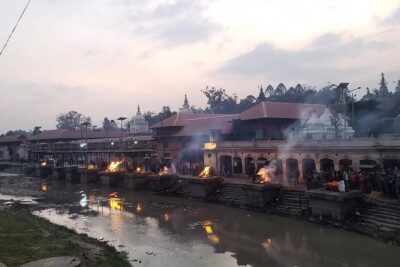
Pashupatinath Evening Aarati: Few Divinely Hours in Kathmandu
Read our review →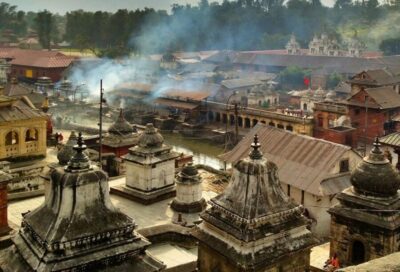
Sacred Pashupatinath: Aarati,Cremation Rites & Boudha Stupa
Read our review →
PashupatiNath and BoudhaNath – Private/Small Group
Read our review →
Private Half-Day Tour of Boudhanath and Pashupatinath Temples in Kathmandu
Read our review →Browse the lists this tour appears in