

Reviewed · PATAN TOURS
Folklore and Everyday Life in Ancient Patan
Patan’s best stories may be found away from its grand palace square, in the courtyards where shrines, monasteries, and ordinary neighborhood life share the same tight spaces. This two to two-and-a-half-hour walk follows those quieter lanes and connects local folklore with Newar Buddhist and Tantric Hindu practice.
I like that the route visits places such as Pimbahal and Nagbahal, where architecture and religious life are part of the same conversation. I also like that the guide explains how old customs continue to meet modern Nepali ambitions, rather than treating Patan as a place frozen in the past.
The main consideration is that Patan Durbar Square is not part of the tour. You finish at Swotha Square, a short walk from the palace complex, so plan extra time and money if you want to see the square and its museum afterward.
- Pimbahal’s courtyard setting introduces how traditional Patan neighborhoods connect spiritual practice with everyday life.
- Nyakhachowk’s lanes and shrines bring you close to falchaa resting areas, ancestral shrines, and vernacular houses.
- Nagbahal’s scale and art provide a chance to discuss how long-distance cultural exchange shaped religious imagery.
- A small group of no more than 10 makes it easier to ask questions and keep the focus on local details.
- The walk ends at Swotha Square, near Patan Durbar Square, but does not include entry to the palace complex or museum.
Patan’s quieter streets tell a different story
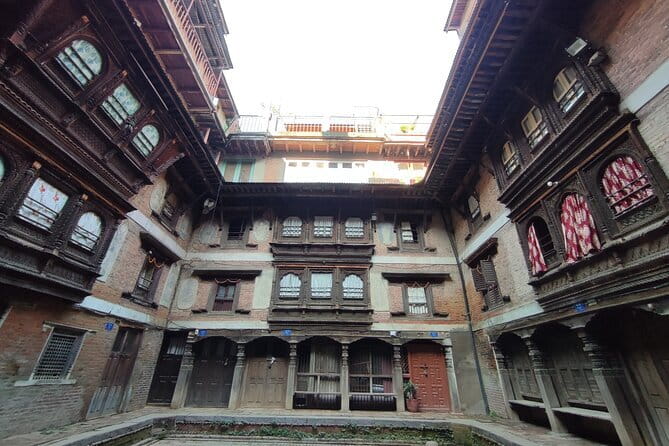
Patan is often associated with its grand temples and palace square, but this walk takes a different approach. Starting at Patan Dhoka, you head into old-town streets and courtyards that show how the city works at a neighborhood scale. Instead of simply looking at buildings, you explore the links between a settlement’s layout, its religious traditions, and the people who still use these spaces.
That emphasis matters. A courtyard is not just a picturesque pause between lanes. In Patan, traditional courtyards can hold monasteries, shrines, and shared spaces that reflect the beliefs and customs of the Newar community. The guide’s job is to help you notice those connections and understand how they fit into everyday life.
The walk also considers how Kathmandu Valley society changes over time. You hear about traditions passed down through generations alongside the goals and values of younger Nepalis. That mix gives the tour more substance than a route built only around photo stops.
Pimbahal: a courtyard shaped by belief
The first main stop is Pimbahal, a Newar Buddhist monastery reached through traditional courtyards. Here, the guide discusses how old urban settlements embody spiritual practice and local knowledge. It’s a useful place to begin because the buildings and spaces help explain how faith belongs to the structure of the neighborhood, not only to a separate temple or formal ceremony.
You’ll have about 30 minutes at this stop. That gives the guide time to put the surroundings in context and gives you a chance to look closely at the setting. The tour details also describe a highly respected, ornately decorated Buddhist monastery associated with more than 4,000 ordained monks in its monastic order. The emphasis is on the monastery’s place in Buddhist life and on details such as its woodwork and metalwork.
Pimbahal is likely to appeal most if you enjoy understanding how a place is used, not only how old it is. The focus is on tradition and community, rather than a long lecture on dates or rulers. If you are hoping for a detailed architectural survey, keep in mind that the tour covers several stops in a relatively short time.
More Patan tours in Kathmandu:
- Bhaktapur & Patan Durbar Square Day Tours
★ 5.0 · 122 reviews - Kathmandu: Private Patan and Bhaktapur Sightseeing Tour
★ 4.7 · 64 reviews - Patan and Bhaktapur City Full Day Tour
★ 5.0 · 24 reviews
Nyakhachowk: small details along a cozy path
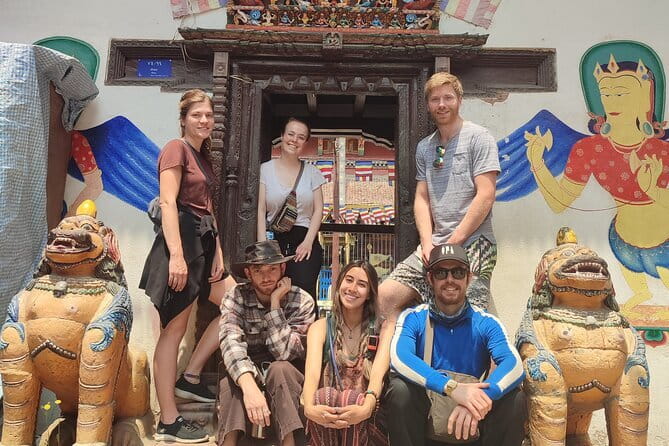
From Pimbahal, the route follows a compact lane to Nyakhachowk. Along the way, you look for traditional architectural features, including falchaa, or resting areas, ancestral shrines, and vernacular houses. These details can be easy to pass without context, especially in a town where striking temples naturally draw the eye.
Nyakhachowk is another courtyard, with a monastery among its features. The stop lasts about 30 minutes, matching Pimbahal for time and making it one of the tour’s central visits. Expect the guide to connect the physical layout and objects you see with the way religious customs are practiced and remembered.
This part of the walk is a good fit for curious observers. You don’t need specialist knowledge of Buddhism or Hinduism, but you’ll get more from it if you’re willing to ask questions and look beyond the main shrine. The lanes are narrow, and the charm lies partly in seeing how tightly the buildings and shared spaces fit together. It is not a grand, wide-open monument visit.
Nagbahal: art with a wider history
Nagbahal is one of the largest courtyards in old Patan. The stop is shorter, around 15 minutes, but it opens up a broader topic: how contact between cultures shaped traditional art. The guide points to Greek and Hellenistic impressions in Buddhist and Hindu imagery, a reminder that artistic traditions can travel far and take on local meaning.
That is a distinctive angle for a short walking tour. Rather than treating Patan’s religious art as isolated or unchanged, the discussion connects it to older exchanges across regions. You may come away looking at familiar figures and ornament with a sharper eye for outside influences and local interpretation.
Because the visit is brief, this is more an introduction than a full art-history lesson. If this subject interests you, use the stop to ask what particular motifs or images to look for. The tour promises context for the art, but the schedule does not suggest long time for close study at each site.
Swotha Square: a natural stopping point, not the palace tour
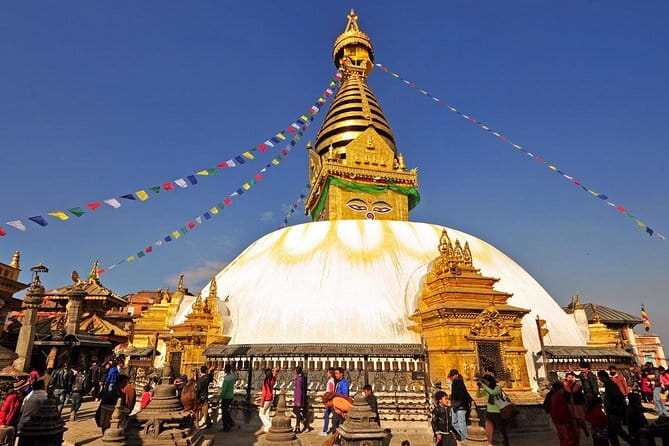
The walk ends at Swotha Square, a pleasant area with temples, shrines, and tea shops. It’s a fitting finish after the quieter courtyards: you can pause, take in the square, and decide whether to continue sightseeing or stop for tea.
Patan Durbar Square is only a couple of minutes away on foot, but it is not included in the guided walk. That separation is deliberate. The tour’s purpose is to explore the old town around the main square and offer a more local view, rather than spend the allotted time at the city’s best-known complex.
If you want to visit the palace area, allow extra time after the tour. The museum inside the old palace is recommended, and both the square and museum require separate admission fees. This is useful to know before booking: the $65 tour price covers the guided walk, not a full Patan sightseeing day.
More Kathmandu tours in Kathmandu:
- Everest Base Camp Trek – 14 Days
★ 5.0 · 1,499 reviews - Private Kathmandu Sightseeing Tour | UNESCO World Heritage sites
★ 5.0 · 756 reviews - Everest Base Camp Helicopter Tour landing at Everest View Hotel
★ 5.0 · 668 reviews - Half day cooking class in Thamel kathmandu
★ 5.0 · 607 reviews
What the guide adds to the walk
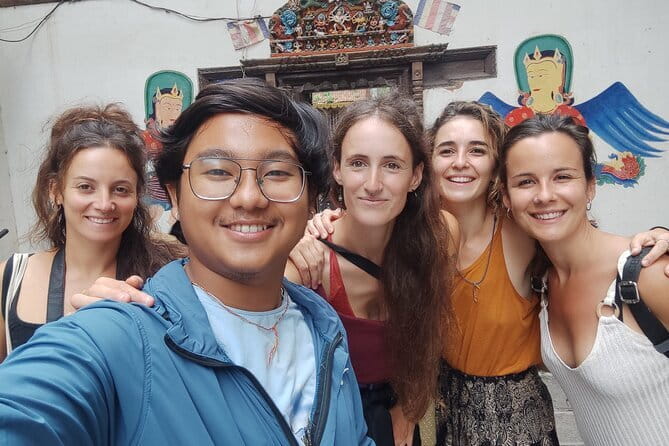
The route’s value depends heavily on interpretation. Narrow lanes and courtyards can be beautiful on their own, but a guide can explain why a shrine sits where it does, what a monastery means to the neighborhood, and how Newar Buddhist and Tantric Hindu beliefs shape local life.
Sandip is named as a guide associated with the experience, and Pinhua is also named. Descriptions of the walk emphasize an easygoing approach, a sense of humor, and explanations that cover local traditions, folklore, Hinduism, and Buddhism. Confirm who will lead your particular date, since the named guides may not both be present each time.
I’d come ready to ask questions. The tour is designed for anyone curious about Nepali society, not only for people already familiar with religious history. A small group, capped at 10, should help keep the conversation personal and make it easier to hear the guide in the narrow streets.
Is $65 good value for two hours?
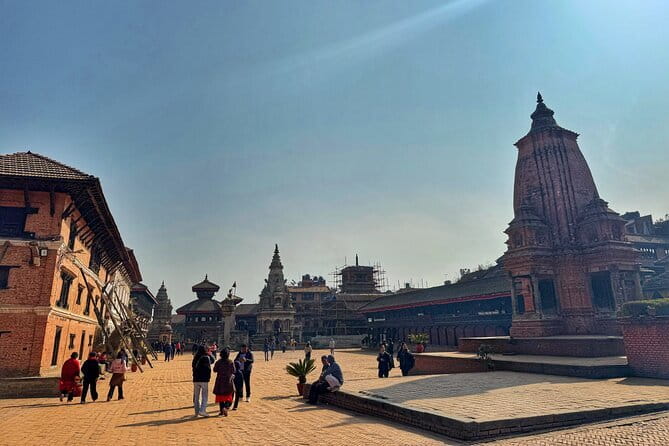
At $65, this is not the cheapest way to walk around Patan. You are paying for a guided, small-group introduction to places you might not find or understand as easily on your own. The strongest value is the explanation: the tour connects courtyards, monasteries, local folklore, and present-day traditions within a compact route.
It helps to think of the price as paying for interpretation rather than admission or transport. The experienced local guide is included, but pickup and drop-off are not. The stops listed are free to enter, and the palace square and museum are separate visits with extra admission fees.
The short duration is both an advantage and a limit. Two to two-and-a-half hours fits well into a day of sightseeing and leaves the rest of your schedule open. At the same time, the walk covers several subjects and stops, so it offers an introduction rather than exhaustive coverage. If you want only a quick look at the main palace square, this is not the right tour. If you want to understand the old town beyond its most famous monuments, the guided format is easier to justify.
Timing, group size, and practical planning
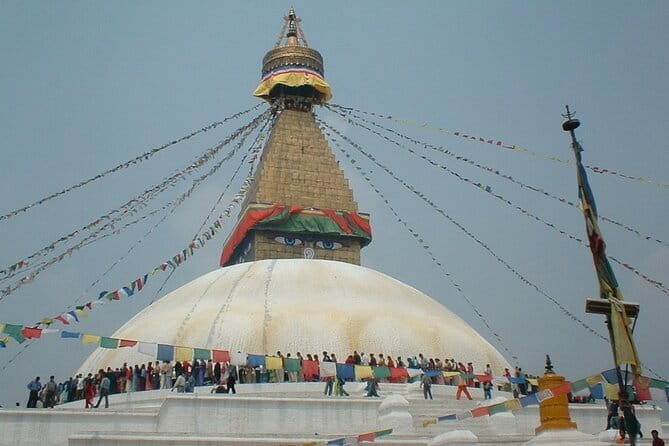
The tour starts at 10:00 am at Patan Dhoka, on Patandhoka Road in Lalitpur, and ends at Swotha Square. Since pickup and drop-off are not included, arrange your own way to the meeting point and onward plans. The end point is convenient if you want to walk to Patan Durbar Square afterward.
The group is limited to 10 people, and most people can participate. Service animals are allowed, and the meeting area is near public transportation. The tour requires good weather; if poor weather forces a cancellation, you can choose a different date or receive a full refund.
You receive confirmation at booking, and the ticket is mobile. You can cancel for a full refund up to 24 hours before the start time. Changes or cancellations inside that 24-hour window are not accepted for a refund, so check your plans before the deadline.
Who should book this Patan walk?

This is a strong choice if you want more than a checklist of temples. It suits visitors curious about Newar society, Buddhist and Hindu practice, folklore, traditional architecture, and how old customs continue to matter in contemporary Nepal. It also works well for anyone who prefers small lanes and courtyards to a tour focused entirely on landmark monuments.
You may want to skip it if your main goal is a guided visit inside Patan Durbar Square. The square and museum are separate, and the tour intentionally spends its time elsewhere. Likewise, if you want a long, specialist-level lesson on a single monastery or art form, this compact walk may move too quickly.
I’d book it if you have a couple of hours to spare and want a local guide to make Patan’s less obvious spaces legible. Pair it with an independent visit to Durbar Square afterward, and you’ll get two different views of the city: the grand public face and the neighborhood life around it.
FAQ
How long does the tour last?
The walk lasts about two to two-and-a-half hours.
Where does the tour start?
It starts at Patan Dhoka, on Patandhoka Road in Lalitpur.
What time does the tour begin?
The scheduled start time is 10:00 am.
Where does the tour end?
It ends at Swotha Square, a couple of minutes’ walk from Patan Durbar Square.
Is Patan Durbar Square included?
No. The guided tour explores the old town around the main square. You can visit Durbar Square independently afterward, with separate admission fees.
What is included in the price?
An experienced local guide is included. Pickup and drop-off are not included.
How many people can join?
The tour has a maximum group size of 10.
Is the tour suitable for most people?
Yes. Most people can participate, and service animals are allowed.
What happens if bad weather cancels the tour?
You will be offered another date or a full refund.
Can I cancel for a refund?
Yes. You can cancel at least 24 hours before the start time for a full refund. Cancellations or changes made less than 24 hours before the start time are not accepted for a refund.
Newly listed in Kathmandu
- Traditional Momo Making Class★ 5.0 · 10 reviews
- Walking tour of real Kathmandu through back streets.★ 5.0 · 3 reviews
- Kathmandu 2 Nights 3 Days Chitwan Jungle Safari Tour★ 5.0 · 9 reviews
- Visit Swayambhunath and Bauddhanath Stupa with Guide★ 5.0 · 5 reviews
- Walking tour of Kathmandu with awesome local guides★ 5.0 · 4 reviews
- Kathmandu Street Food Walking Tour – Eat Like a Local★ 5.0 · 3 reviews
- Private Manaslu Circuit Trek at Himalayas★ 5.0 · 3 reviews
- Kathmandu to Pokhara Vip Sofa Bus Ticket★ 4.0 · 4 reviews
Patan Tours, compared.
Kathmandu and Patan Heritage and Living Goddess Experience Tour
Read our review →
Patan & Bhaktapur Durbar Square Tour with Lunch – Private/Group
Read our review →
Nagarkot Sunrise, Bhaktapur and Patan Durbar Square Tour in Kathmandu
Read our review →Browse the lists this tour appears in