
Reviewed · KATHMANDU TOURS
Pick 2-Wonders of Kathmandu: A 3-Hour Heritage Hop
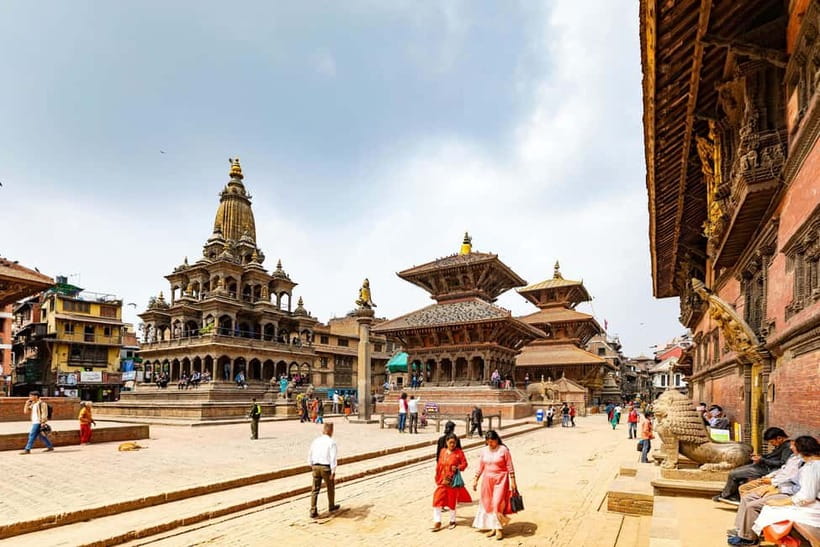
Kathmandu’s heritage sites make more sense when someone can explain what you are seeing. This private three-hour tour lets you choose two, from the old royal squares to Pashupatinath’s riverside rituals, with a guide to connect the architecture, religious customs and local stories.
I like the freedom to pick a pair of sites that suits your interests, and I like that hotel pickup in a private, air-conditioned vehicle saves time between them. Guides such as Nilakantha Acharya have been praised for patient explanations and for adjusting the pace to match your questions.
The main consideration is the clock: three hours is a brisk visit, not a full survey of Kathmandu. Entrance fees are not included, and a chance to see the Kumari or a cremation ritual is not a promise that either will happen during your visit.
At a glance
- Choose two of six heritage sites: Kathmandu, Patan and Bhaktapur Durbar Squares, Swayambhunath, Pashupatinath and Boudhanath.
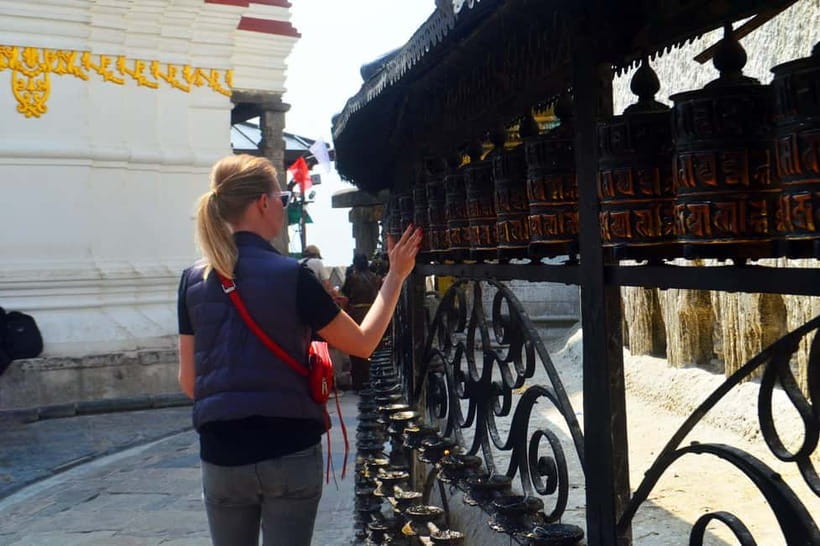
- Option 1 pairs Kathmandu Durbar Square with Swayambhunath, known as the Monkey Temple, for royal architecture, religious imagery and hilltop views.
- Option 2 joins Pashupatinath and Boudhanath, a Hindu temple complex and a major Buddhist stupa.
- Option 3 visits Patan and Kathmandu Durbar Squares, with a focus on Newari architecture and royal history.
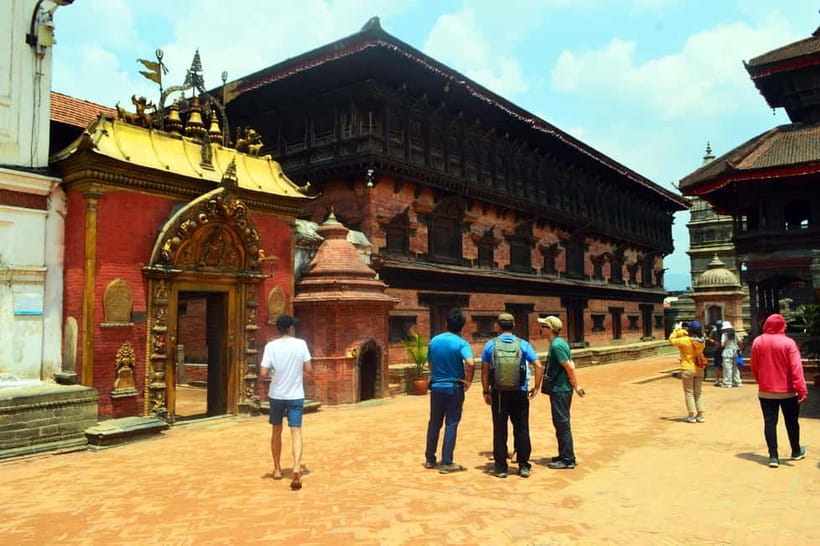
- Option 4 centers on Bhaktapur, including its large Durbar Square and five-tiered Nyatapola Temple.
- The tour is private and lasts three hours, including hotel pickup and return to Thamel; entrance fees and meals are extra.
Two sites, three hours, one useful choice
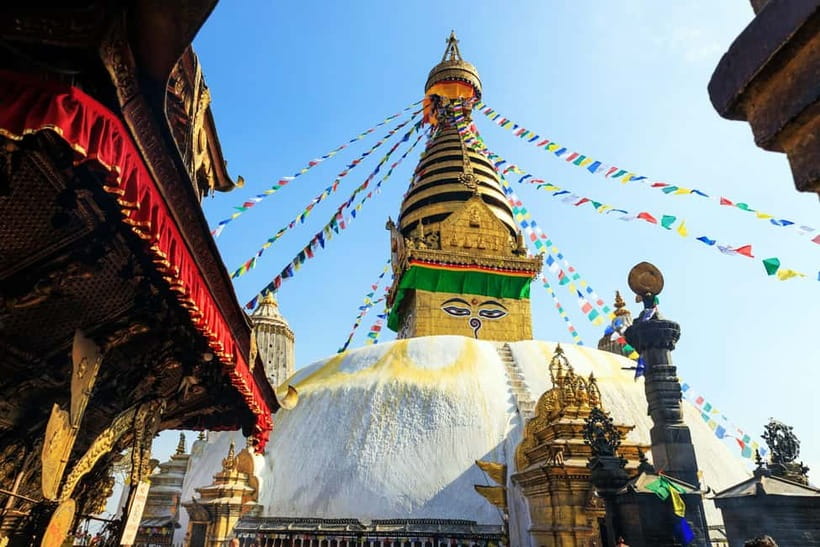
This tour is built around a simple idea: see two important places well enough to understand them, rather than race through a longer checklist. You choose one of four pairings, and a guide leads the visit while a private, air-conditioned vehicle handles the transfers.
That format suits a short stay, a first day in Kathmandu or a traveler who wants an introduction before exploring more on their own. It also gives you room to ask questions. Nilakantha Acharya, a guide repeatedly praised for clear explanations and patience, has tailored visits to the interests and pace of the people in his group.
Three hours is still a tight window. The exact time at each site is not specified, and traffic or the distance between your chosen stops can affect how much time you have to look around. If you want to linger over every carved window or spend a long time at a temple, treat this as an introduction rather than an exhaustive tour.
The pickup and drop-off are in Thamel, and you are asked to wait in your hotel lobby or at your apartment entrance five to ten minutes before pickup. This small bit of planning helps the short schedule start smoothly.
More ways to spend a day in Kathmandu
- Everest Base Camp: 3 Hour Helicopter Sightseeing Tour
★ 4.4 · 17 reviews - 3 Hours Night Pashupatinath Aarati Tour
★ 4.5 · 4 reviews - Private 3-Hour Nagarkot Sunset Tour from Kathmandu
★ 3.5 · 3 reviews
Option 1: Kathmandu Durbar Square and Swayambhunath
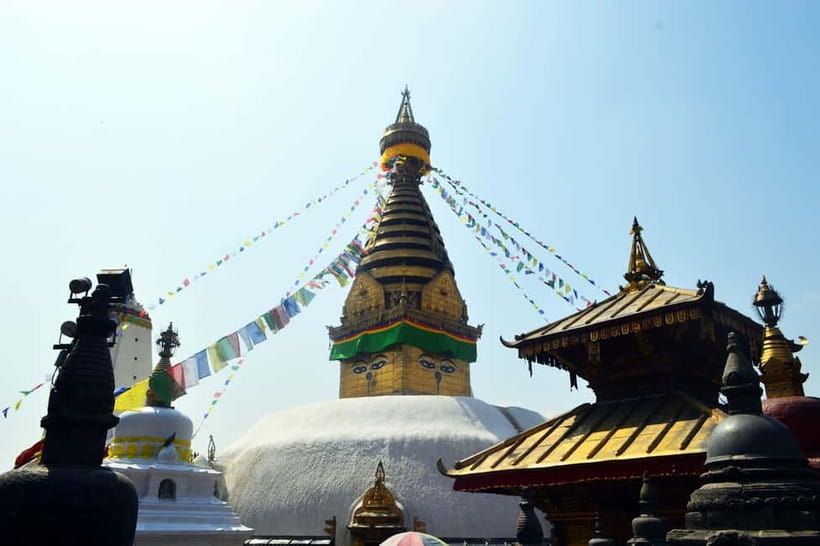
Kathmandu Durbar Square is the historic heart of the old city, a complex of palaces and temples associated with the Malla and Shah dynasties. The nine-storied Nautale Durbar is among the landmarks named for this visit. Here, the guide can help you read the square as more than a collection of old buildings, explaining its royal past and the traditions still connected to it.
The Kumari, revered as a living goddess, resides in a temple in the square. Seeing her is a rare possibility, not something to count on at a particular time. Even without a sighting, the tradition offers a distinctive window into Kathmandu Valley culture, and your guide can explain its place in local religious life.
Swayambhunath sits on a hilltop and is known as the Monkey Temple. Its Mahachaitya stupa and the monkeys around the site give the visit a different character from the formal courtyards below. The reward is a reported 360-degree view over Kathmandu Valley, a useful way to orient yourself after seeing the dense old city at ground level.
This is the strongest pairing if you want a broad first impression: royal architecture, Hindu and Buddhist traditions, and an elevated view. The climb to a hilltop site may not suit everyone, and the tour is not suitable for wheelchair users.
Option 2: Pashupatinath and Boudhanath
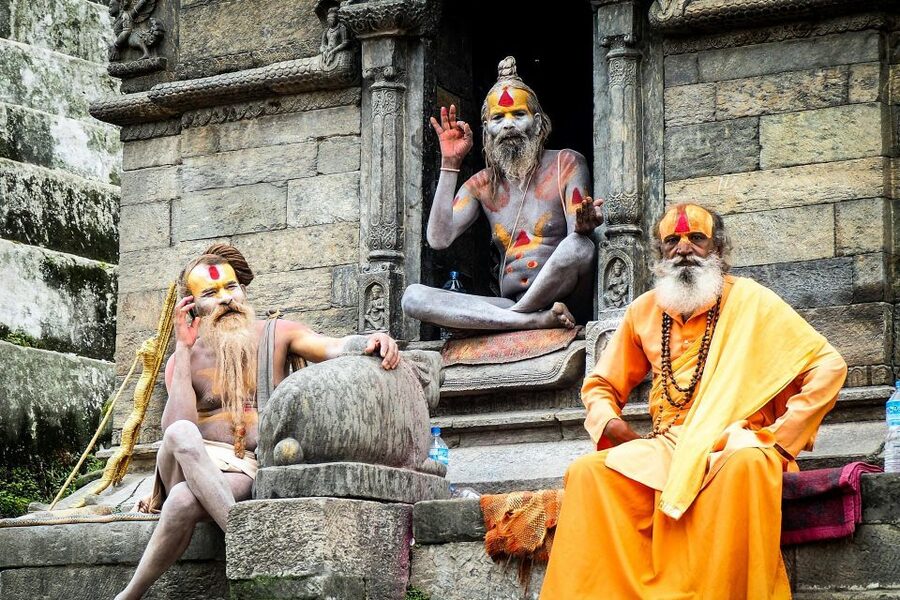
Pashupatinath is one of Hinduism’s holiest sites and is dedicated to Lord Shiva. Set beside the sacred Bagmati River, the complex is a place of worship and ritual, not simply an architectural stop. Depending on what is taking place during your visit, you may see traditional cremation rites along the riverbanks.
This can be a powerful and sensitive part of the tour. A guide can explain the rituals and symbols so you are better prepared to observe respectfully. A festival day can add more activity and ceremony, but dates and events are not guaranteed, so it is best to approach the stop with curiosity rather than a fixed expectation.
Boudhanath offers a striking contrast. This large Buddhist stupa is described as Nepal’s largest mandala and was once an important stop on the trade route to Tibet. Its scale and calm atmosphere make it a natural place to pause after the intensity of Pashupatinath.
I would choose this pairing if religious life is your priority. It brings two major traditions into one short visit and gives you a guide’s help with meaning that might not be obvious at first glance. One practical note: both sites can hold much more than a quick visit, so you will need to accept a sampler rather than an unhurried exploration.
Option 3: Patan and Kathmandu Durbar Squares
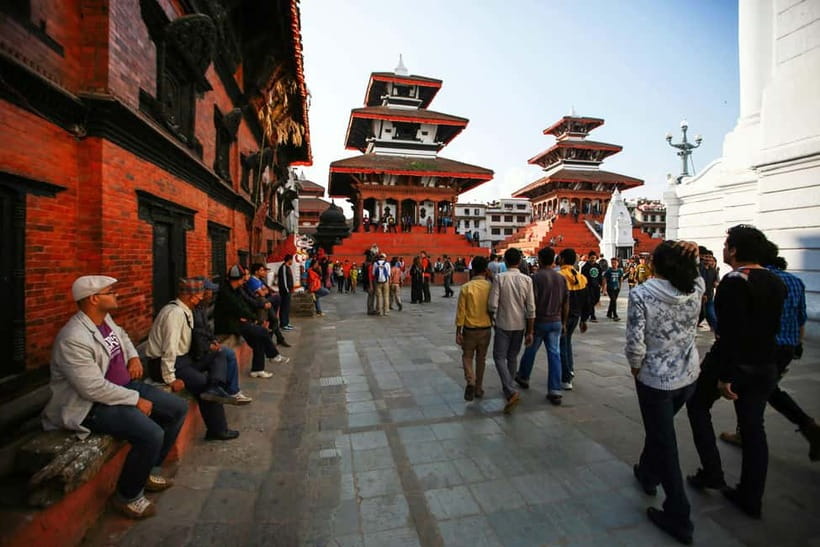
Patan Durbar Square lies in Lalitpur and is known for its Newari architecture, temples, statues and red-brick paving. The medieval royal palace anchors the square, while the surrounding buildings give you plenty to notice in a compact area. A guide can help point out how architectural details and religious images contribute to the character of the place.
Pairing Patan with Kathmandu Durbar Square gives the tour a clear focus: royal squares and the craft traditions associated with them. The two sites are not interchangeable, even though both preserve palace and temple architecture. Visiting both lets you compare their distinct settings and details, while a guide can place each within Kathmandu Valley’s past.
This option is best for people drawn to buildings, sculpture and urban history. It is less varied in subject than the pairing of Pashupatinath and Boudhanath, but that focus can be an advantage if you would rather spend your limited time looking closely at architecture than shifting between very different kinds of sites.
More Kathmandu tours in Kathmandu:
- Everest Base Camp Trek – 14 Days
★ 5.0 · 1,499 reviews - Private Kathmandu Sightseeing Tour | UNESCO World Heritage sites
★ 5.0 · 756 reviews - Everest Base Camp Helicopter Tour landing at Everest View Hotel
★ 5.0 · 668 reviews - Half day cooking class in Thamel kathmandu
★ 5.0 · 607 reviews
Option 4: Bhaktapur’s old squares and Nyatapola Temple
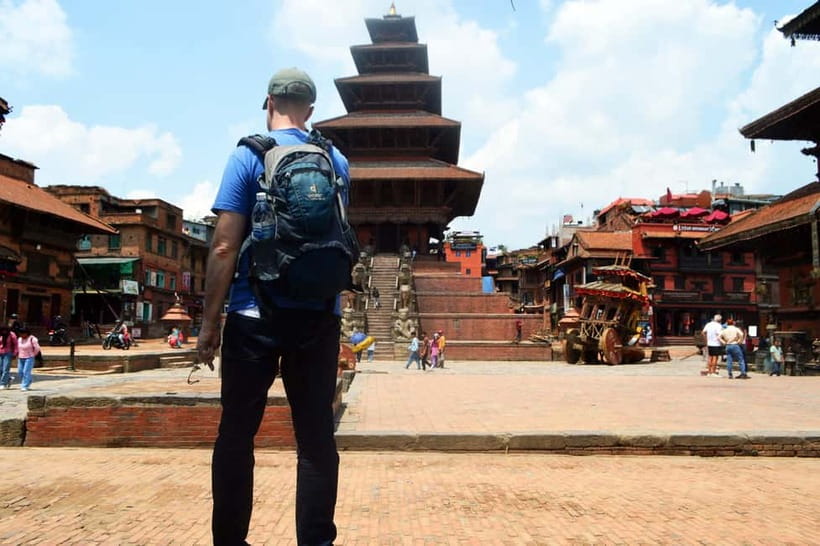
Bhaktapur is described as Nepal’s smallest district, yet its Durbar Square is the country’s largest. The square includes four smaller squares, giving the old city a broad historic center to explore. Its best-known landmark is Nyatapola Temple, a five-storied structure and Nepal’s tallest temple.
This is the option for a concentrated visit to an ancient city and its architecture. The scale of the square and the temple make it a strong choice if you want a memorable visual stop, while the guide can add context to what you see. But the tour description identifies only Bhaktapur as the destination for this option, so confirm how the two-site format applies when you book. The short duration also means you should not expect to cover every corner of the city.
A guide makes the short visit count
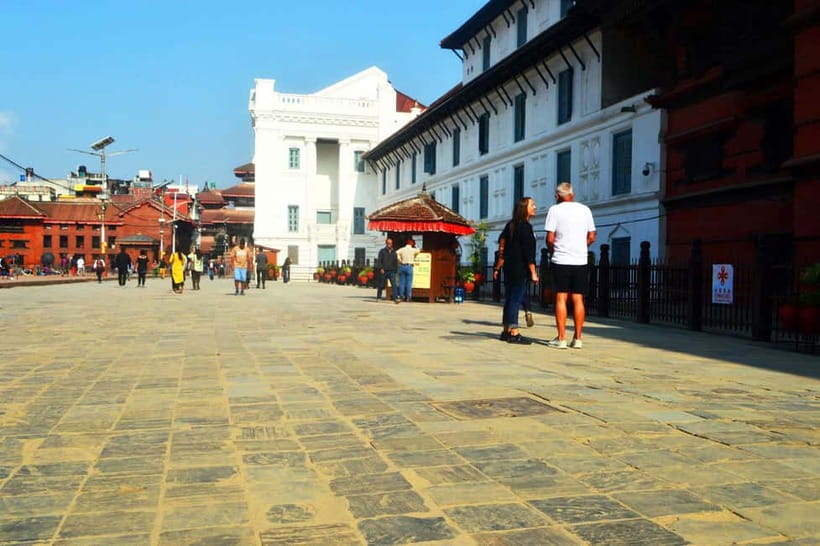
The guide is central to the value here. The strongest feedback about the tour focuses on clear explanations, patience with questions and a willingness to set the pace around what interests you. Nilakantha Acharya is the guide most often named, while Prakash is also mentioned positively. English and Hindi are the listed tour languages.
That flexibility matters in places where a palace courtyard, stupa or ritual can mean different things depending on what you already know. On a visit to Pashupatinath during a festival, for instance, a guide explained the symbols and activity taking place. At the squares, guides have helped visitors understand the monuments and their history rather than simply move between photo stops.
The group is private, so you are not joining a large mixed party with a fixed set of interests. That does not guarantee unlimited time at every site, since the tour still lasts three hours, but it gives you a better chance to ask follow-up questions and slow down when something catches your attention. One guide has even arranged a rooftop coffee stop when a visitor was feeling jet-lagged; treat that as a thoughtful individual gesture, not a scheduled part of the tour.
What the price does and does not cover
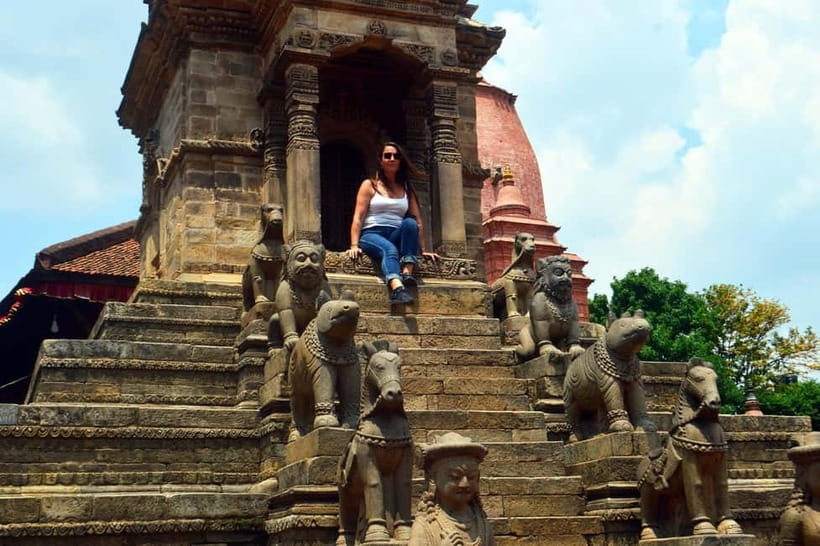
At $3.94 per person, the listed price is unusually low for a private tour that includes hotel pickup, an air-conditioned vehicle, a guide and bottled water. It can be good value if you want transport and interpretation bundled into a short visit, especially when you are trying to make limited time in Kathmandu count.
The price does not include monument entrance fees, meals, beverages or personal expenses. An entrance-fee add-on is available, but check what it covers before booking. Do not assume that a low headline price includes admission to both sites. The activity is marked as skip-the-ticket-line, but that is separate from the stated exclusion of entrance fees.
The private vehicle is another part of the value. You do not have to organize separate transport between your hotel and two sites, and the return to Thamel is included. Still, the tour’s brief schedule means convenience is only one part of the equation: choose sites that matter to you, and be ready for a compact visit.
A few practical details before you go
Pick your preferred option before confirming the booking. The tour lasts three hours, but starting times depend on availability. English and Hindi are offered, and hotel pickup is included for the private group.
Bring cash and your passport, as advised for the activity. Large bags and luggage are not allowed, and alcohol and drugs are prohibited. The tour is not suitable for wheelchair users, babies under one year or people over 95.
You can cancel up to 24 hours in advance for a full refund, and a reserve-now, pay-later option is available. Those terms can help if your plans are still shifting, but do check the booking details for your selected date and option.
Should you book this Kathmandu heritage hop?
Book it if you have only a few hours, want a private guide and would rather understand two important sites than rush through a longer list. The choice of pairings is its great strength: pick architecture and views, religious traditions, two royal squares or Bhaktapur’s historic center.
I would especially consider Option 1 for a first look at Kathmandu, or Option 2 if Hindu and Buddhist practice is what brought you to Nepal. Keep your expectations realistic about the time, admission costs and chance-based sights such as the Kumari. If you want long visits or a full survey of the valley, choose a longer tour; if you want an informed, flexible introduction, this one makes a practical start.
FAQ
How long is the tour?
The tour lasts three hours, including pickup and return to Thamel.
Which sites can I choose from?
The six sites are Kathmandu Durbar Square, Swayambhunath, Pashupatinath, Boudhanath, Patan Durbar Square and Bhaktapur Durbar Square. Choose your preferred option before confirming your booking.
Is the tour private?
Yes. The tour is for a private group.
Is hotel pickup included?
Yes. Pickup and drop-off from your hotel in Kathmandu are included. Wait in your hotel lobby or at your apartment entrance five to ten minutes before pickup.
Which languages are available?
The live guide speaks English or Hindi.
Are entrance fees included?
No. Monument entrance fees are not included, though an add-on option is available.
Can I see the Kumari?
A visit to Kathmandu Durbar Square offers a rare opportunity to sight the Kumari, the living goddess. A sighting is not guaranteed.
What should I bring?
Bring your passport and cash. Large bags and luggage are not allowed.
Can I cancel the booking?
Yes. You can cancel up to 24 hours in advance for a full refund.
Is the tour suitable for wheelchair users?
No. The tour is listed as not suitable for wheelchair users. It is also not suitable for babies under one year or people over 95.
Newly listed in Kathmandu
- Traditional Momo Making Class★ 5.0 · 10 reviews
- Walking tour of real Kathmandu through back streets.★ 5.0 · 3 reviews
- Kathmandu 2 Nights 3 Days Chitwan Jungle Safari Tour★ 5.0 · 9 reviews
- Visit Swayambhunath and Bauddhanath Stupa with Guide★ 5.0 · 5 reviews
- Walking tour of Kathmandu with awesome local guides★ 5.0 · 4 reviews
- Kathmandu Street Food Walking Tour – Eat Like a Local★ 5.0 · 3 reviews
- Private Manaslu Circuit Trek at Himalayas★ 5.0 · 3 reviews
- Kathmandu to Pokhara Vip Sofa Bus Ticket★ 4.0 · 4 reviews
Kathmandu Tours, compared.
Private Kathmandu Sightseeing Tour | UNESCO World Heritage sites
Read our review →
Everest Base Camp Helicopter Tour landing at Everest View Hotel
Read our review →
Nagarkot Sunrise View and Day Hiking from Kathmandu
Read our review →
Full Day 7 UNESCO Tour with Lunch – Private/Group
Read our review →
Browse the lists this tour appears in