
Reviewed · KATHMANDU TOURS
Knife (Khukuri) Making Workshop- Forge of the Gurkhas
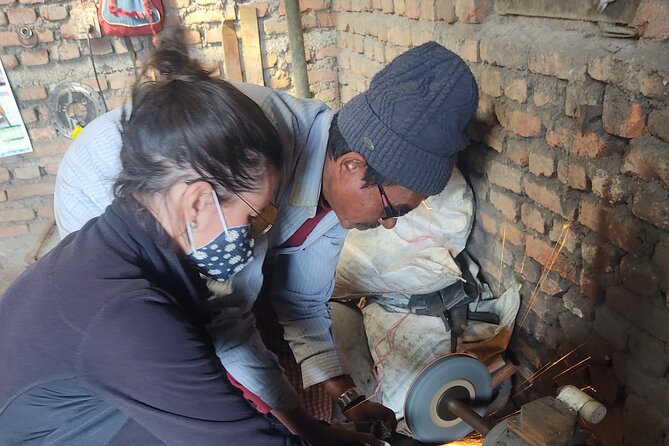
The best part of this Kathmandu workshop is seeing a khukuri take shape from raw metal, then helping with the work yourself. At blacksmith Indra’s home, you’ll hammer the iron and take part in selected finishing steps, while he handles the jobs that need years of skill and a steady hand.
I like two things here: you leave with a knife you helped make, not a shop souvenir, and the small group size gives you room to watch Indra’s craft up close. Guides such as Swoyam and Namrata help with translation and conversation, making the visit feel more like time with a local family than a polished demonstration.
One point to weigh: this is a real forge, but it is not a do-it-all-yourself class. For safety, the host handles some grinding, and the process takes around four hours. If you expect to make every part of the knife alone, you may want to adjust that expectation.
- The standard project is a small, 6-inch khukuri: Larger knives may be possible for an extra charge, but confirm the size and cost before booking.
- You get hands-on time: Expect to hammer the iron and join selected grinding, buffing, and polishing steps.
- Indra brings decades of forge experience: Visitors describe him as a skilled, patient smith with more than 40 years in the craft.
- The workshop is in a home setting: The trip takes you to a more remote, rustic part of Kathmandu, rather than a tourist shop.
- Pickup is offered, and the group is capped at five: The small number makes it easier to follow the work and ask questions.
- Allow four to four and a half hours: The finished knife is part of the value, but the process is not a quick stop.
A khukuri made at the forge, not chosen from a shelf
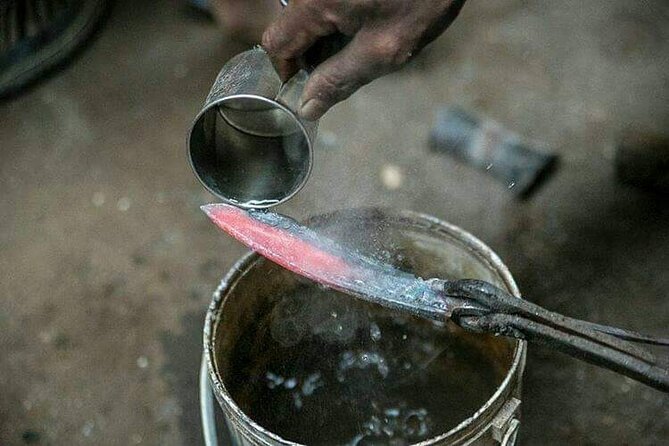
The khukuri has a place in Nepali life beyond its familiar outline. It is associated with Gurkha loyalty and is used as a practical tool for tasks such as shaping wood and cutting food. Its curved, tempered-steel blade, distinctive notch, handle, and scabbard each contribute to its recognizable form. In this workshop, those details become easier to appreciate because you see a blade being made rather than simply displayed.
The standard project is described as a small, 6-inch knife. That makes it a more manageable keepsake than a full-size khukuri, though it is still a real, sharp blade. One attendee reported making a 10-inch version for an added fee. Treat that as a possible option, not a guaranteed price or size: ask the operator what is available when you book.
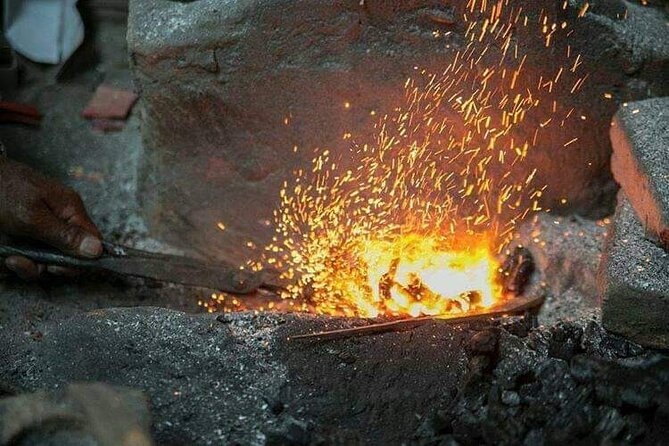
The appeal is partly the object and partly the work behind it. A finished knife may look neat and simple, but making it involves repeated heating, hammering, shaping, grinding, and polishing. Watching the metal change under the smith’s hammer gives you a better sense of the time and judgment built into each step.
The ride to Indra’s home workshop
Pickup is offered, and several participants describe being collected from their hotel before travelling by taxi to the workshop. The smith’s home is in a more remote, rustic part of Kathmandu. That trip is useful context, not just transport: you leave the familiar hotel area and see a different side of the city on the way.
A guide such as Swoyam or Namrata may accompany you. Their role can include translating, helping you understand the process, and keeping conversation going during the journey and workshop. The guide’s presence matters because the craft involves details that are easier to follow when someone can explain what the smith is doing and why.
Plan for about four hours overall, with some sessions running closer to four and a half. That is enough time for transport, instruction, forging, and finishing, but it is a substantial part of your day. If you have a tight schedule, avoid placing another fixed activity immediately afterward.
The group is limited to five people. That small cap suits a workshop where you need to see the forge and hear instructions. It also means this is not a large, theatrical demonstration. The setting is informal, and the pace depends on the work and the people taking part.
More hands-on workshops in Kathmandu:
- Knife Khukuri Making Workshop
★ 4.9 · 38 reviews - Gurkha Knife Making
★ 5.0 · 19 reviews - Kathmandu: Wood Carving Workshop with Local Artisan (Thamel)
★ 4.9 · 17 reviews
Learning the craft before picking up the hammer
The khukuri’s parts and purpose give the workshop a useful cultural frame. The blade is traditionally made from tempered steel and curves toward its point. Its handle may be wood or buffalo horn, while the blade sits in a scabbard made from wood and leather. A notch near the handle is associated with the Hindu deities Brahma, Vishnu, and Shiva, and is also traditionally explained as helping keep blood from reaching the grip.
This background helps you look beyond the finished shape. You begin to notice how the curve, handle, and blade relate to the knife’s use, and how a craft object can carry symbolic meaning as well as practical value. The workshop is focused on making, not a long lecture, so expect the explanations to come alongside the work.
Indra is the central figure at the forge. Participants describe him as an experienced blacksmith who takes care with the result and is willing to guide beginners. His skill is part of the point: you are not being asked to match a professional smith in one afternoon. You get to contribute while watching someone with decades of practice make the difficult decisions.
Hammering iron into a blade
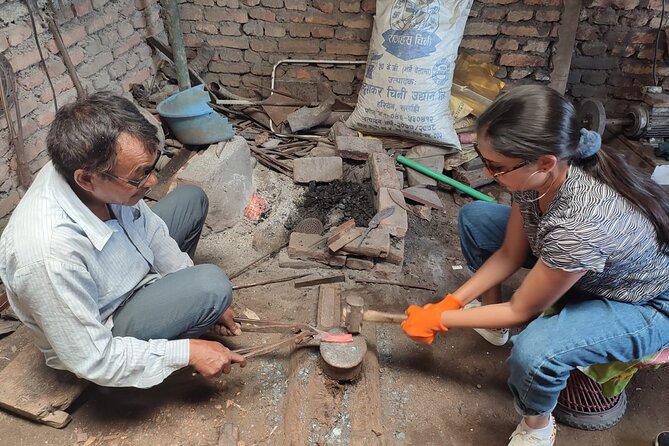
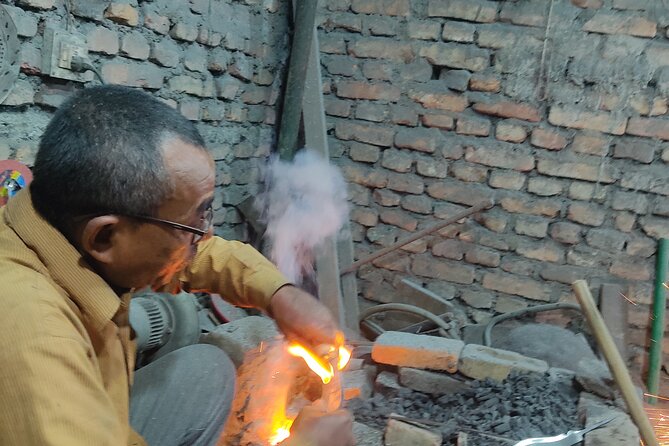
The hands-on work begins with the iron. You take turns hammering it as it is heated and worked toward the rough shape of a blade. This is the clearest chance to feel the physical side of the craft: the repeated blows, the need for control, and the way a simple piece of metal gradually changes form.
The material may be recycled steel. One participant described a knife made from a truck suspension spring, while another noted the use of scrap metal. That is an appealing detail, though the exact source of the metal may vary. It makes the process feel grounded in practical reuse rather than a display built around new, pristine materials.
You should expect guidance and shared work, not complete independence. The smith and assistants may take over when a step calls for more experience or control. That division can feel limiting if you signed up hoping to do every stage yourself, but it is also how the workshop balances participation with the quality of the finished knife.
Grinding and polishing, with safety first
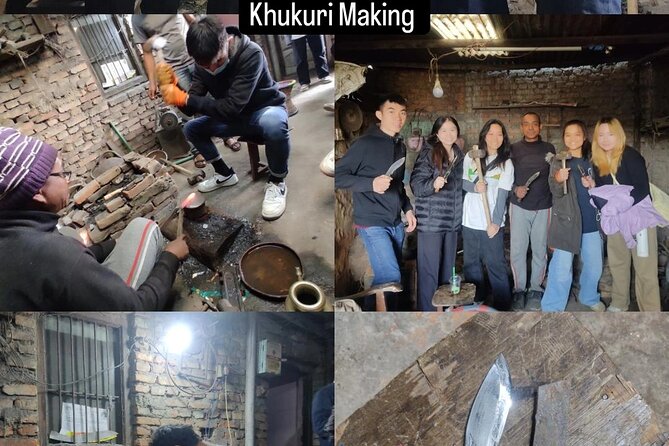
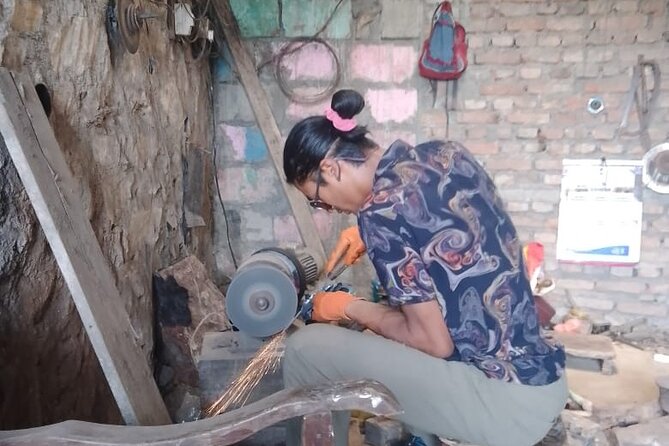
After forging, the blade needs grinding and shaping. The workshop description says guests take part in the first grinding, while the host handles blade grinding for safety. Those details point to a sensible boundary: you may be invited to help with selected grinding or finishing, but do not assume you will operate every tool or work on the sharp edge.
Grinding can throw sparks. Follow the smith’s directions and keep clear when he is using the wheel. The same applies to the final buffing and polishing. Your role may include helping with these finishing steps, but Indra controls the work that needs a trained eye and safe handling.
This is where expectations matter most. Some participants describe hammering and grinding their own knife, while the safety guidance makes clear that the host completes parts of the blade work. In practice, the amount you do can depend on the task and the smith’s judgment. If you want a highly hands-on class, ask before booking which steps you can take part in.
More Kathmandu tours in Kathmandu:
- Everest Base Camp Trek – 14 Days
★ 5.0 · 1,499 reviews - Private Kathmandu Sightseeing Tour | UNESCO World Heritage sites
★ 5.0 · 756 reviews - Everest Base Camp Helicopter Tour landing at Everest View Hotel
★ 5.0 · 668 reviews - Half day cooking class in Thamel kathmandu
★ 5.0 · 607 reviews
A finished knife and a personal keepsake
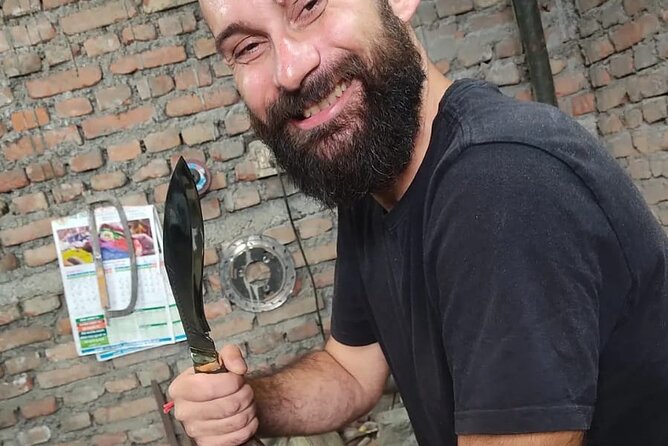
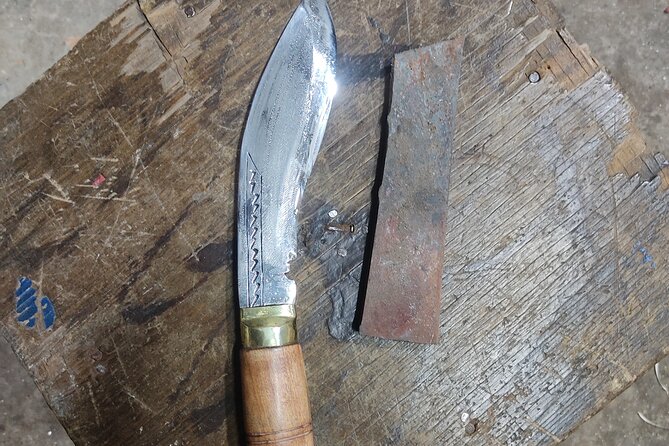
The workshop ends with a finished khukuri to take home. The transformation is satisfying: you have watched the metal move from a rough piece toward a shaped, polished tool, and you have helped at key stages. For many people, that connection makes the knife more meaningful than one bought ready-made in a shop.
The result is also a functional object, not a harmless prop. Participants describe their knives as sharp and well made, so treat yours with care once it is handed over. The workshop information does not set out rules for carrying a knife on flights or across borders. Before travelling home, check the requirements for your airline and destination, and do not assume it can go in cabin baggage.
The basic project is a 6-inch knife. If you are interested in a larger blade, one participant arranged a 10-inch version for an additional fee. Since that option and its price are not listed as a standard inclusion, confirm the details directly rather than counting on it.
What the $68 price buys
At $68 per person, the value is not just the knife. You are paying for several hours at a working forge, instruction from an experienced smith, a guide and translation support, and the chance to contribute to the making process. Pickup is offered, which can simplify the trip to a workshop outside the usual hotel area.
Compare that with buying a finished khukuri in a shop. A shop purchase may be faster, but it cannot give you the same view of the shaping and finishing, or the personal link to a particular smith and workshop. If you value a craft experience and a keepsake with a story behind it, the price is easier to justify.
The price may feel less compelling if you mainly want a knife and do not care how it is made. It is also worth checking what the quoted amount includes if you want a larger blade, since an extra charge has been reported for that option. The standard experience is the small knife, with no larger size included in the stated price.
Who will enjoy this workshop most
This is a strong fit if you like practical crafts, traditional tools, or seeing how a local trade works in its own setting. You do not need blacksmithing experience. The smith and assistants can help, and the workshop is designed for ordinary participants as well as people who already know their way around a forge.
It can work for families, but think about attention spans. One family brought children aged four and six; they enjoyed the visit at first but ran out of patience during the four-to-five-hour process. If you bring young children, plan distractions and be realistic about the length of the session.
The rustic home setting is part of the appeal, but it may not suit someone looking for a formal visitor centre or a tightly scripted class. Hospitality can include conversation, tea, or even a meal, but those extras are not promised parts of the experience. Go for the forge and the craft, and welcome any additional warmth as a bonus.
Should you book the khukuri workshop?
Book it if you want more than a standard sightseeing stop and like the idea of helping make a traditional Nepali tool. The small group, skilled smith, guide support, and finished knife give the four-hour visit a clear purpose. It is especially worthwhile if craft and local working life interest you as much as temples and city sights.
Skip it if your schedule cannot spare most of an afternoon, or if you expect to control every stage of the blade-making process. Before booking, confirm pickup arrangements, the standard 6-inch size, and any added cost for a larger knife. Bring patience, follow the safety instructions, and you are likely to leave with a keepsake that carries the memory of the work behind it.
FAQ
How long does the workshop take?
The experience lasts about four hours. Some participants describe a visit closer to four and a half hours, so leave room in your schedule.
What size knife is included?
The standard knife is described as a small, 6-inch blade. One participant reported arranging a 10-inch knife for an additional fee, so confirm availability and cost before booking.
What parts of making the knife can I do?
You can take part in hammering the iron and selected grinding, buffing, and polishing steps. The host handles some blade grinding for safety and may take over tasks that need more skill.
Is hotel pickup available?
Pickup is offered. Participants have described being collected from their hotel and travelling by taxi to the workshop. Confirm your pickup location with the operator.
How many people can join?
The maximum group size is five people.
Do I need blacksmithing experience?
No prior experience is required. The activity information says most people can participate, and the smith and assistants provide help.
Who leads the workshop?
The blacksmith is Indra. Guides mentioned in connection with the experience include Swoyam and Namrata, though the guide for a particular date may vary.
Can I cancel for a refund?
You can cancel at least 24 hours before the experience’s start time for a full refund. Cancellations or changes made less than 24 hours beforehand are not accepted for a refund.
Newly listed in Kathmandu
- Traditional Momo Making Class★ 5.0 · 10 reviews
- Walking tour of real Kathmandu through back streets.★ 5.0 · 3 reviews
- Kathmandu 2 Nights 3 Days Chitwan Jungle Safari Tour★ 5.0 · 9 reviews
- Visit Swayambhunath and Bauddhanath Stupa with Guide★ 5.0 · 5 reviews
- Walking tour of Kathmandu with awesome local guides★ 5.0 · 4 reviews
- Kathmandu Street Food Walking Tour – Eat Like a Local★ 5.0 · 3 reviews
- Private Manaslu Circuit Trek at Himalayas★ 5.0 · 3 reviews
- Kathmandu to Pokhara Vip Sofa Bus Ticket★ 4.0 · 4 reviews
Kathmandu Tours, compared.


Private Kathmandu Sightseeing Tour | UNESCO World Heritage sites
Read our review →
Everest Base Camp Helicopter Tour landing at Everest View Hotel
Read our review →

Nagarkot Sunrise View and Day Hiking from Kathmandu
Read our review →
Full Day 7 UNESCO Tour with Lunch – Private/Group
Read our review →
Browse the lists this tour appears in