
Reviewed · KATHMANDU TOURS
Evening Photography Tour of Kathmandu
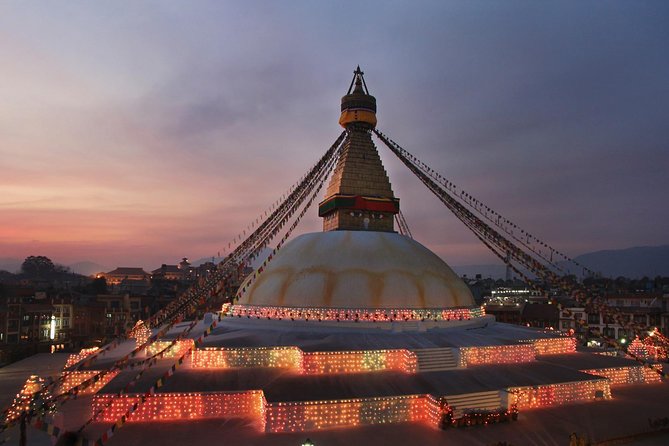
At dusk, Boudhanath’s white stupa glows above devotees making their rounds, while butter lamps flicker below. Later, at Pashupatinath, fire, chanting, and song accompany the evening aarti on the banks of the Bagmati River. This private tour puts two very different expressions of faith into one evening, with a guide to help you find worthwhile views and understand the rituals.
I like two things in particular: private transport makes it easier to visit both sites in one short outing, and a guide can give you more context than you might get while working out the sights on your own. Guides Bikash and Deepa have been named in connection with the tour, with particular praise for their clear explanations and helpful manner.
The main consideration is that this is a photography outing during active religious ceremonies, not a dedicated photography class. You’ll need to bring your own camera and be ready to work with evening light, crowds, and the pace of the rituals. The two stops are about an hour each, so there is limited time to linger.
Key points to know
- Two sites, two faith traditions: Photograph Buddhist devotional life at Boudhanath, then Hindu aarti at Pashupatinath.
- A private outing: Only your group takes part, and private transport is included.
- A guide adds context: An English-speaking licensed city guide accompanies you and can help you understand what you’re seeing.
- Plan for three to four hours: Each site gets about an hour, with the rest of the time allowing for travel between stops.
- Bring your own camera: Dinner, bottled water, and alcoholic drinks are not included.
- The price is $102 per person: Group discounts are offered, and the tour is booked an average of 12 days in advance.
Boudhanath after dark
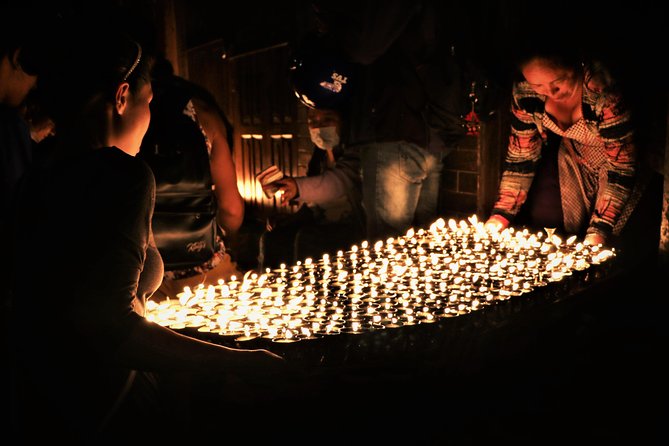
Boudhanath Stupa is a major pilgrimage center for Tibetan Buddhists as well as one of Kathmandu’s best-known landmarks. In the evening, the white dome is lit and decorated, and devotees make a parikrama, or circumambulation, by walking around the stupa. Monks and worshippers light butter lamps and pray for the well-being of all sentient beings and for world peace.
The hour here gives you time to take in both the scale of the monument and the activity around it. Look for the contrast between the stupa’s bright surface and the smaller points of lamp light. The movement of people around a fixed landmark also gives you more than one kind of photograph: a still view of the structure, or a frame that includes the flow of devotees.
Your guide’s role is useful here. The tour is designed to direct you toward settings and moments worth photographing, rather than leave you to guess where to stand or what is happening. A guide can also explain why people are making the circuit and lighting lamps, helping you photograph the scene with more understanding.
That context matters. The evening prayer is not staged for a camera, and the people in your frame are taking part in a living religious practice. I’d keep your attention on the ceremony as well as the viewfinder, and take photographs discreetly. You are there to observe a devotional setting, not to turn it into a photo set.
The trade-off is that the tour allows about an hour at Boudhanath. That is enough to experience the evening atmosphere and make photographs, but not a long, unhurried session for trying every angle. If you like to work slowly, decide what kind of images matter most before arriving.
Other trips people take from Kathmandu:
- Everest Base Camp Trek – 14 Days
★ 5.0 · 1,499 reviews - Private Kathmandu Sightseeing Tour | UNESCO World Heritage sites
★ 5.0 · 756 reviews - Everest Base Camp Helicopter Tour landing at Everest View Hotel
★ 5.0 · 668 reviews
Pashupatinath and the evening aarti
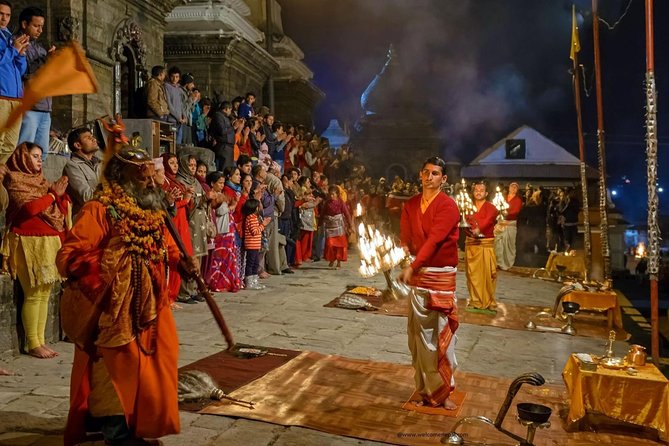
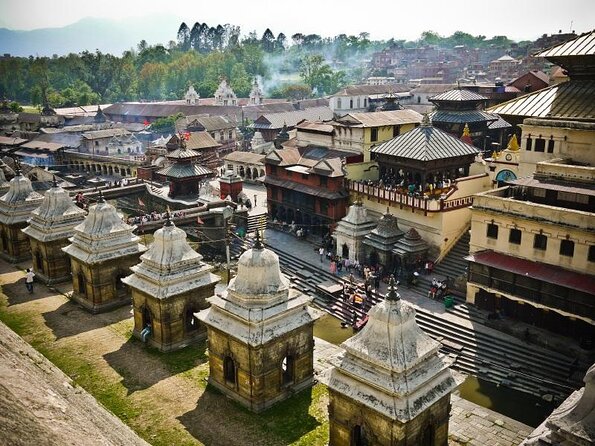
The second stop is Pashupatinath, an ancient Hindu temple and one of the most important shrines dedicated to Lord Shiva. The name Pashupatinath means protector of all living beings. In the evening, the focus is the aarti, a ritual in which priests offer light from a flame to the gods.
The ceremony brings together fire, chanting, and hymns. Devotees may dance as the priests perform the ritual, and the setting on the sacred Bagmati River gives the scene a different feel from the circular, steady movement around Boudhanath. Here, your photographs are likely to be shaped by performance and light: flames against the evening, people gathered to watch, and the sounds of prayer around the river.
This is the tour’s most distinctive stop for many people. The ceremony is not simply a landmark to photograph; it is an event with its own rhythm. A guide can help you understand the aarti and direct you to a suitable place to observe it. One guide, Deepa, has been praised for explaining the experience and providing context. Bikash has also been singled out for his command of Kathmandu’s heritage sites and his professional, polite manner.
You should still approach the photography with patience. Rituals unfold at their own pace, and the best moment may not arrive exactly when you want it. Instead of firing off pictures continuously, watch for a while, then choose a few moments to photograph. You’ll come away with a better sense of what is happening, and may make more thoughtful images.
The tour allots about an hour at Pashupatinath. That gives you time to see the aarti and take photographs, but it may feel short if you want to stay after the ceremony or explore more of the site. This outing is best understood as an introduction to two important places, not a full visit to either one.
What the guide adds
A guide is especially valuable on a tour built around religious rituals. The sights are striking, but without context it can be hard to know what the actions mean or where to focus your attention. The tour’s English-speaking licensed city guide can explain the landmarks and help you locate settings that may work well for photographs.
The drive between the stops is part of the experience, too. Guides have used the time in the car to talk about Kathmandu and Nepal beyond the two sites. That can turn what might otherwise be dead travel time into a useful introduction to the city.
Keep your expectations clear, though. The experience is described as a photography tour, but the information provided promises guidance on where to go and what to photograph, not technical camera instruction. If you need help with exposure settings, flash, or advanced composition, ask before booking rather than assume the guide is a photography teacher.
Bikash and Deepa are names associated with the tour, but you should not assume that either will lead your particular outing. The central benefit is the presence of an English-speaking guide who can connect the places and rituals for you.
Making the most of a short evening
The tour lasts about three to four hours, with roughly one hour at each landmark. Private transportation is included, which makes the two-stop plan practical: you don’t need to arrange your own ride between Boudhanath and Pashupatinath or coordinate your evening around public transport.
Pickup is offered, and the tour description specifies transport from central Kathmandu. Confirm the pickup point when arranging your outing so you know where the evening begins. The group is private, so you’ll be with your own party rather than sharing the guide’s attention with strangers. That can make it easier to ask questions or take a little time for a photograph, although the overall schedule still has to fit both sites.
Bring the camera you’re comfortable using. Because the tour takes place in the evening and includes firelight and illuminated scenes, it’s sensible to know how to adjust your camera before you arrive. This is practical preparation, not a promise of special lighting conditions or technical coaching. If you use a phone, it can still record the experience, but it may offer less control in low light.
The atmosphere also calls for a balance between photography and observation. You’re visiting places of worship during ceremonies, so avoid letting the camera become the whole point of the evening. Watch first, take pictures when there is a clear moment, and be considerate of people engaged in prayer.
More evening plans in Kathmandu:
- Kathmandu Sunset Tour by Rickshaw Including Durbar Square Visit
★ 5.0 · 73 reviews - 3 night 4 Day Yoga & Ayurveda Retreat to Detox the Body & Mind, Nepal
★ 5.0 · 37 reviews - Kathmandu: Pashupatinath Temple Evening Aarati Tour
★ 5.0 · 36 reviews - Kathmandu: Pashupatinath Temple Aarti Night Tour
★ 4.8 · 29 reviews
Is $102 per person good value?
At $102 per person, this is not the cheapest way to see two Kathmandu sights. The value lies in combining private transport, an English-speaking licensed guide, and two evening ceremonies in a single half-day outing. If you would otherwise need to arrange transport and find your own way through both sites, the convenience and local explanation may make the price worthwhile.
The private format matters most if you’re traveling with a companion or a small group and want the guide’s attention for your own questions and photography. Group discounts are offered, which may improve the per-person value for a larger party. The price includes all fees and taxes, but not dinner, bottled water, or alcoholic drinks, so plan to cover those separately.
This is a stronger buy if you care about the rituals and want help understanding them, as well as making photographs. If your priority is only to take pictures and you’re comfortable arranging transport and choosing your own viewpoints, you may prefer to visit independently. The tour’s added value is guidance, context, and an efficient link between the two sites.
Who should book this tour?
I’d recommend this outing to photographers who want to record Kathmandu’s evening religious life without spending their whole night managing transport. It also suits first-time visitors who want an informed introduction to Boudhanath and Pashupatinath, especially if they appreciate having a guide explain what is happening as it unfolds.
It may be less suitable if you want a slow, highly technical photography workshop or several hours at each site. The schedule is compact, and the guide’s role is centered on local context and finding useful settings, not guaranteed camera coaching. If a specific photographic technique is important to you, ask about it before you book.
The tour requires good weather and a minimum number of travelers. If poor weather or the minimum requirement prevents the outing, you’ll be offered another date or a full refund. You can cancel at least 24 hours before the start time for a full refund; changes or cancellations inside that window are not accepted.
Should you book it?
Book this tour if you want to see Boudhanath and Pashupatinath in one evening, value an informed guide, and like the idea of photographing ceremonies rather than just monuments. The private transport and group-only format make the short schedule easier, while the guide’s explanations help give the images meaning.
Skip it if you expect a full-day photo workshop, extensive time at each site, or included meals and drinks. For most people seeking a practical, guided introduction to Kathmandu’s evening rituals, though, this is a worthwhile way to make a short night count.
FAQ
How long is the Evening Photography Tour of Kathmandu?
The tour lasts approximately three to four hours. You spend about one hour at Boudhanath Stupa and about one hour at Pashupatinath Temple, with time for travel between them.
Which places does the tour visit?
It visits Boudhanath Stupa, a major pilgrimage center for Tibetan Buddhists, and Pashupatinath Temple, an important Hindu shrine dedicated to Lord Shiva.
What happens at Boudhanath during the visit?
You can see devotees making a parikrama, or circumambulation, around the stupa, as well as monks and worshippers lighting butter lamps and praying.
What is the evening aarti at Pashupatinath?
It is a Hindu ritual in which priests offer light from a flame to the gods. The ceremony includes sacred chanting and hymns, and devotees may dance.
What is included in the price?
The tour includes private transportation, all fees and taxes, and an English-speaking licensed city guide. Pickup is offered.
Are food and drinks included?
No. Dinner, bottled water, and alcoholic beverages are not included.
What is the cancellation policy?
You can cancel at least 24 hours before the experience’s start time for a full refund. Poor weather or failure to meet the minimum number of travelers may lead to an alternative date or a full refund.
Newly listed in Kathmandu
- Traditional Momo Making Class★ 5.0 · 10 reviews
- Walking tour of real Kathmandu through back streets.★ 5.0 · 3 reviews
- Kathmandu 2 Nights 3 Days Chitwan Jungle Safari Tour★ 5.0 · 9 reviews
- Visit Swayambhunath and Bauddhanath Stupa with Guide★ 5.0 · 5 reviews
- Walking tour of Kathmandu with awesome local guides★ 5.0 · 4 reviews
- Kathmandu Street Food Walking Tour – Eat Like a Local★ 5.0 · 3 reviews
- Private Manaslu Circuit Trek at Himalayas★ 5.0 · 3 reviews
- Kathmandu to Pokhara Vip Sofa Bus Ticket★ 4.0 · 4 reviews
Kathmandu Tours, compared.
Private Kathmandu Sightseeing Tour | UNESCO World Heritage sites
Read our review →
Everest Base Camp Helicopter Tour landing at Everest View Hotel
Read our review →
Nagarkot Sunrise View and Day Hiking from Kathmandu
Read our review →
Full Day 7 UNESCO Tour with Lunch – Private/Group
Read our review →
Browse the lists this tour appears in