
Reviewed · KATHMANDU COOKING CLASSES
Kathmandu: Women-Led Cooking Class & Momo Making-Local Taste
Momo making is the sort of kitchen lesson that turns a familiar dumpling into a useful travel skill: you shop for ingredients, work the dough and filling by hand, then sit down to eat what you made. This women-led Kathmandu class also offers dishes such as dal bhat, chatamari, thukpa and yomari, so you can go beyond the best-known snack.
I like two things about the format: the market stop gives the ingredients a local setting, and the meal is part of the lesson, not an afterthought. One consideration: folding momo takes practice, and the pace may feel less carefree if you get frustrated by fiddly handwork.
Key points
- Three menus offer different routes into Nepali food: choose among Bara, dal bhat and yomari; chatamari, momo and kheer; or aloo chop, thukpa and carrot halwa.
- The market visit connects cooking to everyday ingredients: you shop for vegetables, spices and meat before using them in class.
- You cook, then eat your own work: the session includes equipment, step-by-step instruction and masala tea.
- The group is capped at eight: a small class gives you room to ask questions, though the instructor’s pace can still matter.
- The experience lasts two to three hours and costs $11 per person: a low-cost way to add a meal and a practical activity to a Kathmandu day.
- It suits participants aged over eight: the instruction is in English, and vegetarian and meat dishes are offered.
Start with ingredients, not a restaurant menu
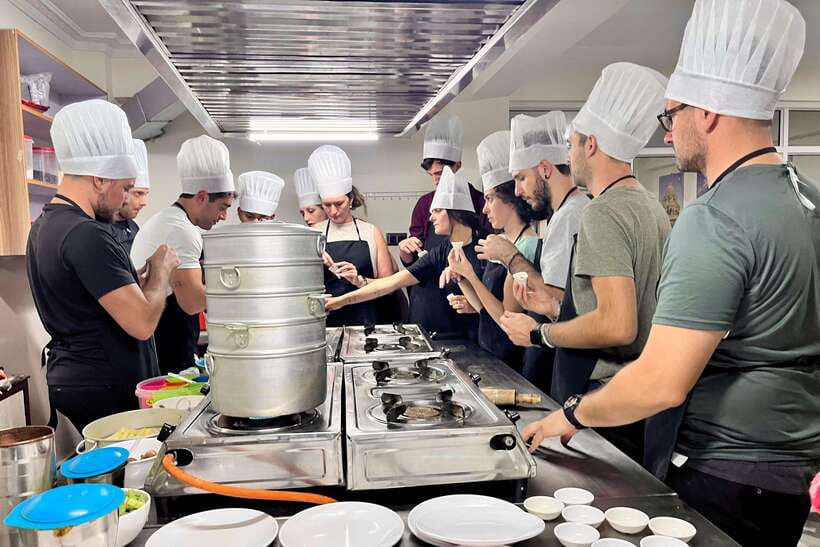
The class begins with a useful idea: Nepali food makes more sense when you see the ingredients before they reach the plate. The market or shop tour is an included part of the experience, where you buy vegetables, spices and meat for the cooking session. That simple errand gives you a chance to connect the dishes with the everyday shopping behind them.
The tour details do not specify which market you visit or how long you spend there, so think of this as a practical ingredient stop rather than a full market tour. Still, it adds context that a cooking demonstration alone would miss. You can see what the class will use, then handle those ingredients yourself in the kitchen.
The meeting point is described as easily reached from Thamel and elsewhere in the Kathmandu Valley. The class takes place in a modern Nepali kitchen, and the instruction is in English. Since no chef names are provided, you should not expect to book around a particular instructor. The experience is presented as women-led, with local chefs guiding the cooking.
More cooking classes in Kathmandu:
- Half day cooking class in Thamel kathmandu
★ 5.0 · 607 reviews - Kathmandu: Local Women-Led Nepali Cooking & Momo Class
★ 4.9 · 360 reviews - Kathmandu: Local Lead Nepali Cooking & Momo-Making Class
★ 5.0 · 212 reviews
Choose a menu that suits your appetite
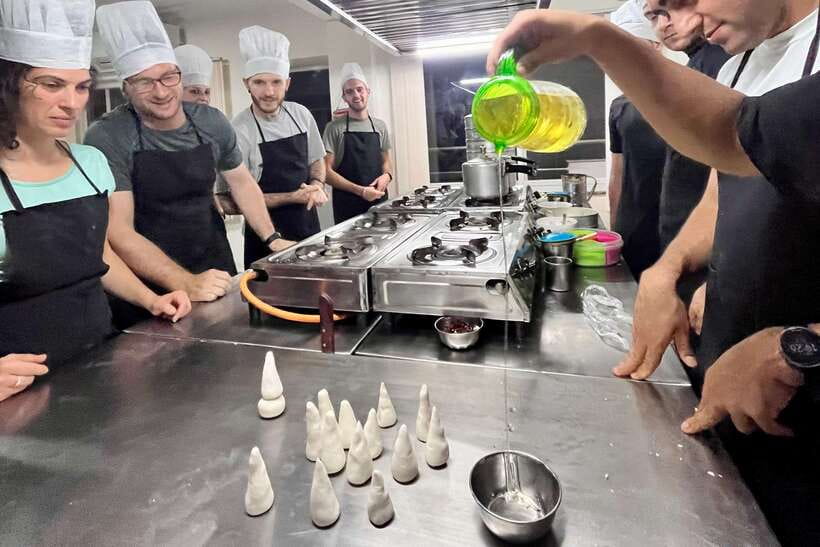
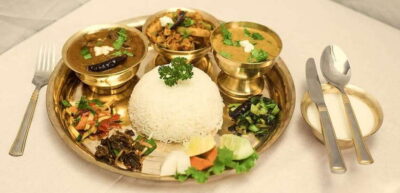
There are three menu sets, each combining different dishes. The first pairs Bara, dal bhat and yomari. Bara is a lentil patty made from ground black gram, often associated with Newari cooking. It may be served plain or topped with egg, minced meat or vegetables. Dal bhat brings together rice and lentil soup, often served with vegetables, pickles and curry. Yomari is a rice-flour dumpling with a sweet filling, commonly made with molasses and sesame.
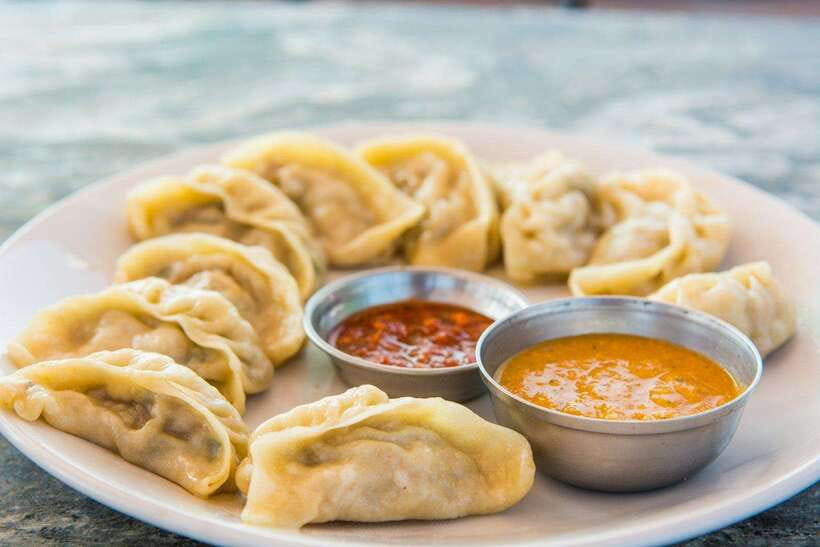
The second menu includes chatamari, momo and kheer. Chatamari is a thin rice-flour crepe often nicknamed Nepali pizza, with toppings that can include egg, minced meat, vegetables and spices. Momo are steamed or otherwise cooked dumplings filled with meat or vegetables, while kheer is a creamy rice pudding flavored with cardamom. This set may appeal if you want to focus on dishes that are easy to recognize and compare, while still sampling both savory and sweet cooking.
The third set brings aloo chop, thukpa and carrot halwa. Aloo chop is a spiced mashed-potato snack that is deep-fried. Thukpa is a noodle soup with a flavorful broth, vegetables and, depending on the version, meat. Carrot halwa is made by slowly cooking grated carrots with milk, sugar, ghee and cardamom.
The menus provide a helpful range, from dumplings and soup to snacks and desserts. But the details do not say whether you can choose a menu on arrival, request a swap or combine dishes from different sets. If one dish matters especially to you, check what is available when booking rather than assuming you can build a custom menu.
Make momo by hand, one fold at a time
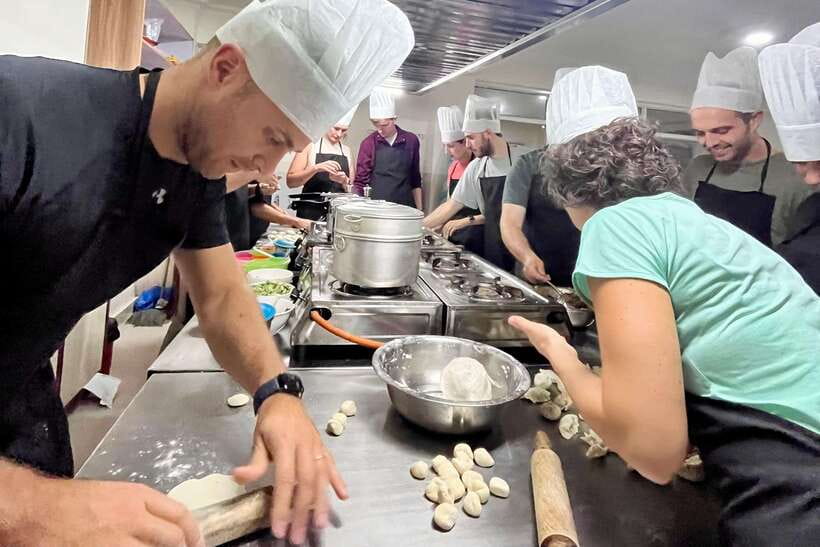
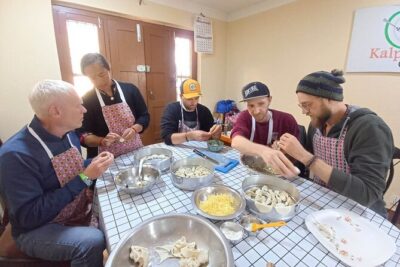
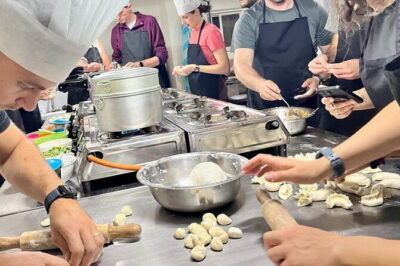
Momo making is likely to be the most hands-on part of the class. The dumplings use thinly rolled dough and a filling of minced meat, such as chicken, buff or pork, or vegetables seasoned with spices. You learn the preparation and folding technique, then make your own batch.
Here, patience helps. Folding dumplings neatly can be awkward at first, and one participant found the instructor’s reaction frustrating when the technique did not come easily. That is worth keeping in mind if you are booking mainly for a relaxed, playful activity. A cooking class involves learning by doing, and sometimes the first few dumplings look more homemade than restaurant-ready.
There is also a cheerful practical upside: you can make as many momo as you can manage to eat, according to one account of the class. That suggests the activity is not limited to watching a chef prepare a perfect sample. If you enjoy repetition and want to get the shape right, you have room to practice. If you are traveling with children over eight, consider whether they will enjoy following steps and working with food for a couple of hours.
Learn how the meal fits Nepali food culture
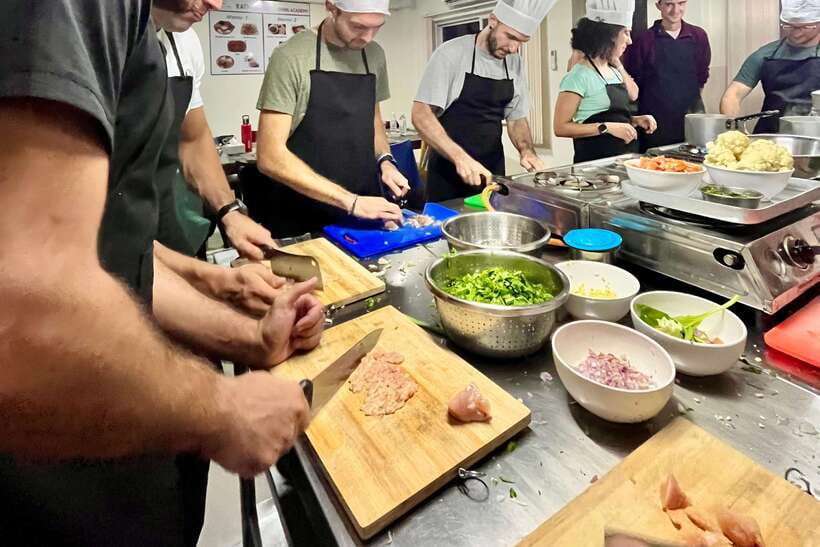
The class is more than a recipe session. The instructor explains cooking methods and the cultural significance of dishes, giving you a way to understand what you eat beyond the ingredients. Dal bhat, for example, is a staple meal built around rice and lentils, with vegetables, pickles and curry often filling out the plate. It is a practical combination, hearty and balanced, rather than a single dish meant to impress for one evening.
Other items show the range of food traditions represented in Kathmandu. Bara and chatamari are linked with Newari cuisine, while thukpa reflects Tibetan and Nepali cooking influences. Yomari offers a sweet contrast, with rice-flour dough wrapped around a filling of molasses and sesame. Taken together, the menus make this a broad introduction rather than a class focused on one recipe.
Masala tea is served during the lesson. It is made with black tea and aromatic spices, and gives you a familiar pause between cooking tasks. Specialty and alcoholic drinks are not included, so the tea is the included beverage to count on.
More Kathmandu tours in Kathmandu:
- Everest Base Camp Trek – 14 Days
★ 5.0 · 1,499 reviews - Private Kathmandu Sightseeing Tour | UNESCO World Heritage sites
★ 5.0 · 756 reviews - Everest Base Camp Helicopter Tour landing at Everest View Hotel
★ 5.0 · 668 reviews - Everest Base Camp Trekking
★ 5.0 · 485 reviews
Eat what you made, not just what you watched
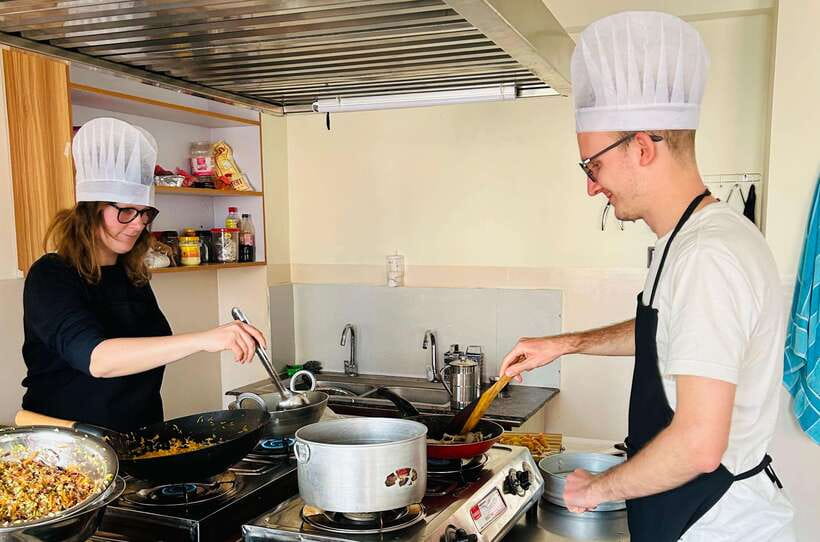
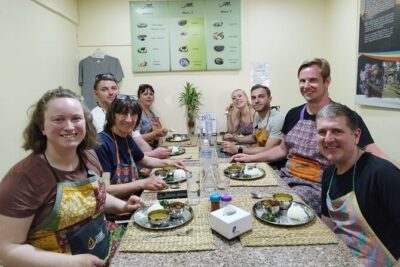
The meal at the end is part of the value. You taste the food you prepared, which makes the instructions easier to remember and gives the class a satisfying finish. Cooking and eating in the same session also helps you notice how the dishes work together, from savory dumplings or lentil patties to a sweet pudding or yomari.
Food quality is a strong point in the experience. The ingredients are described as fresh and locally procured, and the cooking is focused on flavor and familiar Nepali preparations. The meal may be lunch or dinner, depending on the class time. Since the session runs two to three hours, you should leave enough space in your schedule to cook without watching the clock.
Vegetarian and meat options are available across the experience, but that does not automatically mean every menu can be changed to meet a specific dietary need. The class descriptions include vegetable momo and toppings, as well as meat choices, but there is no stated allergy policy. If you have an allergy or strict dietary restriction, ask before booking and get a clear answer.
What the $11 price includes
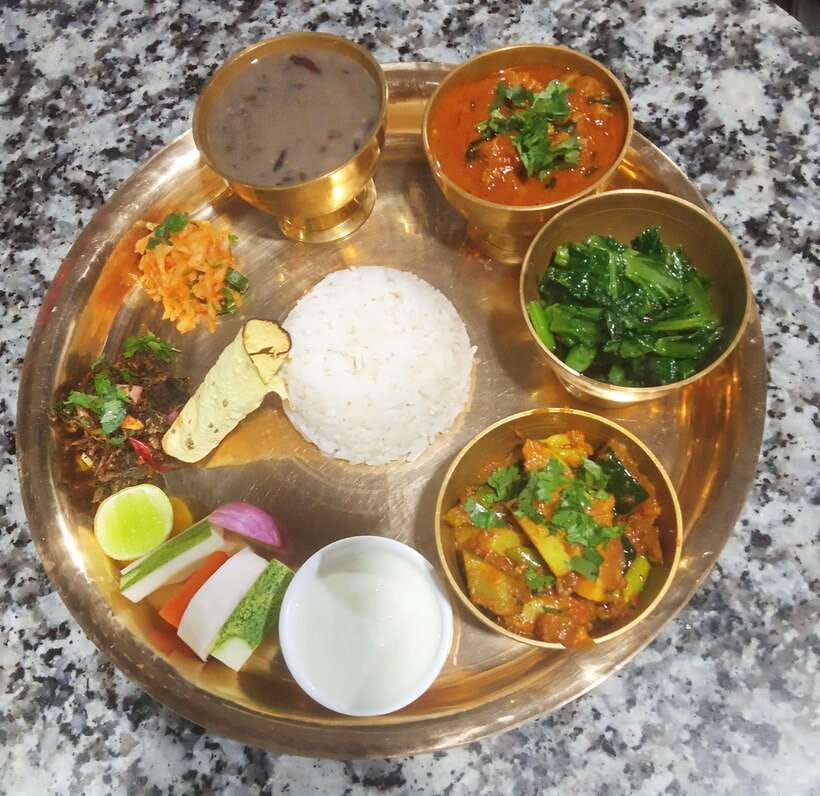
At $11 per person, the price is notably low for a small-group activity that combines a market or shop visit, guided cooking, ingredients, equipment, tasting and masala tea. You are paying for more than a plate of food: the hands-on lesson gives you basic techniques and cultural context that you can carry into the rest of your time in Nepal.
The group limit of eight is valuable at this price. In a smaller class, it is easier to follow the chef’s steps and ask questions than it would be in a large demonstration. Yet a small group does not guarantee that every instructor’s teaching style will suit every student. One account describes a very friendly and patient chef, while another found the response to a difficult folding technique off-putting. If encouragement matters more to you than simply learning the recipe, it is sensible to say so early and ask for help when you need it.
Photos and video are not included. Professional photography or videography is available for an extra fee, and specialty or alcoholic drinks also cost extra. For most people, the included cooking and meal are the main draw, so these add-ons are easy to skip.
Who will get the most from this class
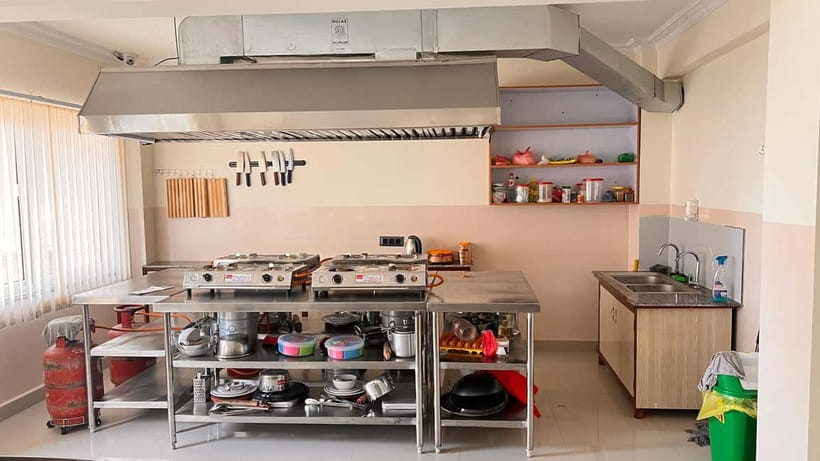
I would choose this activity if you want a food experience that asks you to participate, not just sample dishes. It suits curious cooks, first-time visitors who want an introduction to Nepali staples, and anyone who likes learning a recipe by repeating the steps. You do not need to arrive as an experienced cook; the class is intended for beginners as well as food enthusiasts.
It can also work well for families with children over eight, provided they are interested in cooking and can stay engaged through a two to three hour session. The small group size should make it easier to keep up, but the hands-on nature means this is not simply a meal with a short demonstration.
If your priority is a leisurely tasting tour, a detailed market visit, or a guaranteed custom menu, this may not be the best fit. The market stop is brief in the information provided, and the menu choices are presented as fixed sets. If your main goal is to make momo, select the menu that includes them and check that it will be served during your session.
Should you book it?
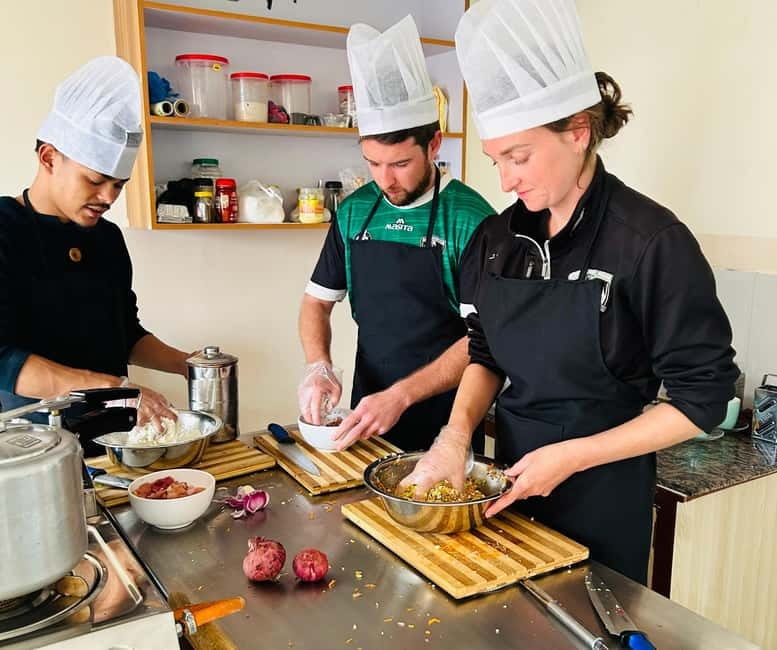
For $11, this is a good-value way to spend part of a Kathmandu day, especially if you want to take home more than a food memory. The strongest reasons to book are the chance to cook with a local chef, the ingredient-shopping stop, the choice of distinct Nepali menus and the meal you prepare yourself. The warm hospitality and tasty food are also central to the appeal.
I would book if you are open to learning at the instructor’s pace and can enjoy the process even when a dumpling fold goes wrong. Before committing, confirm which menu you will make and mention any dietary needs. If those details line up with what you want, this is a practical, affordable introduction to Nepali cooking.
FAQ
How long does the cooking class last?
The class lasts two to three hours. Starting times vary, so check availability for the date you want.
What dishes can I learn to make?
There are three menu sets: Bara, dal bhat and yomari; chatamari, momo and kheer; or aloo chop, thukpa and carrot halwa.
Is a market visit included?
Yes. The experience includes a market or shop visit to buy ingredients such as vegetables, spices and meat for the class.
Is the class suitable for beginners?
Yes. The class is described as suitable for novices as well as experienced food enthusiasts, and it includes step-by-step instruction from a local chef.
Are vegetarian and meat options available?
Yes. The experience offers vegetarian and meat dishes. The menu details do not specify how to handle allergies or other dietary restrictions, so ask before booking if you need a specific adjustment.
What is included in the $11 price?
The price includes the cooking class, chef instruction, the market or shop tour, cooking equipment, hands-on food preparation, a tasting of the meal you make and Nepali masala tea. Specialty or alcoholic drinks and professional photography or videography cost extra.
Newly listed in Kathmandu
- Traditional Momo Making Class★ 5.0 · 10 reviews
- Walking tour of real Kathmandu through back streets.★ 5.0 · 3 reviews
- Kathmandu 2 Nights 3 Days Chitwan Jungle Safari Tour★ 5.0 · 9 reviews
- Visit Swayambhunath and Bauddhanath Stupa with Guide★ 5.0 · 5 reviews
- Walking tour of Kathmandu with awesome local guides★ 5.0 · 4 reviews
- Kathmandu Street Food Walking Tour – Eat Like a Local★ 5.0 · 3 reviews
- Kathmandu to Pokhara Vip Sofa Bus Ticket★ 4.0 · 4 reviews
- Regular Yoga for all levels of practitioners in Kathmandu★ 5.0 · 4 reviews
Kathmandu Cooking Classes, compared.
The best Private Nepali Cooking Class in Kathmandu
Read our review →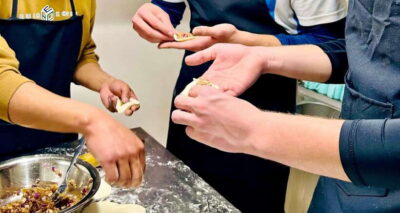
Best Nepali Cooking Class in Thamel with Local Market Trip
Read our review →
Momo Making Class in Kathmandu with Pickup & Drop off from Hotel
Read our review →Browse the lists this tour appears in