
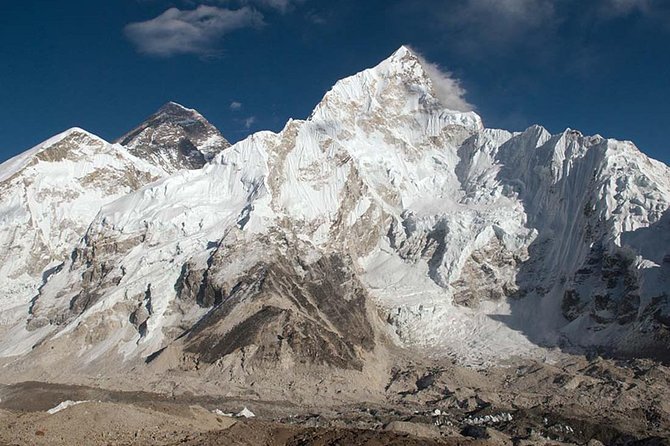
Reviewed · EVEREST BASE CAMP TREKS
Everest Base Camp Trek with Helicopter Return from Gorakshep to Lukla
The big draw is reaching Everest Base Camp on foot, then skipping much of the return trek with a shared 20-minute helicopter flight from Gorakshep to Lukla. I like two things in particular: the gradual route includes acclimatization days at Namche Bazaar and Dingboche, and the package covers practical essentials such as a guide, porters, permits, trail meals, and domestic flights.
The trade-off is the effort required to reach more than 5,300 meters, even with those rest days. I’d also ask the operator to confirm the flight schedule: the day-by-day outline is unclear about how the Gorakshep-to-Lukla helicopter fits with the return to Kathmandu.
Key points
- The helicopter changes the return: You still trek to Base Camp and Kala Patthar, but a shared flight from Gorakshep to Lukla replaces much of the walk back.
- The high point is Kala Patthar: At 5,555 meters, it is the route’s toughest climb and a major viewpoint.
- There are two acclimatization days: You spend one day around Namche Bazaar and another hiking above Dingboche.
- Support is built into the price: A licensed English-speaking guide, porters, permits, trail meals, Kathmandu hotel nights, and domestic flights are included.
- This is a demanding trek, not a casual walk: The tour calls for moderate fitness, and the itinerary includes long days at high altitude.
- Confirm the return details before booking: The schedule describes both a Gorakshep-to-Lukla helicopter and a flight from Lukla to Kathmandu, but does not clearly explain their timing.
The Gorakshep helicopter is the unusual part
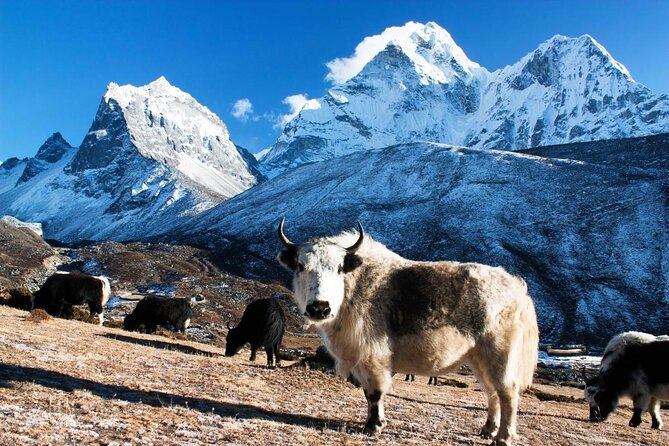
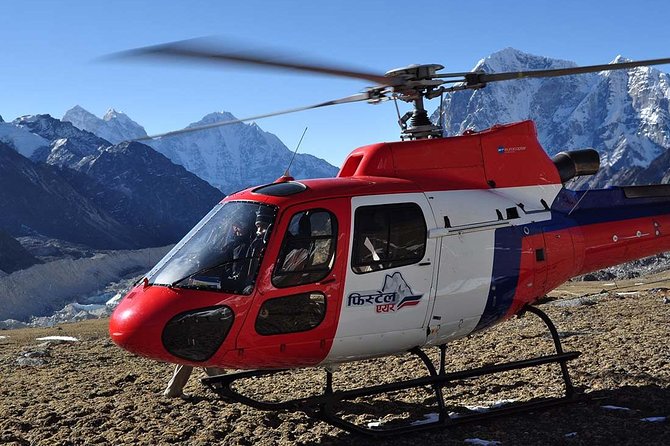
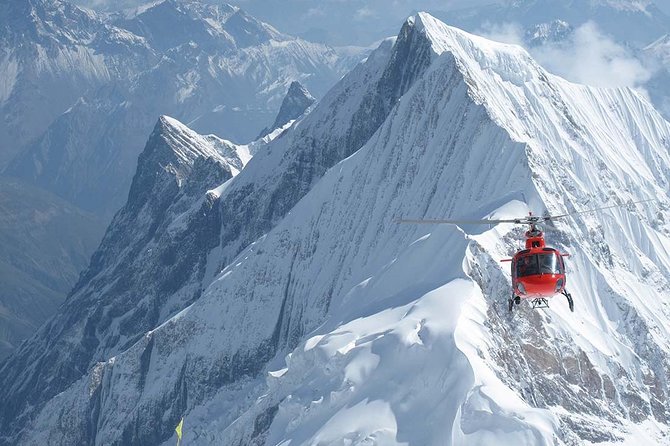
Most of the journey follows a classic Everest Base Camp trekking route: walk from Lukla through Sherpa villages and mountain valleys, gain altitude gradually, and reach Base Camp before climbing Kala Patthar. The twist comes on the way back. Instead of retracing the full route on foot, you take a shared helicopter from Gorakshep to Lukla, a flight described as about 20 minutes.
That shortcut matters. The outbound trek remains the heart of the experience, and you still have to walk to high-altitude destinations under your own power. But you avoid some of the long return miles, which may appeal if you have limited time or would rather spend less of the trip repeating familiar ground.
The tour is priced at $3,000 per person and lasts about 12 days. That is a substantial outlay, but it includes many of the costly and complicated pieces: domestic airfare between Kathmandu and Lukla, the helicopter leg, a guide, porters, permits, trail meals, two Kathmandu hotel nights, and ground transfers. It does not include international flights, travel insurance, personal trekking gear, or Kathmandu lunches and dinners, so budget for those separately.
More Everest helicopter tours in Kathmandu:
- Everest Base Camp Helicopter Tour landing at Everest View Hotel
★ 5.0 · 668 reviews - Everest Base Camp Helicopter Tour landing at Hotel Everest View
★ 5.0 · 218 reviews - Everest Base Camp helicopter tour with landing
★ 5.0 · 61 reviews
Kathmandu: arrival, briefing, and a final night
On Day 1, a representative meets you at Tribhuvan International Airport and drives you to your hotel in a private tourist vehicle. You also meet your guide for a pre-trip briefing. That first conversation is useful: it gives you a chance to understand the plan, ask about the helicopter arrangements, and make sure you know what is expected before leaving for the mountains.
The package includes two nights in a three-star Kathmandu hotel, in twin-sharing accommodation with breakfast. You will need to cover your own lunch and dinner in the city. The itinerary ends with a transfer back to the airport on Day 12, but it does not spell out exactly when you return to Kathmandu after the trek. Confirm that sequence before booking flights home.
Lukla and Phakding: the first steps on trail
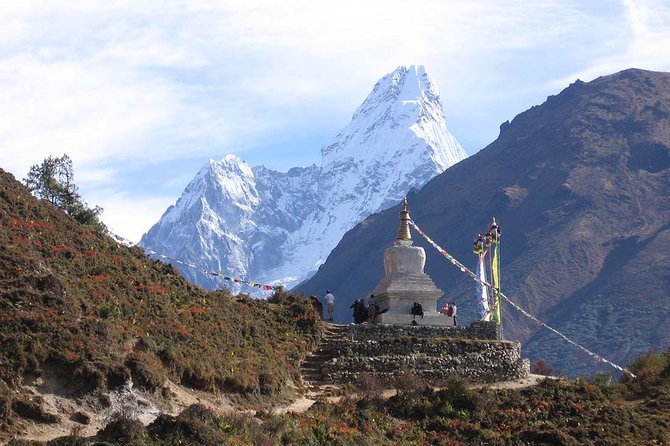
Day 2 begins with a flight from Kathmandu to Lukla, listed as about 35 minutes. The route starts at Tenzing and Hillary Airport, at 2,804 meters, then continues on foot to Phakding. The itinerary describes the arrival and trek but does not give a precise walking time for this day.
You are entering the walking rhythm here: a flight to the trailhead, a first hike, and a night in a guesthouse. Accommodation in Lukla, Phakding, and Namche is described as twin-sharing, with attached toilets. In other trekking villages, expect guesthouse accommodation, though the exact room arrangements are not specified.
Namche Bazaar: bridges and the first acclimatization day
The walk from Phakding to Namche Bazaar takes about six hours. You follow the Dudh Koshi River and cross it several times on suspension bridges decorated with prayer flags. The trail’s crossings and steady climb make this more than a simple transfer day, so pace yourself rather than treating the village at the end as a finish line.
Day 4 is set aside for acclimatization. You stay around Namche and take a short hike, with the itinerary pointing to mountain views and sunrise as rewards. This day does not move you closer to Base Camp, but it has a clear purpose: give yourself time to adjust before continuing to higher ground. The exact length and route of the acclimatization hike are not specified, so ask your guide what the day’s plan will be.
More Everest Base Camp treks in Kathmandu:
- Everest Base Camp Trek – 14 Days
★ 5.0 · 1,499 reviews - Everest Base Camp Trekking
★ 5.0 · 485 reviews - Everest Base Camp Trekking – 13 Day
★ 5.0 · 365 reviews - Everest Base Camp Trek -14 Days
★ 5.0 · 321 reviews
Tengboche: a mountain trail and a monastery
On Day 5, you continue along the Dudh Koshi before reaching Tengboche at 3,860 meters. The route is described as following rushing glacial water with mountain views. At Tengboche Monastery, you can see the interior and its Buddhist images. That cultural stop adds a different kind of focus to a trek otherwise measured in walking hours and altitude.
The daily schedule lists this as a long trekking day but does not give a precise duration. It is sensible to keep the evening simple and follow your guide’s pace. The itinerary includes a local English-speaking guide who is first-aid trained, along with an oxygen saturation meter in the group’s first-aid kit.
Dingboche and Nangkartshang Peak: a second pause to adjust
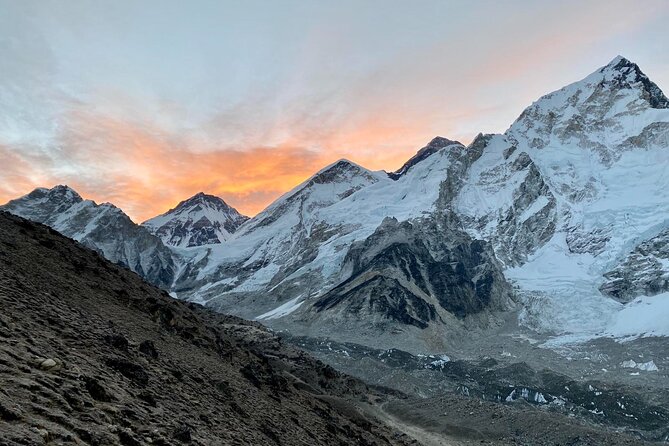
From Tengboche, the route drops to Debuche, crosses the Imja Khola, and climbs through Pangboche toward Dingboche. Mani stones line the trail near Pangboche, and the day ends at a higher elevation. This is another long walking day, so the change in altitude is worth taking seriously.
Day 7 is the second planned acclimatization day. Instead of heading closer to Base Camp, you hike from Dingboche toward Nangkartshang Peak, a viewpoint above the village. It is a useful balance: you get a purposeful walk and a chance to look out over the mountains, while the schedule reserves time for your body to adjust. The itinerary does not state the hike’s exact duration or elevation reached.
Lobuche: memorials beside the glacier
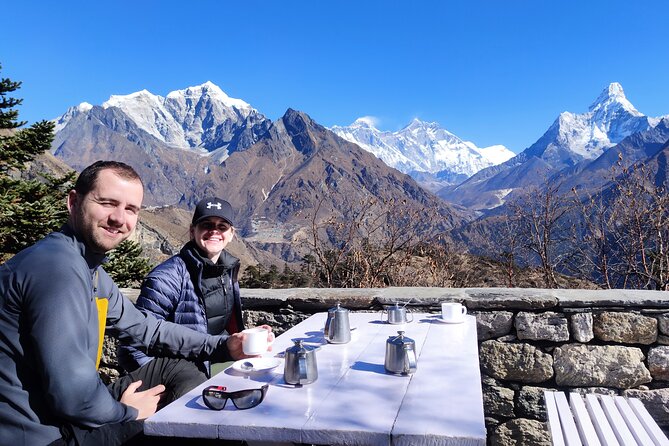
The trail to Lobuche follows the lateral moraine of the Khumbu Glacier and passes stone memorials to climbers who died on nearby peaks. It is a sobering stretch, and one that gives the route a human dimension beyond the famous mountain names. You are also getting closer to the high point of the trek, so the day’s uphill effort may feel more demanding than its distance alone suggests.
The schedule marks this as another long day but does not provide a walking-time estimate. With porters carrying luggage, you can focus on walking with a lighter load. The package assigns one porter for every two people, and covers staff accommodation, food, salary, insurance, equipment, and medicine.
Everest Base Camp: the destination on foot
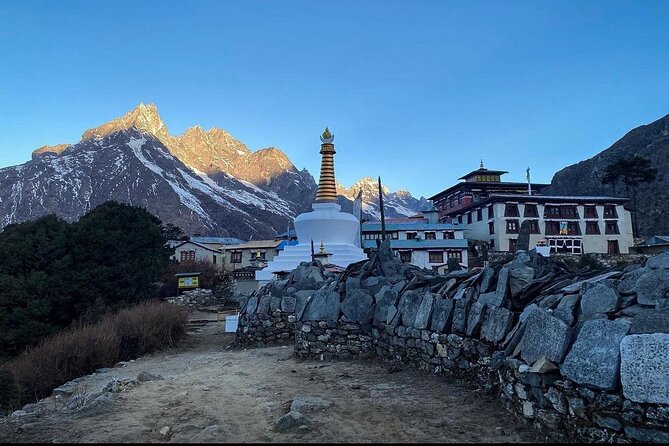
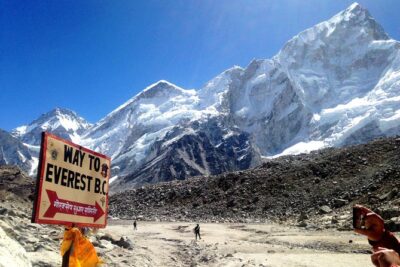
Day 9 is the push to Everest Base Camp at 5,365 meters. The route follows the Khumbu Glacier, and the itinerary calls this a big and difficult day. Base Camp is the closest point to Mount Everest on this trek without mountaineering equipment. In spring, climbing teams may be present, but the itinerary does not promise that you will see them.
It is worth keeping expectations grounded: reaching Base Camp is a major achievement, but it is not a summit climb, and the site itself is not the only reason to make the journey. The walk, the high mountain setting, and the changing terrain are part of the experience. You should also remember that the helicopter comes later in the plan; it does not spare you this demanding trek in.
Kala Patthar: the hardest climb and the big view
Day 10 brings a climb to Kala Patthar at 5,555 meters. The tour describes it as one of the most difficult but rewarding days, with the ascent offering broad views of the surrounding peaks. It is a short-named stop with a serious altitude attached. A moderate fitness rating is not a promise that the climb will feel moderate at this height.
The supplied schedule then becomes less clear. It places a stop at Lukla on Day 11 and describes a 35-minute flight back to Kathmandu, while the tour’s main feature is a shared helicopter from Gorakshep to Lukla. It does not explain exactly how the trek from Kala Patthar and Gorakshep, the helicopter flight, and the return flight to Kathmandu fit together. Get a clear, written day-by-day plan before paying, including what happens if weather disrupts the helicopter.
What the $3,000 covers, and what it does not
The price includes airport and hotel transfers in Kathmandu, two hotel nights with breakfast, domestic flights between Kathmandu and Lukla, the shared helicopter flight, and trekking accommodation. It also covers an English-speaking licensed guide, porters, Everest National Park and TIMS permits, and standard meals during the trek: breakfast, lunch, and dinner. A farewell dinner is included, too.
Practical extras include a duffel bag, trekking map, sun hat, filtered trail water, and seasonal fruit. The operator also provides a first-aid kit with an oximeter. These inclusions make the package easier to manage than assembling each service separately, especially when coordinating flights, staff, permits, and meals across a 12-day route.
Still, the headline price is not the full trip cost. International airfare, Nepal’s entry visa, travel insurance that covers emergency rescue and evacuation, personal trekking equipment, alcoholic and other drinks, tips, and Kathmandu lunches and dinners are excluded. Tips for the trekking staff and driver are expected, so build them into your budget rather than treating them as an afterthought.
Guides, group size, and the kind of support to expect
The tour is run by Ace the Himalaya and takes up to 14 people, with at least two required to book. That cap gives you a group setting without a huge crowd, though the experience will still depend in part on the group’s pace and the guide’s management of the day.
Ace’s trekking teams have included guides named Ram, Raj, Madan, and Rajendra, as well as porters such as Saman, Jit, Sher, Bishal, Girija, and Pesal. Your assigned team may differ. The most useful point is not to expect a particular name, but to confirm who is leading your departure and how the guide handles pacing, acclimatization, and the helicopter plan.
The strongest reported themes from past trips are practical support, attentive guides, and porters who help make the trek manageable. Those matter on a route where a positive word at the right moment can help, but they do not remove the physical demands. You are still responsible for carrying your daypack and walking the route at altitude.
Is this trek right for you?
I’d consider this trip if you want the full walking approach to Everest Base Camp, value having the major logistics bundled, and like the idea of reducing the return trek by helicopter. It may also suit you if you want a guide and porter team rather than organizing trail services on your own. The two acclimatization days are a thoughtful part of the schedule, not spare vacation time.
Think twice if you are looking for an easy mountain holiday, need a fixed return time, or are not prepared for long walking days at high altitude. The itinerary’s return-flight wording also deserves clarification before booking. This tour can offer a memorable, demanding route to Base Camp and Kala Patthar, but its value depends on being comfortable with the exertion, the added costs, and the possibility that weather affects the flight.
My advice: book if you want the trek itself and see the helicopter as a useful shortcut, not a substitute for the climb. Before you commit, ask Ace the Himalaya to confirm the Gorakshep-to-Lukla flight day, the onward flight to Kathmandu, and the plan if poor weather prevents the helicopter from flying.
FAQ
How long is the Everest Base Camp trek with helicopter return?
The experience lasts about 12 days. It begins with airport pickup in Kathmandu and ends with a transfer to Tribhuvan International Airport.
How long is the helicopter flight?
The shared helicopter flight from Gorakshep to Lukla is described as about 20 minutes.
What is the highest point on the trek?
The itinerary lists Kala Patthar at 5,555 meters. Everest Base Camp is listed at 5,365 meters.
What level of fitness is required?
The tour specifies a moderate physical fitness level. The schedule also describes several long trekking days and a difficult climb to Kala Patthar.
Are meals included?
Standard meals are included during the trek: breakfast, lunch, and dinner. Breakfast is included at the Kathmandu hotel, but lunch and dinner in Kathmandu are not.
What is included in the $3,000 price?
Included items cover Kathmandu airport and hotel transfers, two hotel nights with breakfast, domestic airfare between Kathmandu and Lukla, the shared helicopter flight, trekking accommodation, a guide, porters, permits, trail meals, and some trekking supplies.
Is travel insurance included?
No. Travel insurance is not included. The tour specifies that you should have coverage for emergency rescue and evacuation.
More multi-day treks in Kathmandu
- Everest Base Camp Trekking – 2025/2026
★ 5.0 · 199 reviews - Everest Base Camp Trek
★ 5.0 · 193 reviews - Everest Base Camp Trekking
★ 5.0 · 146 reviews - Langtang Valley Trek
★ 5.0 · 140 reviews
Newly listed in Kathmandu
- Traditional Momo Making Class★ 5.0 · 10 reviews
- Walking tour of real Kathmandu through back streets.★ 5.0 · 3 reviews
- Kathmandu 2 Nights 3 Days Chitwan Jungle Safari Tour★ 5.0 · 9 reviews
- Visit Swayambhunath and Bauddhanath Stupa with Guide★ 5.0 · 5 reviews
- Walking tour of Kathmandu with awesome local guides★ 5.0 · 4 reviews
- Kathmandu Street Food Walking Tour – Eat Like a Local★ 5.0 · 3 reviews
- Private Manaslu Circuit Trek at Himalayas★ 5.0 · 3 reviews
- Kathmandu to Pokhara Vip Sofa Bus Ticket★ 4.0 · 4 reviews
Everest Base Camp Treks, compared.
Browse the lists this tour appears in