
Reviewed · EVEREST BASE CAMP TREKS
Everest Base Camp Trek
Everest Base Camp is not a quick photo stop. It is a two-week walk into thin air, along a route where the views grow larger and each day asks a little more of your legs. This private trek builds in acclimatization days and takes you from Kathmandu to the Khumbu with a guide and porters handling much of the practical work.
I like two things in particular: the slower pace and planned rest days give you time to adjust to altitude, and porters carry your main gear while your guide sorts out the daily details. Guides named by past participants include Lok, Khila, Lal, and Ossman, though you should not assume you will be assigned a particular person.
The trade-off is the altitude, not just the distance. The itinerary reaches about 5,000 meters on the Nagarkhang Peak acclimatization hike, and the route crosses glacier terrain where walking gets harder as oxygen thins. Lukla flights are weather-dependent, so the extra Kathmandu day is useful, not spare fluff.
Key points before you book
- Lukla is part of the adventure: The roughly 30-minute flight is included in both directions, but weather can delay or cancel it.
- You get two acclimatization days: Hikes around the Khumbu and a day hike to Nagarkhang Peak help you adapt before heading higher.
- Porters carry your gear: The package includes porters, a guide, and a duffel bag, sleeping bag, and down jacket on loan.
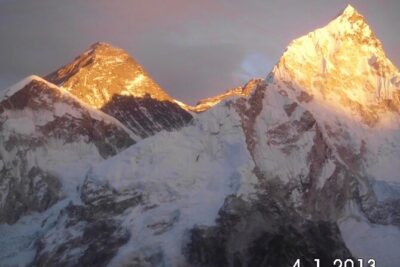
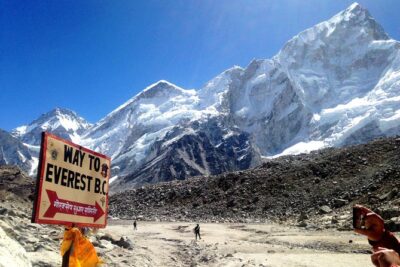
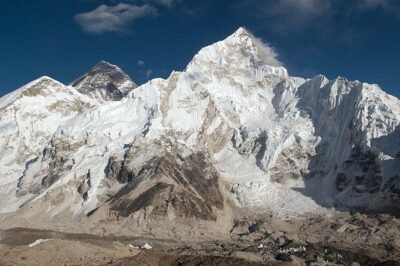
- The route reaches Everest Base Camp and Kala Patthar: The trek includes glacier walking and an early start for the Kala Patthar viewpoint.
- The package covers key costs: Permits, domestic flights, airport transfers, guide and porter costs, and most meals are included.
- Budget extra for personal costs: International flights, insurance, emergency evacuation, hot showers, drinks, laundry, and other personal expenses are not included.
A 15-day trek, with altitude built into the plan
This is a guided, private trek for your group, not a large mixed party. The stated duration is about 15 days, including arrival and departure days in Kathmandu, a day set aside for possible flight disruption, and 12 days of walking and acclimatization in the mountains.
That extra time matters. This is not a route where you want to rush through the first few days and hope your body catches up. The trek schedules two rest and acclimatization days, with hikes rather than full days of sitting still. You can take these at your own pace with your group and guide.
The tour calls for moderate physical fitness, but that label can understate the challenge. You will walk for several days at altitude, and the route gets tougher as the air gets thinner. A guide and porter make the logistics easier; they do not make the climb effortless.
More Everest Base Camp treks in Kathmandu:
- Everest Base Camp Trek – 14 Days
★ 5.0 · 1,499 reviews - Everest Base Camp Trekking
★ 5.0 · 485 reviews - Everest Base Camp Trekking – 13 Day
★ 5.0 · 365 reviews
Kathmandu, then a flight into the Khumbu
Day 1 begins with an airport pickup in Kathmandu and a transfer to your hotel. The airport representative meets you with a name card, and the team introduces you to the arrangements for the trip. You have a chance to settle in before the mountain portion begins.
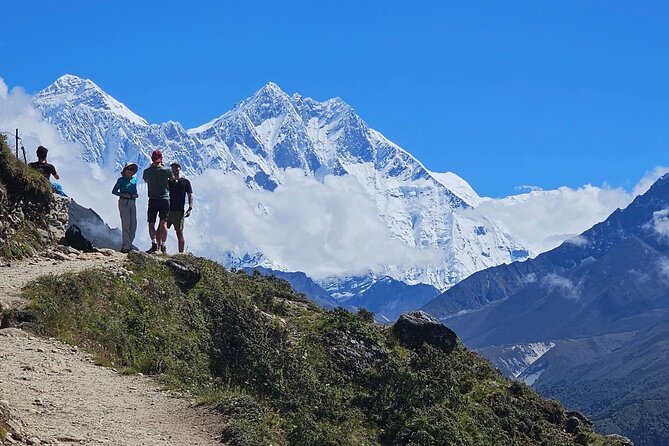
On Day 2, you fly to Lukla, a short flight of about 30 minutes, then start walking toward Phakding. The flight is a memorable part of the journey, with Himalayan views if the weather and visibility cooperate. The advice to sit on the right side of the plane is worth noting for the views, but do not treat a particular seat as a guarantee of a clear sightline.
The flight also introduces one of the trek’s practical uncertainties. Lukla services can be affected by weather, which is why the itinerary includes a spare day in Kathmandu near the end. Keep international connections flexible enough to allow for delays.
Forest trails, river crossings, and the first acclimatization day
The following day starts with a gentler climb toward Monjo. You stop for lunch at Jorsalle, then continue through pine forest and across the Hillary Bridge. After the bridge, the path climbs steeply. This is a good early reminder that even a day described as a manageable approach can include a demanding uphill section.
Day 4 is set aside for acclimatization. Your leader may offer hikes to places such as Khumjung and Khunde, the Everest View Hotel, Thame, or a national park area. The choice gives your group some flexibility, while the purpose stays the same: gain some height and give your body time to adjust before moving farther up the valley.
I like that this day is treated as part of the trek rather than a scheduling nuisance. Altitude affects people differently, and a planned pause gives your guide room to set a sensible pace. It is still a hiking day, so do not count on it as a full rest for tired legs.
Toward Pangboche and a second high-altitude hike
The route continues toward Kyanjuma, with a tea break possible along the way. You descend to Phungi Thanga for lunch, cross the Dudh Koshi River, then climb again. The repeated ups and downs are part of the rhythm here: a descent is not always a sign that the hard work is over.
On Day 6, the trail follows the Imja Khola toward Pangboche, at 3,930 meters. The village is described as home to many well-known Everest climbers and to Sherpa families. This stretch offers a closer look at life in the region, rather than only a succession of mountain viewpoints.
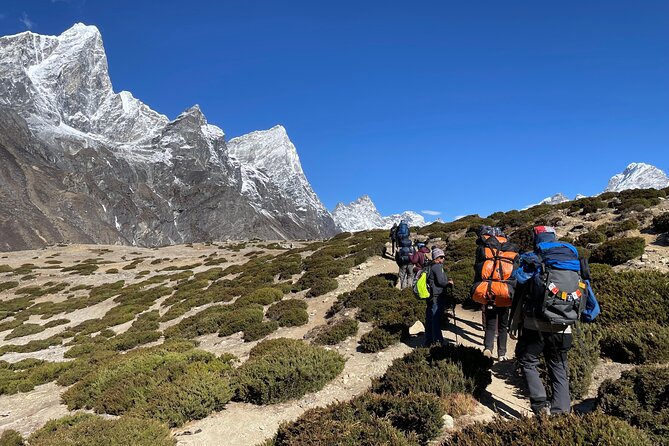
Day 7 brings another acclimatization day, this time with a hike to Nagarkhang Peak at about 5,000 meters. The summit offers views of several Himalayan peaks. This is a substantial hike at high altitude, so follow your guide’s pace and take the day seriously. The point is not to race uphill, but to prepare for the higher section ahead.
More multi-day treks in Kathmandu:
- Everest Base Camp Trek -14 Days
★ 5.0 · 321 reviews - Everest Base Camp Trekking – 2025/2026
★ 5.0 · 199 reviews - Everest Base Camp Trek with Helicopter Return from Gorakshep to Lukla
★ 5.0 · 161 reviews - Everest Base Camp Trekking
★ 5.0 · 146 reviews
Dughla Pass, glacier ground, and Everest Base Camp
As you approach your goal, the trail follows a ridge above Pheriche and reaches Dughla, where you stop for lunch before a steep climb to Dughla Pass. The itinerary describes this as a difficult uphill section, and it comes after several days of walking. Slow, steady progress matters more here than speed.
The next day takes you over glacier terrain toward Everest Base Camp. The early part is described as easier, but the route becomes harder once you begin climbing across the glacier. Uneven ground and low oxygen make this a demanding day, even for fit walkers. Your guide stays with the group and carries a first-aid kit, but you should still tell them promptly if you feel unwell.
Reaching Base Camp is the headline moment, though the route is about more than a single destination. You pass through mountain villages and high valleys, with views of peaks and glaciers along the way. Conditions and visibility can change, so the best approach is to focus on the walk itself rather than expect a perfect view at every turn.
Kala Patthar at dawn, then the long return
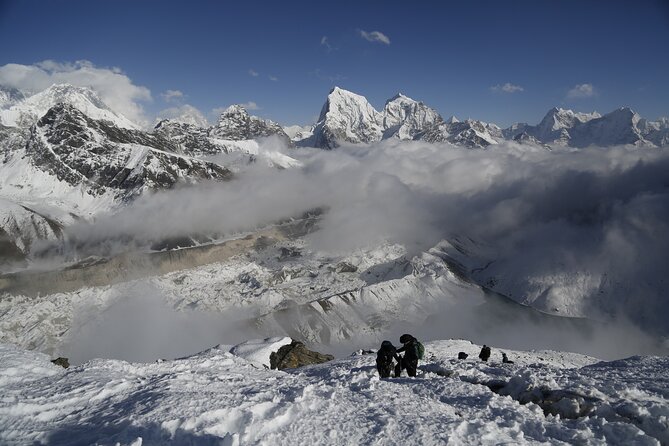
Day 10 starts early with a climb to Kala Patthar before sunrise. The climb is difficult, but the viewpoint is prized for its views across the Khumbu peaks. An early start means cold conditions and tired legs, so bring patience as well as warm layers. The down jacket supplied for the trek can help, though you will want to confirm what personal clothing you need before departure.
The return route retraces much of the way in. You pass through Debuche and Tengboche, descend to Phungi Thanga for lunch, then climb toward Kyanjuma. That up-and-down profile can be a surprise after the major objectives are behind you. The return is not a simple downhill stroll.
The next walking day takes you down toward Jorsalle and on to Phakding, then the trek continues to Lukla. The schedule describes the walking portion as concluding there after 12 days on the trail. Day 13 is the flight back to Kathmandu, weather permitting.
Day 14 is a free day in Kathmandu, with time for shopping or simply catching your breath. More importantly, it acts as a buffer in case the Lukla flight is delayed or canceled. Day 15 includes a private airport transfer, planned for about three hours before your international flight.
What the $1,408 price covers, and what it does not
At $1,408 per person, this package bundles several expensive and useful pieces of a Himalayan trek. It includes Kathmandu airport transfers by private vehicle, Kathmandu to Lukla flights for you and your guide, the Everest National Park entry permit, TIMS registration, a licensed English-speaking guide, porters, and a first-aid kit carried by the guide.
You also get a four-season sleeping bag, down jacket, and duffel bag to use and return after the trip. That saves you from having to buy or transport some bulky gear, though the details of fit, condition, and what else to pack are worth confirming with the operator before departure.
Meals included are 14 breakfasts, 11 lunches, and 12 dinners. Accommodation is described as part of the arrangements, but no lodging standard or room details are provided, so ask what to expect before you book. The package does not include international airfare, Nepal visa fees, travel or medical insurance, emergency evacuation, drinks, hot showers, laundry, phone costs, or other personal purchases.
For the price, the main value is having the flights, permits, guide, porters, transfers, and core trek arrangements managed together. That can make a complex trip easier to plan, but it does not remove the need for your own insurance and a personal spending budget. Costs caused by natural events or other circumstances beyond the operator’s control are also excluded.
Guides, pace, and the human side of the trek
The strongest practical advantage here is having a guide who handles the route and daily organization while you concentrate on walking. The tour is private, so only your group participates. It also says the group can take the trek at its own pace, a useful feature when people in one party adjust to altitude differently.
Several guides associated with the company have been named by people who took the trek, including Lok, Khila, Lal, Ossman, and Hari. Their accounts emphasize care, safety, encouragement, and steady pacing. Those are exactly the qualities to value on a long high-altitude route. However, the names are examples, not a promise that a specific guide will lead your departure.
Porters carry your gear and are provided with meals, accommodation, salary, and insurance. For groups larger than six, an assistant guide is included, with the same basic support arrangements. The arrangement lightens your load, but it is still wise to pack carefully and carry any personal essentials you need during the day.
Who should book this trek?
This trip suits you if you want to reach Everest Base Camp with a guide and organized support, rather than assemble every flight, permit, porter, and meal arrangement yourself. It is also a strong fit for a private group that values flexibility in pace and wants acclimatization hikes built into the schedule.
It is less suited to anyone looking for an easy mountain holiday. The route involves multiple days of walking, high altitude, a hike to about 5,000 meters, glacier terrain, and the possibility of flight disruption. You should be comfortable with a moderate fitness level and arrange travel and medical insurance that covers your plans; insurance and emergency evacuation are not included.
I would book this trek if the goal is Everest Base Camp with dependable logistical support and a measured itinerary. Before paying, ask about accommodation, what personal gear to bring, and how the operator handles flight delays. If you are prepared for the physical demands and the uncertainty of mountain weather, the package offers a practical way to experience the Khumbu with a guide and porters beside you.
FAQ
How long is the Everest Base Camp Trek?
The trip lasts about 15 days, including time in Kathmandu, the mountain trek, and a spare day in Kathmandu for possible flight delays.
What is included in the price?
The package includes private airport transfers, Kathmandu to Lukla flights for you and the guide, permits, a licensed English-speaking guide, porters, a first-aid kit, and a sleeping bag, down jacket, and duffel bag to return after the trip. It also includes 14 breakfasts, 11 lunches, and 12 dinners.
Are international flights and travel insurance included?
No. International airfare, Nepal visa fees, travel and medical insurance, and emergency evacuation are not included.
Is the trek private?
Yes. It is a private activity, and only your group participates. An assistant trekking guide is included for groups larger than six.
How difficult is the trek?
The stated fitness level is moderate. The route includes several days of walking at altitude, glacier terrain, and an acclimatization hike to Nagarkhang Peak at about 5,000 meters.
Are the flights to Lukla included?
Yes. Domestic flights between Kathmandu and Lukla are included for you and your guide. The flights may be delayed or canceled because of weather.
What personal costs should I budget for?
You pay separately for items such as drinks, hot showers, phone use, laundry, snacks, and other personal purchases. The package also excludes international airfare, visa fees, insurance, emergency evacuation, and costs caused by events beyond the operator’s control.
Newly listed in Kathmandu
- Traditional Momo Making Class★ 5.0 · 10 reviews
- Walking tour of real Kathmandu through back streets.★ 5.0 · 3 reviews
- Kathmandu 2 Nights 3 Days Chitwan Jungle Safari Tour★ 5.0 · 9 reviews
- Visit Swayambhunath and Bauddhanath Stupa with Guide★ 5.0 · 5 reviews
- Walking tour of Kathmandu with awesome local guides★ 5.0 · 4 reviews
- Kathmandu Street Food Walking Tour – Eat Like a Local★ 5.0 · 3 reviews
- Kathmandu to Pokhara Vip Sofa Bus Ticket★ 4.0 · 4 reviews
- Regular Yoga for all levels of practitioners in Kathmandu★ 5.0 · 4 reviews
Everest Base Camp Treks, compared.
Everest Base Camp Trek with Helicopter Return from Gorakshep to Lukla
Read our review →
Browse the lists this tour appears in