
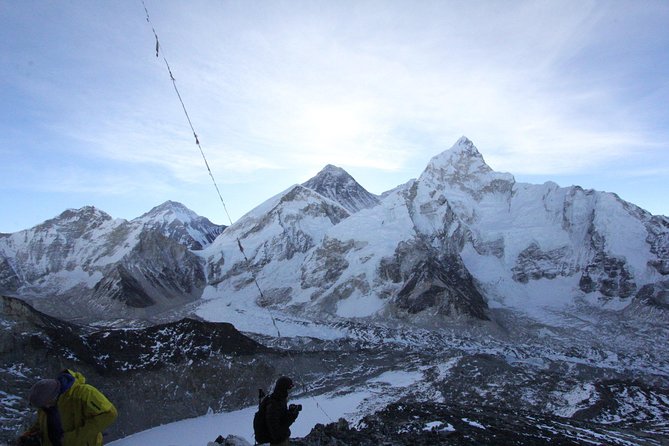
Reviewed · EVEREST BASE CAMP TREKS
Gokyo to Everest Base Camp Trek
The draw here is the full Everest circuit: Gokyo’s high lakes, a crossing of Cho La Pass, Everest Base Camp and the sunrise climb of Kala Patthar, all on one 17-day route. You get more than the standard approach to base camp, but you also take on several days above 5,000 meters.
I like two things in particular: the quieter-feeling approach through Gokyo before joining the base camp route, and the practical support of a licensed guide, a porter for every two people, filtered trail water and flights between Kathmandu and Lukla. Guides named by the company’s past clients include Nima, Raj Kumar, Ramesh, Lakpa Sherpa and Ganesh, though your guide will depend on your departure.
The trade-off is the effort. Cho La, Gokyo Ri and Kala Patthar are serious high-altitude outings, and conditions can force changes to the plan. You need good fitness, suitable insurance and a willingness to accept basic lodging in remote places.
Five things to know before you book
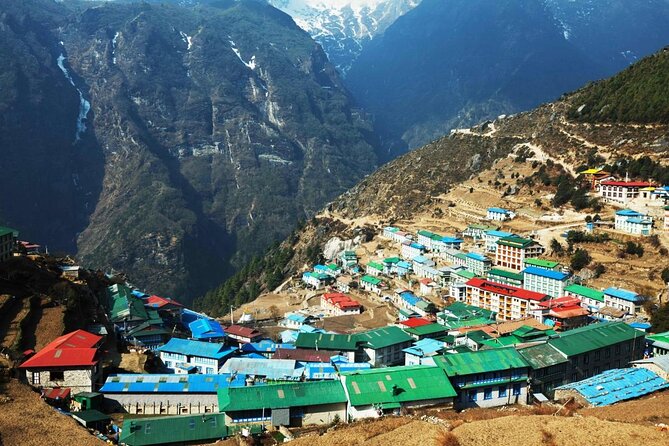
- Gokyo adds a different side of Everest: The route reaches Gokyo and its lakes before crossing Cho La toward base camp.
- Three high points define the trek: Gokyo Ri reaches 5,483 meters, Cho La is about 5,300 meters, and Kala Patthar rises to 5,555 meters.
- Namche includes an acclimatization day: You stay there for two nights early in the trek, with a short outing to a museum.
- Support is built into the price: A licensed English-speaking guide, one porter per two people, permits, trail water, meals and Kathmandu to Lukla flights are included.
- Weather can change the plan: The guide may need to adjust timing or route decisions, especially around the pass and mountain flights.
What the Gokyo to Everest route gives you
At $2,200 per person, this is a 17-day guided trek that combines the Gokyo Valley with Everest Base Camp and Kala Patthar. The route follows the Dudh Koshi toward its source near Gokyo, then crosses Cho La Pass to join the trail toward Lobuche and base camp.
That circuit matters if you want more than the familiar base camp approach. You visit Gokyo, climb Gokyo Ri for views toward Cho Oyu, Everest and Makalu, then cross a high pass before reaching the Khumbu Glacier and base camp. The variety comes with a price in effort: this is a long, high route with several demanding days.
The group is capped at 15 people. That is small enough for a guide to manage a group on the trail, while still allowing you to share the experience and costs with others. The trek is listed for people with moderate physical fitness, but the altitude and steep climbs make it sensible to prepare for sustained walking rather than treat that rating as a promise of an easy outing.
More Everest Base Camp treks in Kathmandu:
- Everest Base Camp Trek – 14 Days
★ 5.0 · 1,499 reviews - Everest Base Camp Trekking
★ 5.0 · 485 reviews - Everest Base Camp Trekking – 13 Day
★ 5.0 · 365 reviews
Kathmandu, Lukla and the walk to Namche
Your trip begins with an airport pickup at Tribhuvan International Airport in Kathmandu. The first day is set aside for arrival and transfer. Two nights in a three-star Kathmandu hotel are included, one at the start and one after the trek, while meals in Kathmandu are not.
The next morning, you fly for about 35 minutes to Lukla, at 2,804 meters, then begin walking toward Phakding. The short flight is a striking start to a trek that soon leaves city routines behind. Flights are weather-dependent, so it is wise to keep some flexibility in your wider travel plans.
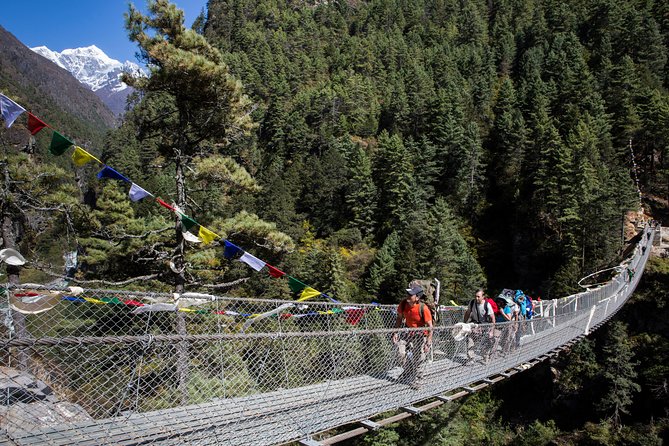
From Phakding, the trail follows the Dudh Koshi and crosses suspension bridges decorated with prayer flags. After entering Sagarmatha National Park, the path climbs toward Namche Bazaar. This is the first major adjustment to altitude, and the ascent can feel harder than its distance suggests.
You spend two nights in Namche, giving your body a chance to adjust. The planned acclimatization outing is short and includes a museum with exhibits on Sherpa customs. I like that the schedule does not rush straight through this important stop. Namche is also a useful place to pause before the route climbs higher, though the trek does not promise a full rest day without walking.
From Namche into the Gokyo Valley
Leaving Namche, the route climbs through rhododendron forest, with juniper and conifers appearing at higher elevations. The trail passes through yak grazing country before reaching Phortse. The vegetation and villages change as you gain height, and the trail begins to feel more remote.
The next leg climbs a ridge with views down toward Kengtega and up toward Cho Oyu, then descends to a river before climbing again near the Ngozumpa Glacier’s terminal moraine. You reach Machhermo, another high stop on the way to Gokyo. These repeated ups and downs are part of the trek’s rhythm, but they can also make a day feel longer than the map suggests.
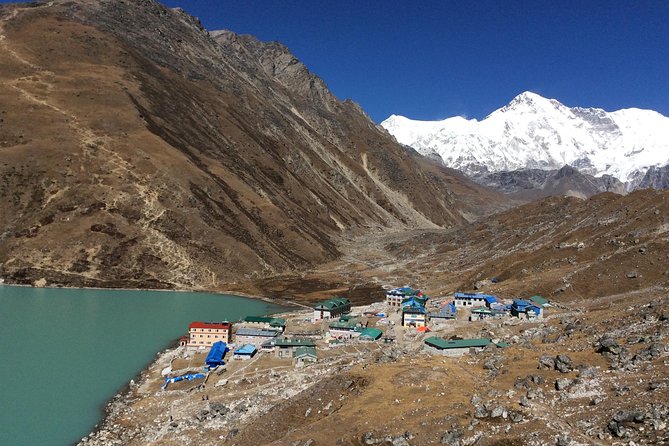
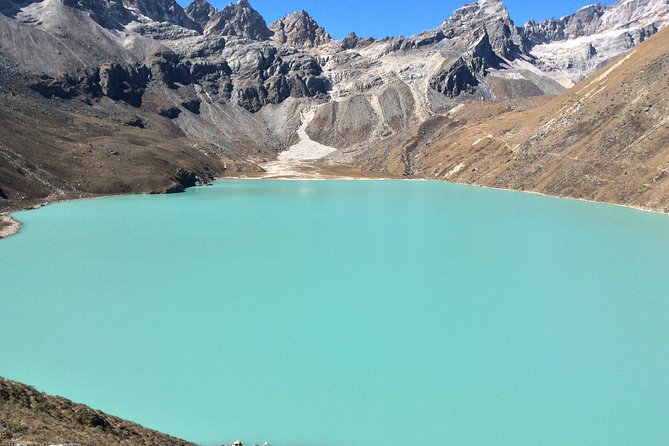
Gokyo, at 4,790 meters, is a two-night base. That gives you time for the lakes and the climb to Gokyo Ri rather than a quick overnight stop. The setting is one of the main reasons to choose this route: Gokyo sits west of Everest Base Camp, and the views from the surrounding heights reach toward Cho Oyu, Everest and Makalu.
The following morning brings a steep climb to Gokyo Ri at 5,483 meters. The ascent is optional in the sense that it is a hike from camp, but it is a major effort at altitude. The payoff is a broad view over the Gokyo Valley and surrounding high peaks. If you are comparing this with a direct base camp trek, this climb and the lakes are the chief reasons to take the longer circuit.
Cho La Pass: the route’s toughest link
From Gokyo, you walk to Thangnag, at the foot of Cho La. The accommodation here is described as basic and dormitory-style because of the remote location. This is a useful expectation to set: comfort becomes less predictable as the route moves away from larger settlements.
The pass day starts very early, around 4 or 5 a.m., with the aim of reaching the crossing by 9 or 10 a.m. The timing is intended to avoid the poorer weather conditions that can arrive later in the day. Cho La sits around 5,300 meters, and snow or bad weather can affect the crossing and the decisions your guide makes.
This is the part of the route where you most need patience and flexibility. One past client described a guide named Nima adjusting the plan around heavy snow and weather, with safety guiding the decisions. Other named guides, including Raj Kumar and Ganesh, were also credited with adapting plans when conditions changed. Those names are not a guarantee of who will lead your trek, but they point to the kind of judgment you should expect from a guide on a route where the weather matters.
After the pass, you continue toward Lobuche. The next day is described as a shorter, easier walk of about four hours. That shorter stage is welcome after the crossing, though the altitude remains high and a shorter day is not the same as an easy one.
More multi-day treks in Kathmandu:
- Everest Base Camp Trek -14 Days
★ 5.0 · 321 reviews - Everest Base Camp Trekking – 2025/2026
★ 5.0 · 199 reviews - Everest Base Camp Trek
★ 5.0 · 193 reviews - Everest Base Camp Trek with Helicopter Return from Gorakshep to Lukla
★ 5.0 · 161 reviews
Everest Base Camp and Kala Patthar
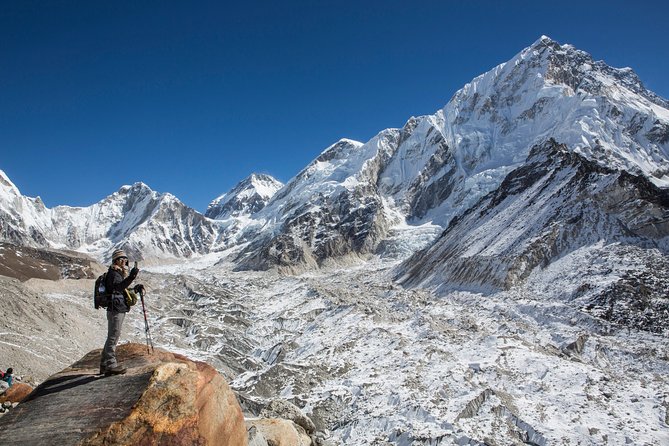
From Lobuche, you walk along the Khumbu Glacier toward Everest Base Camp at 5,365 meters. It is a long and difficult day, and base camp is the closest you can get to Everest without mountaineering equipment. During spring, tents may be present at base camp, but the trek does not include a climb of Everest itself.
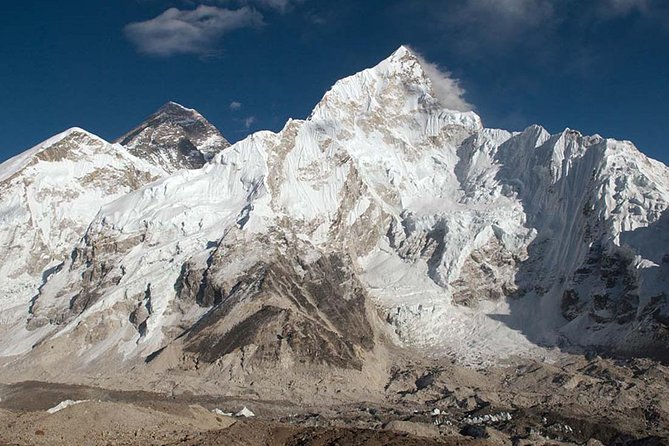
Base camp is an important destination, but it is not the only place to get a wide view of the mountain. The next morning’s climb to Kala Patthar, at 5,555 meters, is described as one of the hardest and most rewarding days. The climb is demanding, and the high point gives you the panoramic mountain views that many people hope to see on this trip.
The itinerary places these two major goals on successive days. That is a lot to ask of your legs and lungs, so do not book this route just for a photo at base camp. The full experience depends on the approach, the high pass and the effort required to reach the viewpoints. Weather and personal condition can affect what you manage to do.
After Kala Patthar, the route descends through Pangboche and Tengboche before returning to Namche Bazaar. The descent brings a change of pace, but it is still a full trekking day. You then walk back to Lukla, where there is time in the afternoon to reflect on the trek as a group.
What is included, and what still costs extra
The $2,200 price covers more than a guide and a bed. Included are airport transfers, two nights in a three-star Kathmandu hotel, 14 nights in guest houses, the Kathmandu to Lukla flights, trekking permits, a licensed English-speaking guide and one porter for every two people.
The package also provides a down jacket and sleeping bag to return after the trek, a duffel or kit bag, a sun hat, seasonal fruit and filtered trail water using a Katadyn Pocket Water Filter. Breakfast is included for 16 days, with 14 lunches and 14 dinners. That takes care of many routine costs on the trail, though it does not cover every drink or meal.
You pay separately for international airfare, a Nepal entry visa, travel insurance, personal trekking equipment, alcoholic and other hot or cold drinks, and lunch and dinner in Kathmandu. Tips for trekking staff and the driver are expected, so include them in your budget rather than treating them as a surprise at the end.
Insurance deserves special attention because the package specifically requires cover for emergency high-altitude rescue and evacuation. The trek reaches elevations above 5,500 meters, and the operator does not include that protection in the price. Check your policy carefully before departure.
Lodging, group size and the practical trade-offs
Guest house accommodation is included for 14 nights, with twin-sharing arrangements and attached toilets specified for Lukla, Phakding and Namche. At remote stops, conditions can be more basic. Thangnag, for example, has dormitory-style lodging. If a private room or consistent facilities are essential to your comfort, ask the operator what is available before booking.
A maximum of 15 people keeps the group from becoming unwieldy, but the pace still needs to work for different fitness levels. Your guide leads the trek and can respond to trail and weather conditions. One porter for every two people means you do not carry all your trekking baggage yourself, though you still need to bring personal equipment.
The trek is usually booked about 51 days in advance. That is a useful planning reference, not a promise that a particular date will be available. The stated start and end point is Tribhuvan International Airport in Kathmandu, with an 8 a.m. start time. The experience ends back at the same meeting point after the return to Kathmandu and airport drop-off.
The cancellation terms are worth reading before you commit: a full refund is available if you cancel at least six full days before the start; cancellations two to six days ahead receive a 50 percent refund, and cancellations less than two days ahead are not refunded. If poor weather cancels the experience, you are offered a different date or a full refund.
Should you book this Gokyo to Everest Base Camp trek?
Book it if you want a demanding circuit rather than a straightforward trek to base camp. The Gokyo lakes, Gokyo Ri and Cho La crossing add variety and high mountain views, while the included guide, porter, permits, meals and domestic flights make the $2,200 price easier to assess as a complete package.
Think twice if your main goal is simply to reach Everest Base Camp with the least strain, or if basic lodging and weather-related changes would spoil the trip for you. This route asks for solid fitness and flexibility. If that sounds like a fair trade for Gokyo, the high pass and Kala Patthar, it is a distinctive way to reach the Everest region.
FAQ
How long is the trek?
The trip lasts about 17 days, including arrival in Kathmandu, the trek, the return flight to Kathmandu and airport departure.
What is the price per person?
The listed price is $2,200 per person.
How large can the group be?
The group has a maximum of 15 people.
Are flights between Kathmandu and Lukla included?
Yes. The Kathmandu to Lukla and return airfare is included.
What meals are included?
The package includes 16 breakfasts, 14 lunches and 14 dinners. Lunch and dinner in Kathmandu are not included.
What are the highest points on the route?
Gokyo Ri reaches 5,483 meters, Cho La Pass is about 5,300 meters, Everest Base Camp is 5,365 meters, and Kala Patthar is 5,555 meters.
Do I need travel insurance?
Yes. Travel insurance is not included, and the stated requirements call for cover that includes emergency high-altitude rescue and evacuation.
Newly listed in Kathmandu
- Traditional Momo Making Class★ 5.0 · 10 reviews
- Kathmandu 2 Nights 3 Days Chitwan Jungle Safari Tour★ 5.0 · 9 reviews
- Walking tour of real Kathmandu through back streets.★ 5.0 · 3 reviews
- Visit Swayambhunath and Bauddhanath Stupa with Guide★ 5.0 · 5 reviews
- Walking tour of Kathmandu with awesome local guides★ 5.0 · 4 reviews
- Kathmandu Street Food Walking Tour – Eat Like a Local★ 5.0 · 3 reviews
- Private Manaslu Circuit Trek at Himalayas★ 5.0 · 3 reviews
- Kathmandu to Pokhara Vip Sofa Bus Ticket★ 4.0 · 4 reviews
Everest Base Camp Treks, compared.
Everest Base Camp Trek with Helicopter Return from Gorakshep to Lukla
Read our review →Browse the lists this tour appears in