
Reviewed · EVEREST BASE CAMP TREKS
Everest Base Camp Trek | Deluxe Lodges | Both Way Helicopter Ride
Everest Base Camp is the goal, but the way there is part of the reward: you follow the Dudh Koshi River, cross suspension bridges, and pass through Sherpa villages before the trail climbs into the high Khumbu. This 10-day trip pairs that trek with shared helicopter flights, including a return from Gorakshep, so you can cover the route without walking back to Lukla.
I like two things in particular: the gradual route with acclimatization days gives you time to adjust, and the helicopter return saves several days of retracing your steps. You also get a guide, a porter shared between two people, trail meals, permits, and Kathmandu hotel nights in one package.
The trade-off is that 10 days makes for a brisk schedule at serious altitude. You need strong fitness, and no itinerary can guarantee you will avoid altitude sickness. Also, the words deluxe lodges do not tell you exactly what each room will be like, so keep expectations practical in a remote mountain region.
At a glance
- Shared helicopter flights connect Kathmandu and Lukla, with another flight from Gorakshep to Lukla.
- Two acclimatization days include a hike near Namche Bazaar and a climb above Dingboche.
- A licensed guide and porter support are included, with one porter for every two people.
- The route passes through Sherpa villages such as Phakding, Namche Bazaar, Tengboche, Pangboche, and Dingboche.
- The package costs $3,332 per person and includes trail accommodation, meals, permits, and two nights in a Kathmandu hotel.
- You need strong fitness and high-altitude travel insurance; insurance for rescue and evacuation up to 5,500 meters is not included.
Kathmandu to Lukla: a quick start in the Khumbu
Your first day is for arrival and settling in. A team member meets you at Tribhuvan International Airport and takes you to your hotel in Kathmandu. The package includes two nights in a three-star hotel with breakfast, one before and one after the trek. Take that first evening seriously: rest, check your kit, and speak up early if something important is missing.
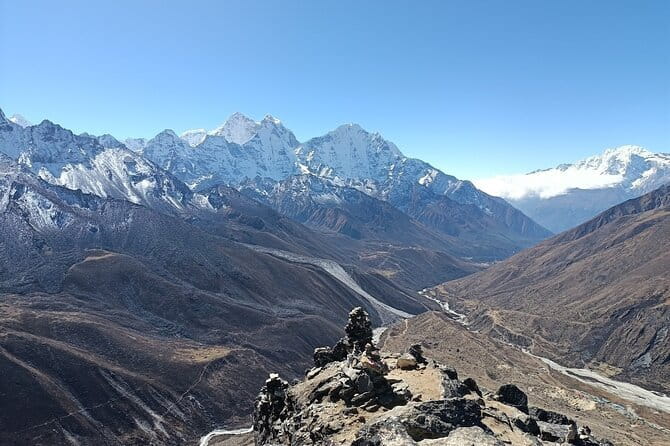
The next morning begins with a shared helicopter flight to Lukla, listed at about 45 minutes. The flight is a scenic introduction to the mountains, with views toward Everest and Kanchenjunga noted on the route. It also avoids making the first trekking day a long approach walk from another trailhead.
From Lukla, you walk toward Phakding beside the Dudh Koshi River. This is a gentler first day than the climbs ahead, which matters when you have just arrived at altitude. The route passes small settlements and river scenery, giving you a first look at the pace of trail life: walking, eating, and sleeping according to the terrain rather than a city clock.
More Everest helicopter tours in Kathmandu:
- Everest Base Camp Helicopter Tour landing at Everest View Hotel
★ 5.0 · 668 reviews - Everest Base Camp Helicopter Tour landing at Hotel Everest View
★ 5.0 · 218 reviews - Everest Base Camp Trek with Helicopter Return from Gorakshep to Lukla
★ 5.0 · 161 reviews
Phakding to Namche: bridges, river valleys, and a steep finish
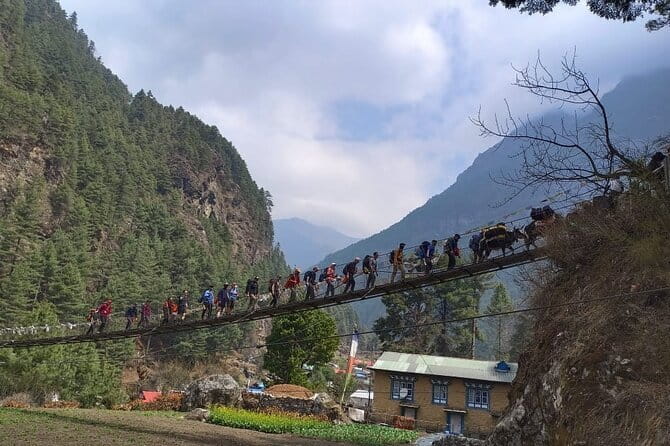
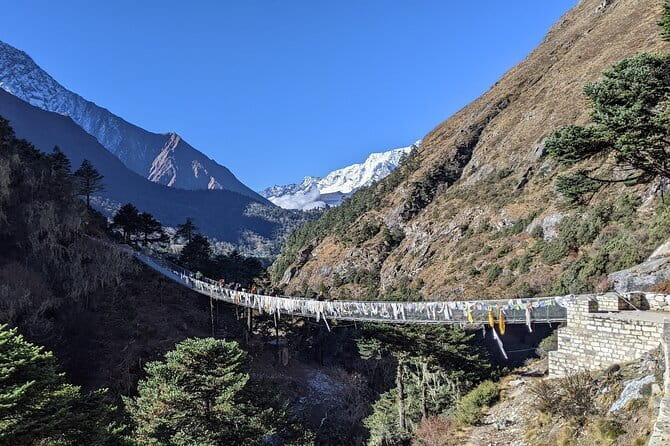
The trail continues through pine forest and along the Dudh Koshi, crossing suspension bridges on the way toward Monjo and the entrance to Sagarmatha National Park. Hillary Bridge is one of the route’s notable crossings. The bridges are practical links between steep valley walls, but they are also memorable moments on the walk. If heights unsettle you, take your time and let faster walkers pass.
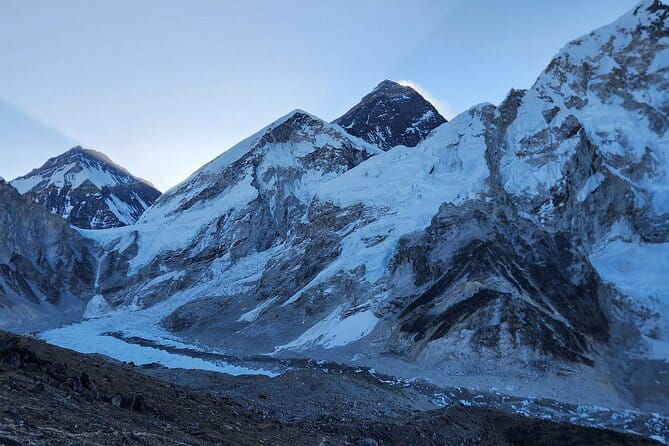
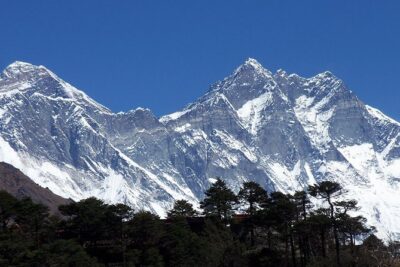
The day ends with a sustained climb to Namche Bazaar, at about 3,440 meters. This is a major gain in elevation, and the first place where the route can feel like more than a pleasant mountain walk. The trail’s first reported view of Everest comes near the end of the ascent, with Lhotse and Nuptse nearby. Namche is a useful place to rest, eat, and get a feel for the region’s main trading town.
You have time here to explore local shops, restaurants, massage centers, and spas, though any personal purchases or treatments are not listed as included. Think of Namche as more than a scenic stop: it is your first chance to take the altitude seriously and notice how your body is responding.
Namche’s acclimatization day: a walk high, a night lower
The first planned acclimatization day includes a hike toward Syangboche and the Hotel Everest View, described at 3,880 meters. The idea is to climb higher during the day, then return to sleep in Namche. This high-and-low pattern is a common way to help your body adjust, though it does not remove the risk of altitude sickness.
The hotel is a destination for the view as much as for a drink. From this area, the route description names Everest, Ama Dablam, and Lhotse among the peaks you may see. You can stop for coffee, but note that admission to the hotel is not included. Keep the day relaxed rather than treating the viewpoint as a fitness test.
Back in Namche, you have time to rest or look around. I would keep the afternoon light. A massage or a slow meal may sound tempting, but the more useful goal is to drink regularly, eat well, and save energy for the higher trail.
Tengboche and Pangboche: monasteries beneath Ama Dablam
Leaving Namche, the route follows the river before climbing and crossing another long suspension bridge into the Imja Khola Valley. The trail then rises toward Tengboche Gompa, one of the major cultural stops on the walk. The monastery gives the day a different rhythm from the river crossings and steep climbs: it is a place to pause, look around, and appreciate the spiritual life woven into the Khumbu.
The following day takes you toward Pangboche, with views of Ama Dablam and other high peaks along the way. Pangboche is known on this itinerary for its Buddhist monastery. Even if you are focused on reaching Base Camp, give these villages and religious sites time. The trek is not just a march toward a famous endpoint; these stops are part of what makes the route meaningful.
The terrain is increasingly high and exposed, and walking can feel slower than the map suggests. Your guide sets the pace and can adjust it to the group. Previous clients have named guides Tika, Rabin, and Pramod, and coordinator Shiba. Your assigned guide may be someone else, but it is useful to know that the company has named staff associated with guiding and trip communication.
More Everest Base Camp treks in Kathmandu:
- Everest Base Camp Trek – 14 Days
★ 5.0 · 1,499 reviews - Everest Base Camp Trekking
★ 5.0 · 485 reviews - Everest Base Camp Trekking – 13 Day
★ 5.0 · 365 reviews - Everest Base Camp Trek -14 Days
★ 5.0 · 321 reviews
Dingboche: another day to adjust before the high trail
Dingboche is the second planned acclimatization stop. The day includes a climb above the village, following the principle of gaining height before returning to sleep lower. After several days of walking, this may feel like an odd use of a rest day, but it is not a day to race. The purpose is to give your body more time at altitude while keeping your legs moving.
This is also where the trek’s physical demands become clearer. The air is thinner, and distances that seem modest can take effort. Pay attention to your guide’s instructions and speak up if you feel unwell. The package includes a first-aid kit and an oximeter for the staff and group, but those tools are not a substitute for reporting symptoms or following sound safety advice.
Dingboche to Lobuche: memorials and thinner air
From Dingboche, the trail climbs toward the wide valley of Dughla and continues to Lobuche. The route passes a memorial area near Thukla, dedicated to climbers who died on Everest. It is a sober pause on a trek often sold for its views, and a reminder that these mountains deserve respect.
This day is described as relatively light in walking time but significant in altitude gain. That distinction matters: a shorter walk at higher elevation can feel harder than a longer day lower down. Take the pace steadily, keep warm, and save some energy for the next day’s push toward Base Camp.
Twin-share accommodation in the best available lodges is included along the trail. The package calls the lodges deluxe, but it does not specify room amenities or promise the same standard at every stop. At this altitude, it is wiser to value a place to sleep and recover than to expect hotel comforts.
Everest Base Camp: the big goal, with Gorakshep on the route
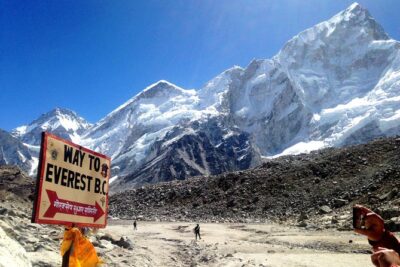
The approach from Lobuche leads toward Gorakshep across glacial terrain. From there, the route continues to Everest Base Camp, the central goal of the trek. Expect a long, demanding day on uneven ground rather than a simple stroll to a signpost. Your guide’s pacing matters here, especially after several days of elevation gain.
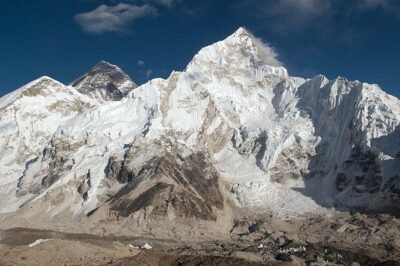
Base Camp itself is a powerful destination, but it is not the best place to expect a clear, front-on view of Everest. The itinerary’s next morning hike to Kala Patthar is the route’s designated viewpoint for a broad panorama. That distinction is useful when setting expectations: Base Camp is the milestone, while the mountain views often define the photograph.
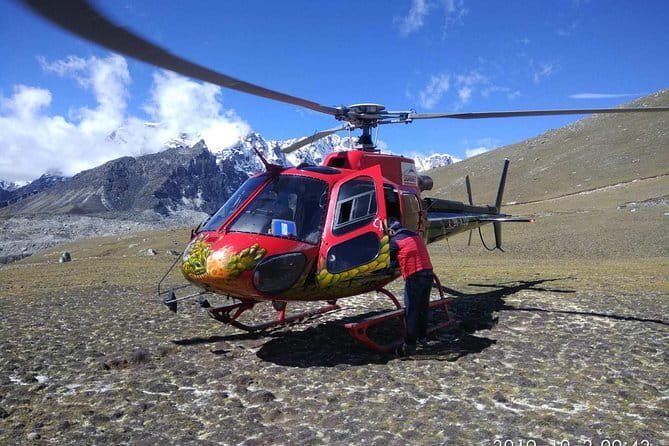
The package includes the helicopter flight from Gorakshep to Lukla. That shortcut is the key practical feature of this version of the trek. Instead of walking all the way back through the villages and valleys, you leave the high route by air, then continue by helicopter from Lukla to Kathmandu. Weather and flight operations can affect mountain travel, so do not treat a flight plan as a guarantee of exact timing.
Kala Patthar at sunrise, then the helicopter home
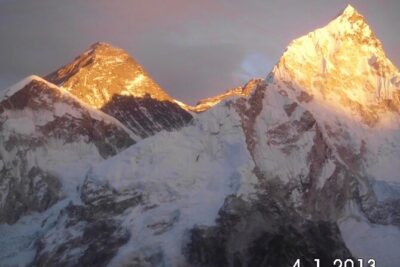
The final morning begins before sunrise with a hike up Kala Patthar. The aim is to see daylight spread across Everest and the surrounding peaks. It is an early start at high altitude, but this is the route’s clearest opportunity for a wide mountain view. Bring warm layers and follow your guide’s advice about pace.
After the viewpoint, the itinerary has you return by helicopter from Gorakshep to Lukla, followed by the shared flight from Lukla to Kathmandu. The flight saves several days of walking and is a strong reason to choose this package if you have limited holiday time. It also makes the trip more expensive than a standard trek that returns on foot.
The schedule is described as 10 days, with airport transfers, the trek, and Kathmandu hotel nights built around that span. It is a compact plan, not a leisurely one. Ask the operator how the final flight day is arranged for your dates, especially if you need to connect to an international flight. The supplied package does not specify a buffer day.
What $3,332 covers, and what remains yours to pay
At $3,332 per person, this is a substantial trip cost, but the package brings together several expensive and useful components: shared helicopter flights, a licensed trekking guide, a porter for every two people, permits, trail lodging, meals on trek, airport transfers, and two Kathmandu hotel nights. It also includes staff wages, equipment, food, transport, and accident insurance for the guide and porters, plus a warm down jacket and sleeping bag rated to minus 20 degrees for use during the trek. Those items must be returned afterward.
Meals included are 10 breakfasts, eight lunches, and eight dinners. Lunch and dinner in Kathmandu are not covered, and drinks and snacks are extra. International airfare, Nepal’s entry visa, and your own travel insurance are also excluded. In particular, arrange insurance that covers rescue and evacuation up to 5,500 meters, as that protection is not part of the price.
A duffel bag, trek map, T-shirt, first-aid supplies, and an achievement certificate are included, along with a farewell dinner at a traditional Nepali restaurant. The package allows 10 kilograms of luggage in a big bag and 5 kilograms in a handbag. Pack with those limits in mind, and confirm how your personal items will be handled with the company before departure.
Who should choose this trek
This is a good fit if you have limited time, want the Everest Base Camp route, and value a helicopter return over walking back to Lukla. You get a private activity for your own group, but the helicopter flights are shared. That combination offers a guided, supported trek without implying that you will have an aircraft to yourself.
You should be comfortable with sustained walking and high altitude. The company specifies strong physical fitness, and the short schedule leaves little room for an unplanned rest day. If you prefer a slower pace or want more time to adjust, ask about customization before booking; the trip can be adjusted for individual or group needs, but no specific alternative schedule is stated.
The most consistently praised parts of Life Himalaya’s service are the guides, the care taken from airport pickup through the trek, and flexibility around personal pace. Names include Tika, Rabin, and Pramod, while Shiba is associated with communication. Those details are reassuring, but your own guide and exact arrangements should be confirmed with the company.
Should you book it?
Book this trek if you want the Everest Base Camp experience in a tight timeframe and see real value in flying back from Gorakshep. The included guide, porter support, permits, meals, and helicopter links make the price easier to understand, even though it remains a major expense.
Think twice if you want a slow trek, dislike early starts, or are not prepared for strenuous walking at altitude. Before paying, confirm the lodge standard you should expect, the flight sequence for your dates, and your insurance coverage. With those points settled, this is a practical way to reach Base Camp and return without spending several extra days retracing the trail.
FAQ
How long is the trek?
The activity is listed as approximately 10 days. It includes arrival and departure arrangements in Kathmandu as well as the trek and helicopter transfers.
Are helicopter flights included?
Yes. Shared helicopter flights are included from Kathmandu to Lukla, from Gorakshep to Lukla, and from Lukla to Kathmandu.
What meals are included?
The package includes 10 breakfasts, eight lunches, and eight dinners. Lunch and dinner in Kathmandu, along with beverages and snacks, are not included.
Is a guide provided?
Yes. An experienced, government-licensed trekking guide is included. A porter is also provided for every two people.
Is travel insurance included?
No. Travel insurance is not included. The package specifically excludes insurance for rescue and evacuation up to 5,500 meters.
How fit do I need to be?
The activity specifies that participants should have a strong level of physical fitness. The trek includes sustained walking and high-altitude days.
More multi-day treks in Kathmandu
- Everest Base Camp Trekking – 2025/2026
★ 5.0 · 199 reviews - Everest Base Camp Trek
★ 5.0 · 193 reviews - Everest Base Camp Trekking
★ 5.0 · 146 reviews - Langtang Valley Trek
★ 5.0 · 140 reviews
Newly listed in Kathmandu
- Traditional Momo Making Class★ 5.0 · 10 reviews
- Walking tour of real Kathmandu through back streets.★ 5.0 · 3 reviews
- Kathmandu 2 Nights 3 Days Chitwan Jungle Safari Tour★ 5.0 · 9 reviews
- Visit Swayambhunath and Bauddhanath Stupa with Guide★ 5.0 · 5 reviews
- Walking tour of Kathmandu with awesome local guides★ 5.0 · 4 reviews
- Kathmandu Street Food Walking Tour – Eat Like a Local★ 5.0 · 3 reviews
- Private Manaslu Circuit Trek at Himalayas★ 5.0 · 3 reviews
- Kathmandu to Pokhara Vip Sofa Bus Ticket★ 4.0 · 4 reviews
Everest Base Camp Treks, compared.
Everest Base Camp Trek with Helicopter Return from Gorakshep to Lukla
Read our review →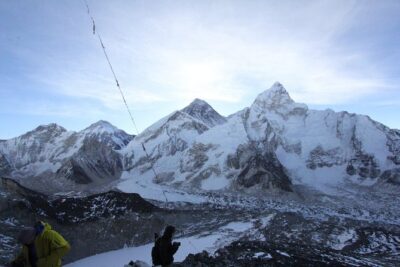
Browse the lists this tour appears in