
Reviewed · EVEREST BASE CAMP TREKS
Everest Base Camp Trek 15 days | Local Guide | Flexible Itinerary
Everest Base Camp is the headline, but the real test is the steady climb that gets you there. This 15-day private trek pairs the classic Sherpa trail with two acclimatization days, a night-by-night teahouse journey, and a pre-dawn ascent of Kala Patthar at 5,545 meters.
I like two things in particular: you travel with a licensed local guide and a porter shared by every two trekkers, and the return route takes in Phorste rather than simply retracing the same way. The group is private, so you are not sharing the trek with strangers.
The trade-off is plain: this is a demanding high-altitude walk, not a scenic stroll with Everest as the backdrop. The itinerary includes careful acclimatization, but altitude, cold, basic lodge comforts, and long walking days still make fitness and preparation essential.
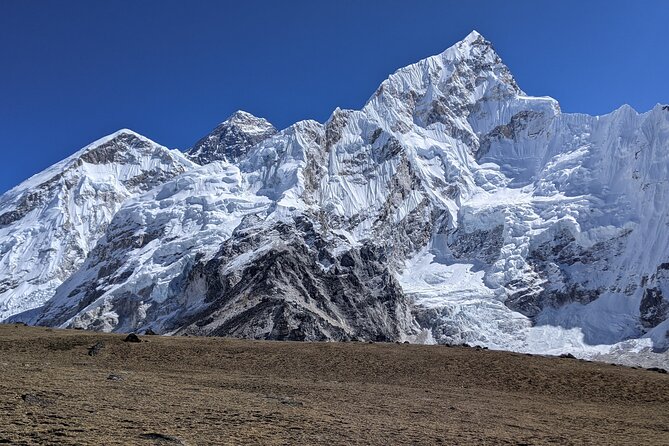
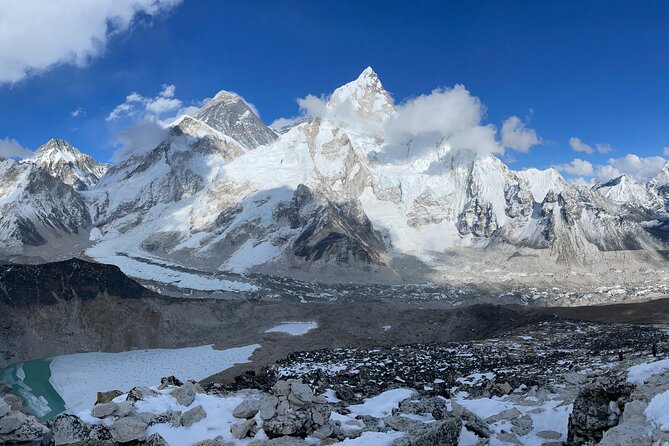
- Everest Base Camp and Kala Patthar: Reach 5,364 meters at base camp, then climb higher for views of Everest, Lhotse, Nuptse, and other peaks.
- Two acclimatization days: Spend extra time in Namche Bazaar and Dingboche, with side excursions to help your body adjust.
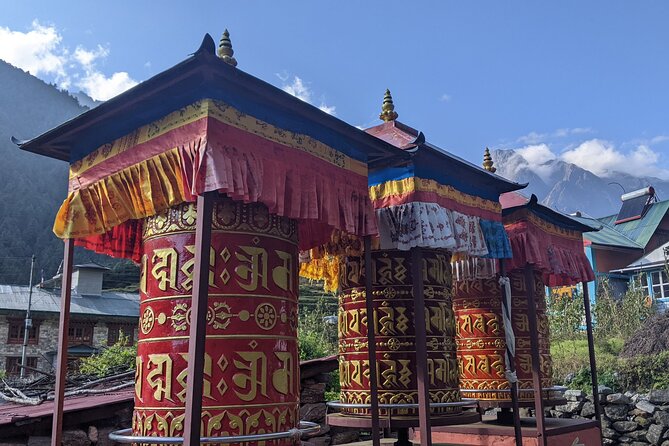
- Sherpa villages and monastery: Pass through local mountain communities and visit Tengboche Gompa.
- A local support team: An English-speaking licensed guide leads the trek, with one porter for every two people.
- Flights and permits included: The package covers domestic flights to and from Lukla, park and local permits, and TIMS.
- A quieter return stretch: The route via Phorste offers a less crowded way back toward Lukla.
A 15-day route from Kathmandu to the Khumbu
The trek begins and ends in Kathmandu, with airport pickup and private transportation included. The first day is for arrival and transfer to your hotel, a useful buffer before the mountain flight and a chance to meet the local team.
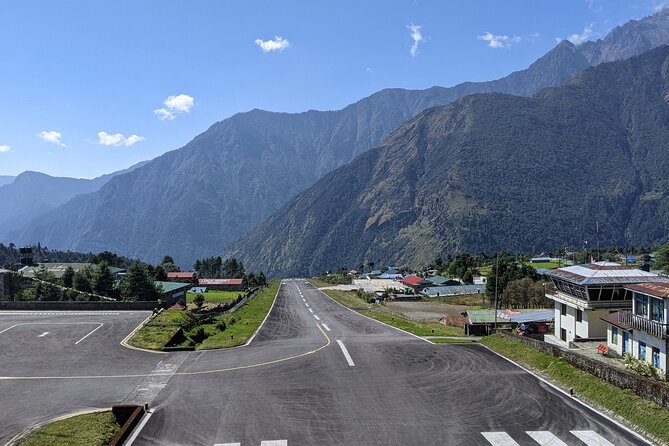
The next morning, you fly to Lukla, the gateway to the Everest region, at 2,810 meters. Flights are listed between Kathmandu or Ramechhap and Lukla, depending on the arrangements. The package includes these flights for the group and staff, as well as a total domestic baggage allowance of 15 kilograms per person: 10 kilograms in a large bag and 5 kilograms as hand carry.
The itinerary then follows the familiar trail through Sherpa villages toward Namche Bazaar and on to higher settlements. Day-by-day walking times are given for some stages, but not every stage, so ask the operator for the latest detailed schedule before booking. The title describes a flexible itinerary, while the supplied route outlines a specific 15-day plan. If you need a change, check what flexibility means for your dates and group.
Namche Bazaar is more than a place to sleep
After setting out from the Lukla area, the trail crosses the Hillary Bridge and climbs toward Namche Bazaar. The listed walking time is about five hours. Namche is the Sherpa region’s main town and a natural place to pause before the route gets higher.
Day four is an acclimatization day at 3,440 meters. The plan names Hotel Everest View as a stop and recommends side excursions to stay active while giving your body extra time at altitude. That balance matters: the day is not simply a rest day in bed, but it is also not another push to a higher overnight stop.
The itinerary calls this extra time essential, and I agree with the logic. You cannot force your body to adjust faster by walking harder. If you feel unwell, tell your guide rather than treating the schedule as a challenge to beat.
More Everest Base Camp treks in Kathmandu:
- Everest Base Camp Trek – 14 Days
★ 5.0 · 1,499 reviews - Everest Base Camp Trekking
★ 5.0 · 485 reviews - Everest Base Camp Trekking – 13 Day
★ 5.0 · 365 reviews
Tengboche and the climb toward Dingboche
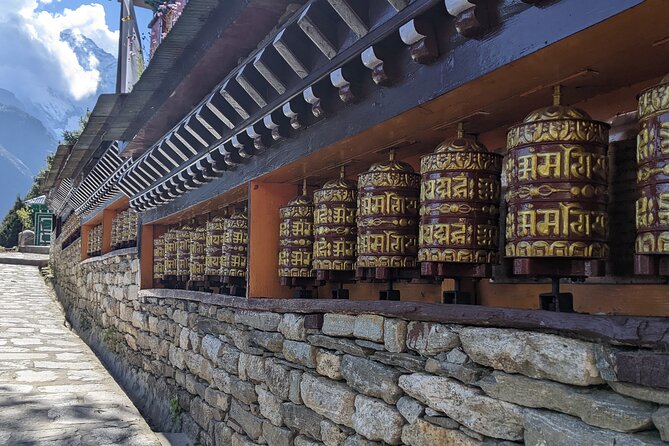
From Namche, the route climbs to Tengboche, a walk described as about five hours. Tengboche Gompa is one of the trip’s cultural highlights, set among the mountain scenery and visited as part of the day. You get a change of pace from the trail: this is a working religious site, not just a viewpoint with a photo stop.
The next stage continues toward Dingboche, with about four to five hours of walking. The route follows the Imja Khola and passes the junction where the way to Pheriche separates from the way to Dingboche. The itinerary also names Orsho and the Lobuche trail. These place names mark the steady transition into a higher, more exposed part of the trek.
Dingboche brings another acclimatization day. Side excursions are available, though the exact walk is not specified. Use the day to move gently, take in the surroundings, and follow your guide’s advice. At this altitude, a quieter day is not wasted time. It is part of making the rest of the route possible.
The high trail to Everest Base Camp
After Dingboche, the trek heads toward the Thugla area and continues into the high country. The itinerary describes a morning walk with broad Himalayan views and a lunch stop at Thugla, but it does not give a walking time or a named overnight stop for every stage. Ask for those details when you discuss the trip, especially if you want a clear picture of each day’s distance and elevation gain.
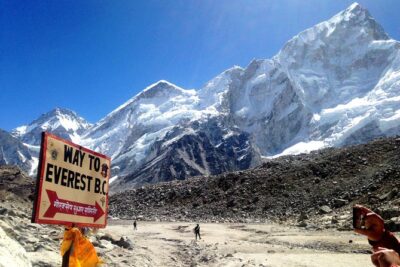
Day nine is the push to Everest Base Camp, at 5,364 meters. Reaching the base camp is the central goal, but it is worth keeping expectations sensible: this is a high-altitude destination on a glacier, not a summit climb or a promise of a clear view of Everest from camp itself. The larger mountain panorama comes on the following morning.
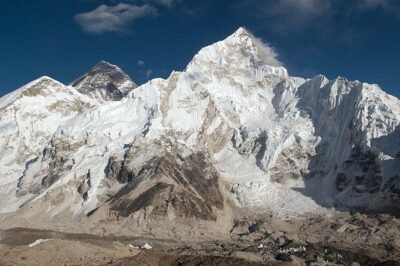
The next day begins very early with the ascent of Kala Patthar, the highest point on the trip at 5,545 meters. The planned stop is about 20 minutes, enough to take in the views of Everest, Lhotse, Nuptse, and surrounding peaks before descending. An early start is part of the plan, so prepare for a cold, demanding morning. You have already climbed high to reach base camp; Kala Patthar adds another hard effort when your legs may be tired.
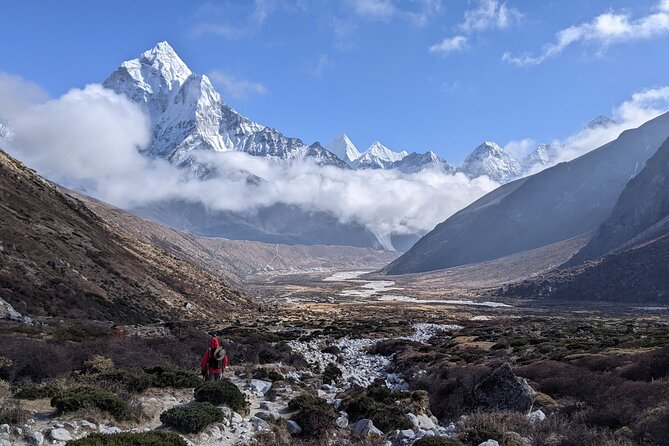
The route then turns downhill. The itinerary sets the day’s destination at Pangboche before continuing along a less crowded path toward Phorste. That change gives the return journey a different feel from the uphill route and brings views of Ama Dablam, Thamserku, and Tengboche Monastery.
The quieter return through Phorste
From Phorste, the route descends toward the river from the Gokyo Lakes area, connects with the Gokyo trail at Phorste Thanga, and climbs to Mong Danda. This section is described as less crowded, a welcome contrast after the main Everest trail. It connects with the Gokyo route, but this trip description does not include a visit to Gokyo Lakes or a pass crossing.
The following day retraces the lower trail toward Lukla, passing Toktok, Phakding, Ghat, and Cheeplung before a final uphill stretch. The itinerary describes the last 200 meters as a climb into Lukla, where the walking portion ends and the group spends the evening.
On day 14, you take an early flight back toward Kathmandu, then have the rest of the day at leisure. The final day is reserved for airport transfer and departure. The extra day in the schedule is practical: mountain flights are part of the journey, and it is sensible not to plan the international flight home for the same day you leave Lukla.
More multi-day treks in Kathmandu:
- Everest Base Camp Trek -14 Days
★ 5.0 · 321 reviews - Everest Base Camp Trekking – 2025/2026
★ 5.0 · 199 reviews - Everest Base Camp Trek
★ 5.0 · 193 reviews - Everest Base Camp Trek with Helicopter Return from Gorakshep to Lukla
★ 5.0 · 161 reviews
What the $1,890 price covers
At $1,890 per person, this is a guided package rather than a bare-bones trek where you arrange the essentials as you go. The fee includes private transportation, domestic flights, national park and local permits, a TIMS permit, a trail map, and an English-speaking, experienced, licensed guide. Groups of five or more get an assistant guide.
A porter is provided for every two trekkers, carrying up to 20 kilograms total, or 10 kilograms per guest. That is a meaningful help on a long, high-altitude route. You still need to pack with care: the included flight allowance is 15 kilograms per person, and the porter’s share is limited.
The package also supplies hiking poles, sleeping bags, and down jackets, which must be returned after the trek. Lodging is described as clean and comfortable, and meals are provided during the trek: 14 breakfasts, 13 dinners, and 12 lunches. A farewell dinner and an achievement certificate are included too.
The price does not cover international flights, a Nepal visa, or travel insurance. Insurance that covers trekking up to 6,000 meters is listed at $200 per person as an additional cost. You also pay for lunches and dinners in Kathmandu, personal snacks and drinks, tips for the guide, porters, and drivers, and any extra nights of accommodation. Hot showers and battery charging during the trek are not included, so budget for those as possible extra costs.
That is a fairly broad set of inclusions for a private guided trek, especially with flights, permits, a guide, porters, and some technical gear in the package. Still, the final cost will be higher than the headline price once you add insurance, tips, snacks, drinks, and extras at lodges.
Local guides and the importance of the team
The guide is central to a trek like this. The company provides an English-speaking, licensed guide, and the reviews name team members including Raj, Sagar, Ram, Rabin, Jal, and Shiba. Those names point to different trips and teams, not a guarantee of who will lead your departure. Ask who is assigned to your trek and how the guide handles pacing and altitude concerns.
The strongest praise in the comments is for attentive support from guides and porters, including help with safety and encouragement when the walking gets tough. That matters more here than a slick speech or a fast pace. A good guide should help you understand how the day is going, keep the group moving sensibly, and take concerns seriously.
This is a private activity, so only your group participates. That gives you more room to talk through pace and rest stops than you would have in a large mixed group, although the route and altitude still set limits. The company’s stated priorities are safety, satisfaction, and comfort, but no guide can remove the physical demands of the trail.
Is this trek right for you?
Choose this trip if you want the classic Everest Base Camp route, a local guide, porters, included domestic flights, and an itinerary that allows time to acclimatize. It suits people who are physically fit, comfortable with a demanding multi-day walk, and willing to trade hotel comforts for teahouse stays and mountain access.
It is less suitable if you want a relaxed holiday, a guaranteed flight schedule, or a route with no high-altitude strain. The supplied information calls for strong physical fitness and does not give daily distances or detailed elevation gains for every stage. Before paying, ask for the full day-by-day walking plan, confirm what itinerary flexibility is available, and clarify the flight arrangements for your dates.
I would book it if the Everest region is your priority and you are prepared for the effort and extra costs beyond the $1,890 base price. I would hold off if your fitness is uncertain or you need precise daily walking details that the operator has not yet provided. The combination of acclimatization days, local support, and a quieter return route gives this trip a sound shape, but the mountain sets the terms.
FAQ
How long is the Everest Base Camp trek?
The experience lasts approximately 15 days, including arrival and departure days in Kathmandu.
What is the highest point on the trek?
Kala Patthar is the highest point, at 5,545 meters. Everest Base Camp is at 5,364 meters.
Are flights to Lukla included?
Yes. The package includes flights between Kathmandu or Ramechhap and Lukla for the group and staff.
How much baggage can I take on the domestic flights?
The stated allowance is 15 kilograms per person: 10 kilograms in a large bag and 5 kilograms as hand carry.
Are meals included?
The package includes 14 breakfasts, 13 dinners, and 12 lunches. Lunch and dinner in Kathmandu are not included.
Is travel insurance included?
No. Insurance is excluded. The stated additional cost is $200 per person for coverage up to 6,000 meters.
Is this a group tour?
It is a private activity, so only your group participates. Groups of five or more have an assistant guide.
What can I expect if the weather prevents the experience?
The experience requires good weather. If poor weather causes cancellation, you will be offered a different date or a full refund.
Newly listed in Kathmandu
- Traditional Momo Making Class★ 5.0 · 10 reviews
- Walking tour of real Kathmandu through back streets.★ 5.0 · 3 reviews
- Kathmandu 2 Nights 3 Days Chitwan Jungle Safari Tour★ 5.0 · 9 reviews
- Walking tour of Kathmandu with awesome local guides★ 5.0 · 4 reviews
- Kathmandu Street Food Walking Tour – Eat Like a Local★ 5.0 · 3 reviews
- Visit Swayambhunath and Bauddhanath Stupa with Guide★ 5.0 · 5 reviews
- Private Manaslu Circuit Trek at Himalayas★ 5.0 · 3 reviews
- Kathmandu to Pokhara Vip Sofa Bus Ticket★ 4.0 · 4 reviews
Everest Base Camp Treks, compared.
Everest Base Camp Trek with Helicopter Return from Gorakshep to Lukla
Read our review →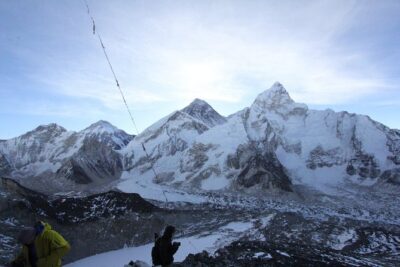
Browse the lists this tour appears in