
Reviewed · EVEREST BASE CAMP TREKS
Everest Base Camp trek with Helicopter return 9 days
Everest Base Camp is the goal, but the helicopter return is what makes this nine-day version possible for people short on time. You trek up through the Khumbu to Kala Patthar, then trade the long walk back for a flight from Gorak Shep to Lukla.
I like two practical features here: an acclimatization day near Namche Bazaar gives your body time to adjust, and the price includes a guide, a porter for every two people, meals on the trek, permits, and key transport. The main consideration is altitude: the route reaches 5,644 meters, and the trail becomes steeper and more remote above Dingboche.
At a glance
- Kala Patthar tops out at 5,644 meters: The high point offers the trek’s major mountain-view payoff, but reaching it takes effort at serious altitude.
- The schedule saves time on the return: A helicopter from Gorak Shep to Lukla replaces the descent on foot.
- Namche is an acclimatization stop: You spend a day in the area, with an outing toward Khumjung and the Everest View Hotel.
- Your group travels privately: This is a private activity, so only your group joins the trek.
- The $3,888 price covers much of the core logistics: Guide, porter, permits, meals during the trek, and listed flights are included, while drinks, travel insurance, and personal expenses are extra.
A fast route to Everest country, not an easy one
This trip is a compressed way to reach the Everest region. Day one is for arrival in Kathmandu; the following days take you by air to Lukla and on foot through villages and high mountain terrain. You spend the trekking days gaining altitude gradually, then return from Gorak Shep by helicopter to Lukla.
That format suits you if you have limited holiday time and want to trek rather than simply take a scenic flight. It is still a demanding itinerary. The tour describes the difficulty as moderate, but that label should not distract from the elevation: Kala Patthar is 5,644 meters above sea level, and the trail gets steeper and more remote above Dingboche, at 4,410 meters.
A guide leads the group, and the operator provides an oximeter to check pulse, oxygen saturation, and heart rate twice a day. That is a useful part of the plan, not a substitute for paying attention to how you feel. Tell your guide promptly if you feel unwell.
More Everest helicopter tours in Kathmandu:
- Everest Base Camp Helicopter Tour landing at Everest View Hotel
★ 5.0 · 668 reviews - Everest Base Camp Helicopter Tour landing at Hotel Everest View
★ 5.0 · 218 reviews - Everest Base Camp Trek with Helicopter Return from Gorakshep to Lukla
★ 5.0 · 161 reviews
Day 1: Kathmandu arrival and a first briefing
An airport team meets you at the international terminal and takes you to your hotel in a private car. They help with check-in and bags, then you meet the core team after resting.
This is a practical start, especially if you arrive tired or unfamiliar with Kathmandu. Use the evening to check your gear and ask questions about the route, the altitude, and what the porter will carry. Lunch and dinner in Kathmandu are not included, so budget for those separately.
Day 2: The flight to Lukla and the trail to Phakding
You get up early for the flight from Kathmandu to Lukla. The short journey is noted for its views, and after landing at Tenzing Hillary Airport, you meet the porters and start walking.
The first day on foot is about four hours. It is a gentle introduction compared with the higher stages ahead, but it is still a trekking day after an early start and a flight. The route continues toward Phakding, setting up the climb toward Namche Bazaar the next day.
The package lists flights between Kathmandu and Lukla, as well as a helicopter flight from Gorak Shep to Lukla. Since the return sequence involves more than one leg, it is sensible to confirm the exact flight arrangements with the operator before departure.
Day 3: Namche Bazaar and the first major climb
From Phakding, the trail passes through rhododendron and magnolia forest, with villages including Toktok and Bengkar along the way. Bridges lead toward Monjo and the approach to Namche Bazaar. The day is listed at about six hours.
Namche is the region’s main town and a natural place to pause before continuing higher. The climb here marks a change from the lower valley stages: you are gaining elevation, and your body needs time to respond. Keep a measured pace rather than treating the first strong day as a race.
More Everest Base Camp treks in Kathmandu:
- Everest Base Camp Trek – 14 Days
★ 5.0 · 1,499 reviews - Everest Base Camp Trekking
★ 5.0 · 485 reviews - Everest Base Camp Trekking – 13 Day
★ 5.0 · 365 reviews - Everest Base Camp Trek -14 Days
★ 5.0 · 321 reviews
Day 4: Acclimatizing near Khumjung
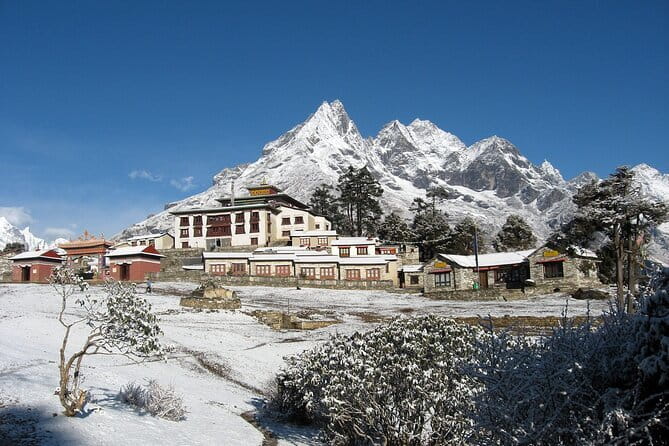
The schedule sets aside a rest day in Namche for acclimatization, with an outing toward Syangboche Airstrip, the Everest View Hotel, and Khumjung. The excursion is listed at about five hours, so this is not necessarily a day spent entirely indoors.
I like this kind of planned pause. It gives you a chance to see more of the area without pushing the overnight elevation up another step. It also makes the itinerary feel less like a string of long walks. The outing still involves activity, so follow your guide’s pace and use the day to drink water, rest, and check how you are feeling.
Day 5: Kyangjuma and mountain views
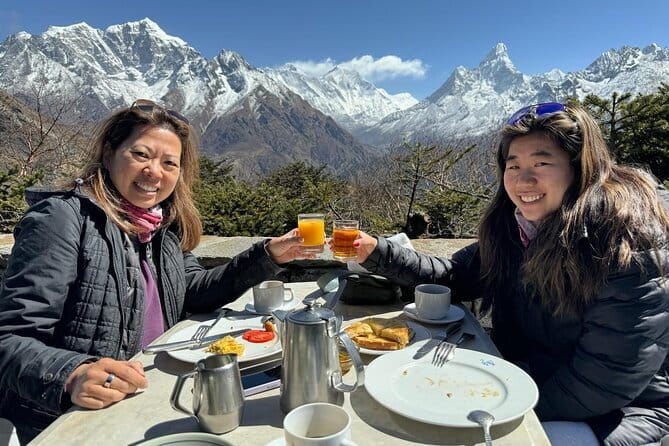
The route leaves Namche and follows the green foothills toward Kyangjuma, at 3,550 meters. The walk is described as roughly five hours, with mountain views along the way and a trail that rises and falls.
This stage is a reminder that trekking is not a simple staircase uphill. Short descents can feel welcome, but they are followed by more climbing. Kyangjuma is a quieter stop on the route, and the day’s value lies partly in the gradual transition to higher, more remote terrain.
Day 6: Tengboche and forest trails
The itinerary describes an early start for sunrise, followed by breakfast and a descent through rhododendron forest to Deboche, at 3,320 meters. The day’s named stop is Tengboche, and walking time is listed at about five hours. The route may offer chances to see musk deer, blue sheep, and monkeys.
Tengboche is one of the most recognizable stops on this approach to Everest. The forested section offers a different feel from the open, rocky ground higher up, though the route’s ups and downs still take effort. If wildlife appears, treat it as a bonus rather than a promise.
Day 7: Toward the Khumbu Glacier
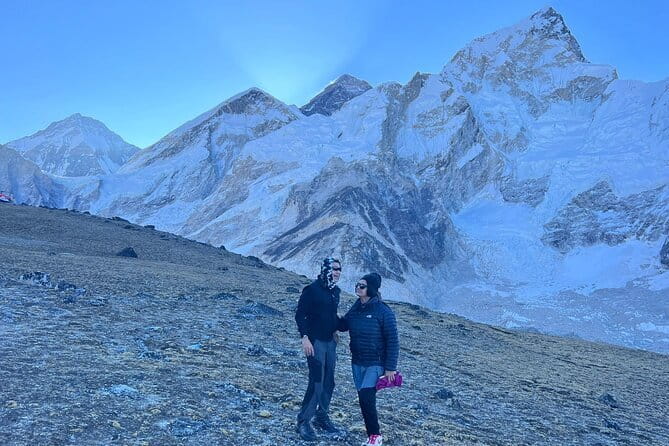
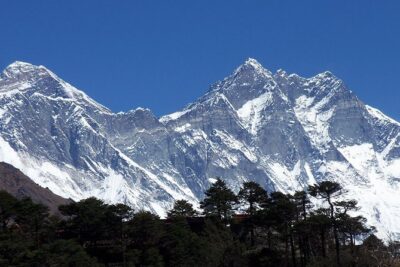
The trek moves into higher country, with the route described as passing a ridge beyond Dingboche and continuing alongside the Khumbu Glacier. Cholatse and Tawache are among the peaks visible from the trail. The day is listed at about six hours.
This is where the character of the trek changes. The overview notes that above Dingboche the route becomes more remote and steep, so the days may feel more demanding even if the walking time is not dramatically longer. At 4,410 meters, Dingboche is already high enough that a comfortable pace matters.
Day 8: Lobuche, Gorak Shep, and the Base Camp goal
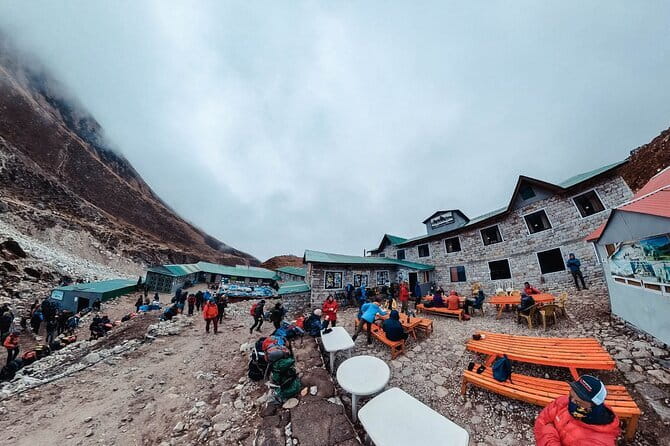
The route leaves Lobuche and follows a rocky valley toward Gorak Shep. The climb gradually steepens as you gain elevation, and the day is listed at about eight hours. This is the longest walking day in the schedule, so it is worth saving energy rather than charging ahead early.
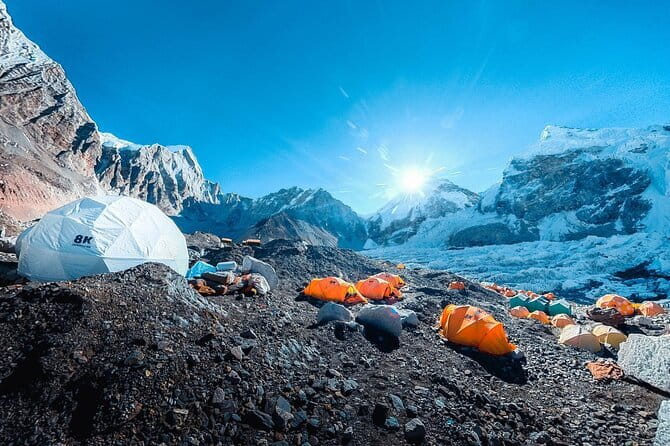
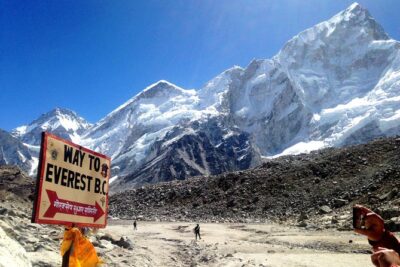
Everest Base Camp is the central objective of the trek, at 5,364 meters according to the tour information. The itinerary places the approach to Gorak Shep on this day and the Kala Patthar climb the next morning. The exact timing of the Base Camp walk is not fully spelled out, so ask the operator how the day is divided and what walking is planned after reaching Gorak Shep.
Day 9: Kala Patthar, then the helicopter return
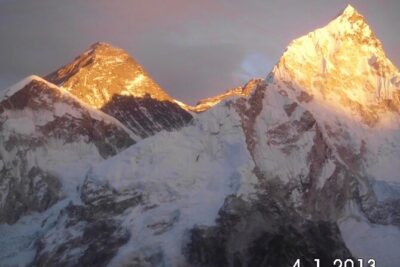
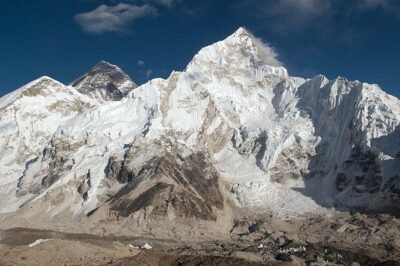
The final morning starts early for Kala Patthar, at 5,644 meters. The trail begins above Gorak Shep and is described as well-used but steep in places. The reward is the mountain view in the early light, when the peaks catch the sun.
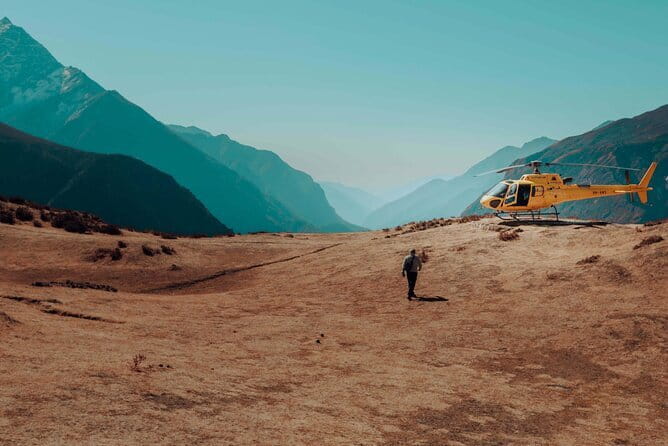
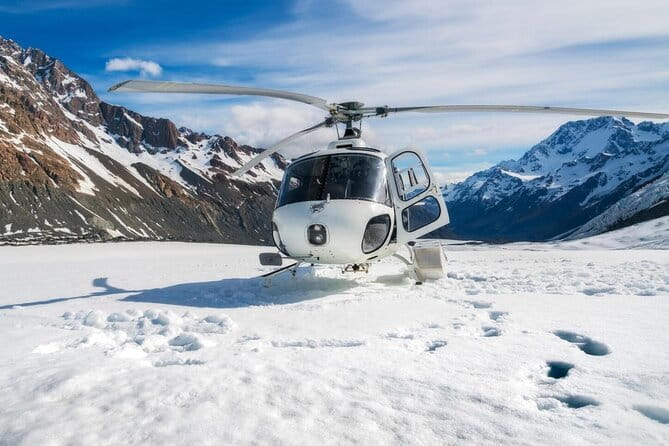
After the high point, the return plan includes a helicopter from Gorak Shep to Lukla. That saves the long descent on foot and is the defining convenience of this version of the trek. The day is listed at about six hours, though the helicopter leg is a major part of the return. The tour also includes the Kathmandu-Lukla-Kathmandu flights, so confirm the precise connection plan and timing with the operator.
The helicopter is a useful time-saver, but it does not make the trek itself short or effortless. You still have to reach Gorak Shep and climb Kala Patthar on foot. The flight changes the final logistics, not the physical demands of the route.
What the $3,888 price includes
At $3,888 per person, this is a substantial trip cost, but the package covers many of the central expenses. Included are private ground transport, the listed Kathmandu-Lukla flights, the Gorak Shep-Lukla helicopter, an experienced guide, permits, government fees, and one porter for every two people.
The guide’s salary, food, lodging, transport, and insurance are covered. You also get a first-aid kit and an oximeter for twice-daily checks. Meals listed as included are eight breakfasts, eight lunches, and eight dinners, which covers the trekking portion rather than meals in Kathmandu.
The value depends on whether you want the logistics handled for you. Organizing flights, permits, a guide, a porter, and a helicopter independently would take time and coordination. On the other hand, the package does not include travel or medical insurance, international airfare, a visa, Kathmandu lunches and dinners, tips, personal expenses, or drinks and desserts on the trek.
Tea-house hot showers and phone charging cost about $2 to $5, according to the tour details. Cold and hot drinks, alcoholic and non-alcoholic, are also extra. Tipping the guide, porter, and driver is expected, so include that in your budget rather than treating it as an optional surprise.
The people and support behind the trek
The strongest practical reason to choose a guided trip is support on a route where altitude and changing terrain matter. The company’s wider trekking feedback names Raj as someone who helped with choosing a trek and organizing needs, while Ramesh was praised as a guide on an Everest Base Camp trip. Those names do not establish who will lead your departure, so ask who your assigned guide is before you book.
A separate family account of this nine-day helicopter-return trek describes the team as professional and supportive. Other comments about the company’s trips mention guides and porters helping with the day-to-day experience. That is encouraging, but the best safeguard is still a clear pre-trip conversation about pace, altitude symptoms, porter loads, and what happens if plans need to change.
Who should book this version
This trek is a good fit if you want the Everest Base Camp experience but cannot set aside a longer schedule, and if you are comfortable with a high-altitude walk. The private format is especially appealing if you want your own group rather than joining a mixed party.
It may not be the right choice if you want a relaxed holiday or have little experience with sustained walking. The tour asks for moderate fitness, but the altitude is the larger challenge. You should also be comfortable with basic tea-house costs and with paying extra for drinks, showers, charging, and tips.
The helicopter return makes the trip shorter, not casual. If you have the time and prefer a slower ascent or a longer acclimatization schedule, compare this with longer Everest routes before committing. If nine days is your limit and you are prepared for the height, this package offers a clear way to trek up and fly back.
FAQ
How long is the Everest Base Camp helicopter-return trek?
The trip is approximately nine days, starting with arrival in Kathmandu and ending with the return journey from the Everest region.
How high does the trek go?
The route climbs to Kala Patthar at 5,644 meters. Everest Base Camp is listed at 5,364 meters.
Is the trek suitable for beginners?
The tour describes the difficulty as moderate and recommends a moderate level of physical fitness. The route reaches high altitude, so you should consider that demand carefully.
What meals are included?
The package includes eight breakfasts, eight lunches, and eight dinners. Lunch and dinner in Kathmandu are not included.
Is the helicopter flight included?
Yes. A helicopter flight from Gorak Shep to Lukla is included. The package also lists flights between Kathmandu and Lukla.
What expenses are not included?
You pay separately for international airfare, visa, travel and medical insurance, Kathmandu lunches and dinners, personal expenses, drinks and desserts on the trek, tea-house showers and charging, and tips for the guide, porter, and driver.
More multi-day treks in Kathmandu
- Everest Base Camp Trekking – 2025/2026
★ 5.0 · 199 reviews - Everest Base Camp Trek
★ 5.0 · 193 reviews - Everest Base Camp Trekking
★ 5.0 · 146 reviews - Langtang Valley Trek
★ 5.0 · 140 reviews
Newly listed in Kathmandu
- Traditional Momo Making Class★ 5.0 · 10 reviews
- Walking tour of real Kathmandu through back streets.★ 5.0 · 3 reviews
- Kathmandu 2 Nights 3 Days Chitwan Jungle Safari Tour★ 5.0 · 9 reviews
- Visit Swayambhunath and Bauddhanath Stupa with Guide★ 5.0 · 5 reviews
- Walking tour of Kathmandu with awesome local guides★ 5.0 · 4 reviews
- Kathmandu Street Food Walking Tour – Eat Like a Local★ 5.0 · 3 reviews
- Private Manaslu Circuit Trek at Himalayas★ 5.0 · 3 reviews
- Kathmandu to Pokhara Vip Sofa Bus Ticket★ 4.0 · 4 reviews
Everest Base Camp Treks, compared.
Everest Base Camp Trek with Helicopter Return from Gorakshep to Lukla
Read our review →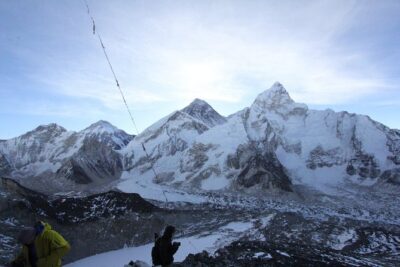
Browse the lists this tour appears in