
Reviewed · EVEREST BASE CAMP TREKS
Everest Base Camp Trek with Helicopter Return – 10 Days
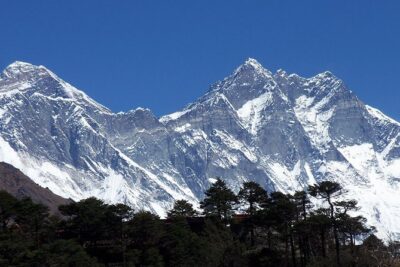
The boldest twist in this Everest trek comes at the end: after walking to Base Camp and climbing Kala Patthar, you return to Kathmandu by shared helicopter instead of retracing the trail to Lukla. Along the way, you pass through Sherpa villages and get views of Everest, Lhotse, Makalu and Cho Oyu.
I like two things in particular: the trek includes the practical pieces that can be hard to arrange separately, from Lukla flights and permits to meals and a porter shared between two trekkers; and the acclimatization day in Namche Bazaar gives you time to pause before heading higher. The small group is capped at 15, though the helicopter ride is shared.
The trade-off is the pace. Ten days is a short schedule for a high-altitude trek, and the route includes long walking days. You need moderate fitness, and the price does not cover Kathmandu lunches and dinners, drinks, personal expenses or tips.
The details that matter most
- The return is by helicopter: After the Kala Patthar viewpoint, you fly back to Kathmandu in a group-sharing helicopter, avoiding the walk back toward Lukla.
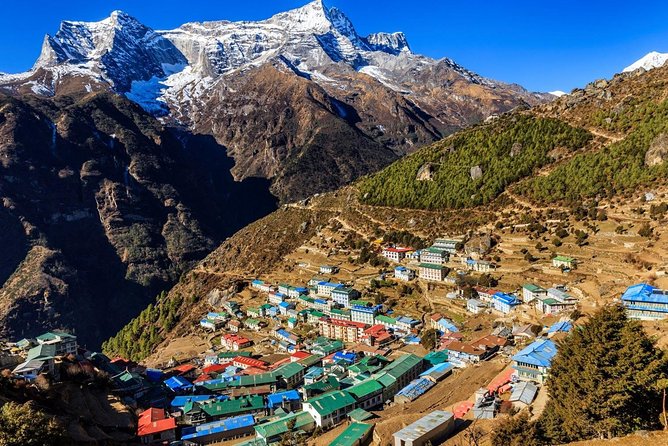
- The route takes you through key Everest-region villages: Phakding, Namche Bazaar, Tengboche, Dingboche, Lobuche and Gorakshep mark the way to Base Camp.
- Namche includes an acclimatization day: The planned hike toward Everest View Hotel offers a chance to adjust to the altitude and see the mountains.
- Practical trek costs are bundled: Lukla flights, trekking accommodation, trek meals, permits, a guide and porter support are included.
- The group has a stated maximum of 15: That can make the trek feel more personal than a large departure, though it is not a private tour.
- The listed price is $3,400 per person: Budget separately for Kathmandu meals, drinks, visa costs, personal purchases and customary tips.
From Kathmandu to the trail at Lukla
The trip starts with an airport pickup and a transfer to your Kathmandu hotel. The first day is deliberately light: settle in, rest or spend your free time exploring. Breakfast is included at the Kathmandu accommodation, but lunch and dinner are on your own, so allow room in your budget for meals in the city.
The next morning begins early, with a drive to the domestic airport and a flight to Lukla. Once there, you meet the trekking crew and set off toward Phakding. The trail follows green hills and offers views of Kusum Kangaru, a first taste of the mountain country ahead.
Lukla is the gateway to the Everest region, and the flight is an important part of the plan. It is included in the tour price, as are the transfers described in the schedule. The trek begins as soon as you land, so this is not a day for a leisurely start. Pack what you need for the walk where you can reach it, while your porter carries the supplied duffle bag.
More Everest helicopter tours in Kathmandu:
- Everest Base Camp Helicopter Tour landing at Everest View Hotel
★ 5.0 · 668 reviews - Everest Base Camp Helicopter Tour landing at Hotel Everest View
★ 5.0 · 218 reviews - Everest Base Camp Trek with Helicopter Return from Gorakshep to Lukla
★ 5.0 · 161 reviews
Namche Bazaar, the first major pause
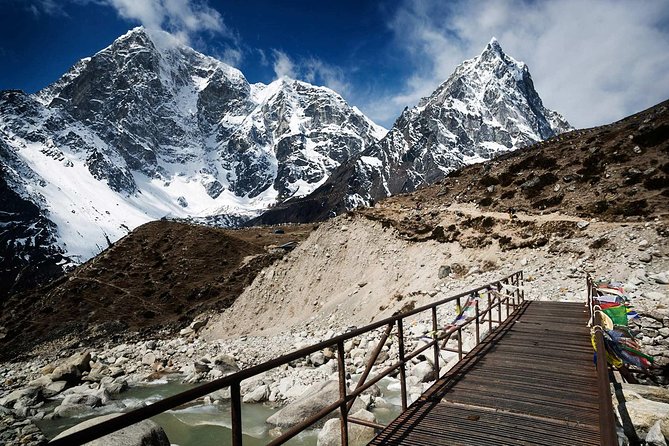
The route to Namche Bazaar follows the Dudh Koshi River through pine forest and over the Hillary suspension bridge. You also pass through the entrance to Sagarmatha National Park, the protected area covering much of the Everest region. The climb to Namche makes this a demanding day, with a long walking schedule.
Namche is both a Sherpa trading town and a key stop on the route. You have an acclimatization day here, with a hike toward Everest View Hotel for mountain views. That pause is not simply a sightseeing extra: it breaks up the climb and gives you time to adjust before the route goes higher.
A visit to the Sherpa Museum is also included as a stop, but its admission fee is not. The museum offers context on Sherpa culture and traditions, making it a worthwhile option if you want more than a quick look around town. Keep some flexibility in your expectations: the main value of this day is the combination of a planned hike, a chance to rest, and time in Namche.
Tengboche and the trail into higher country
From Namche, the route passes Kayangjuma and Sanasa before crossing the Dudh Koshi toward Punki Tenga. A steeper climb leads to Tengboche, home to the largest monastery in the Khumbu region. The monastery gives this stop a cultural focus as well as its place on the trail.
You will spend the night in a guest house or lodge. Accommodation is included throughout the trek, but the tour does not promise hotel-style comforts. The practical appeal is having a bed and meals arranged along a remote walking route, not luxury.
The following day takes you through small villages, past chortens and mani walls, and across the Imja Khola near Pangboche. The route then enters the Imja Valley toward Dingboche. At 3,900 metres, Pangboche signals how high the trail has climbed, and Dingboche serves as another important stop for acclimatization.
The schedule lists Dingboche as an overnight stop, but does not specify a second full rest day there. That makes it especially useful to pace yourself and follow your guide’s instructions. The trek’s short overall duration leaves little slack in the itinerary.
Lobuche, Gorakshep and Everest Base Camp
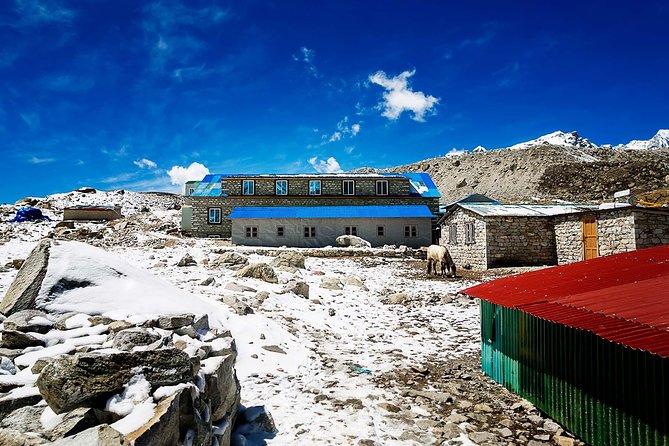
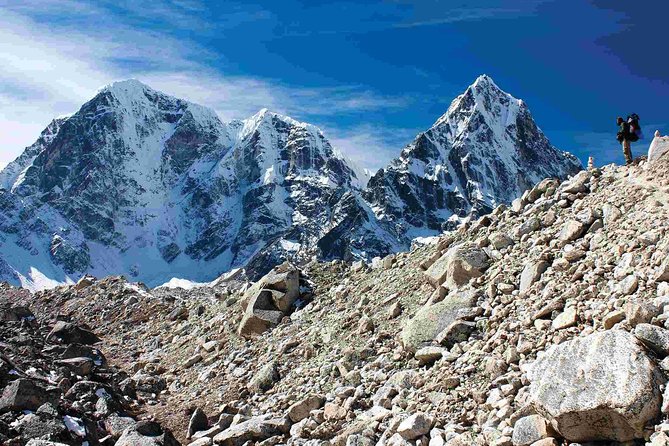
Beyond Dingboche, the trail climbs through the Khumbu Khola Valley, passing Dusa and Phulung Karpo before reaching Chola Lake and Duglha. It continues upward toward Lobuche, near Lobuche Peak and the Khumbu Glacier. The surroundings become more stark as the route reaches higher ground, and the walk includes repeated climbs.
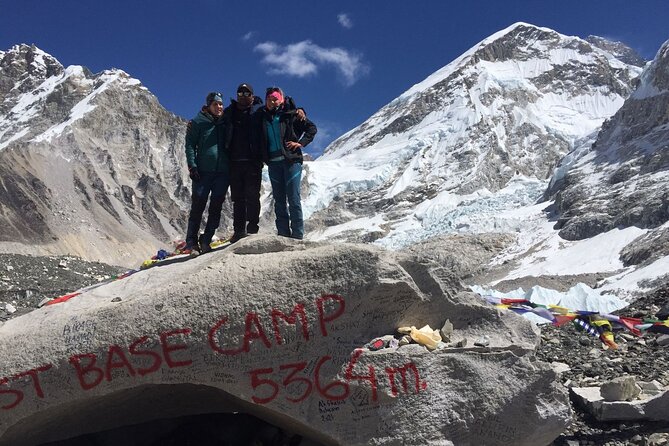
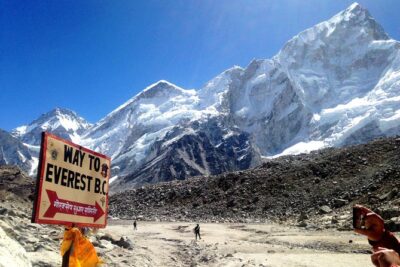
The next stage brings you to Everest Base Camp after roughly three hours of steady hiking, with ups and downs along the way. From Base Camp, you can see the Khumbu Glacier and icefall. The stop is brief, about 30 minutes, before you return to Gorakshep, the final overnight stop on the trek.
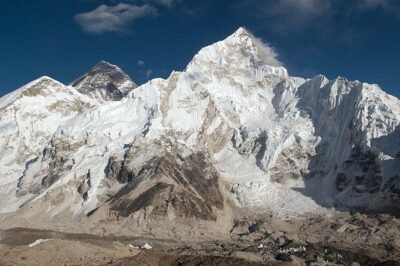
Base Camp is a powerful destination, but it is not the place listed for the broadest panoramic view of Everest. That comes the next morning at Kala Patthar. The distinction matters when you plan your expectations: Base Camp puts you beside the glacier and icefall, while Kala Patthar is the viewpoint for the mountain panorama.
The trek’s lodging, breakfast, lunch and dinner are included while you are on the route. Drinks are not, including tea, coffee, boiled water and bottled water. Those exclusions can add up over several days, so bring extra spending money rather than treating the tour price as an all-in total.
More Everest Base Camp treks in Kathmandu:
- Everest Base Camp Trek – 14 Days
★ 5.0 · 1,499 reviews - Everest Base Camp Trekking
★ 5.0 · 485 reviews - Everest Base Camp Trekking – 13 Day
★ 5.0 · 365 reviews - Everest Base Camp Trek -14 Days
★ 5.0 · 321 reviews
Kala Patthar and the helicopter home
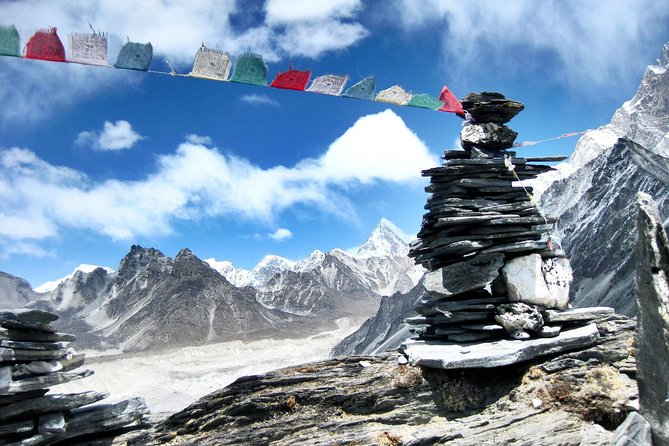
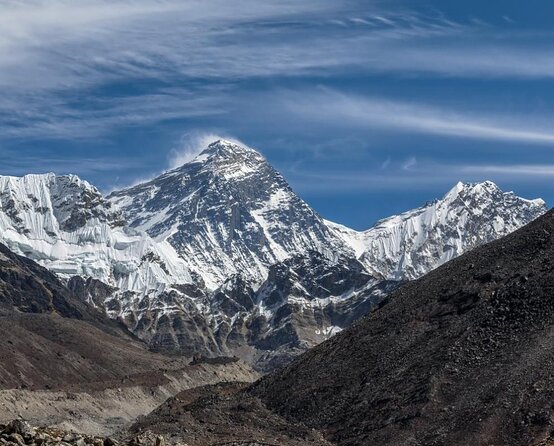
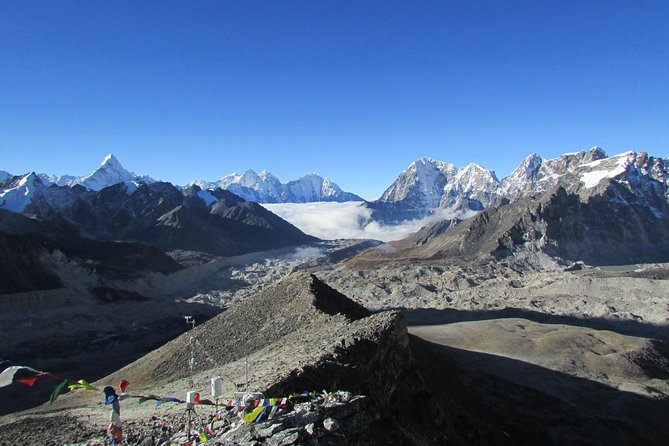
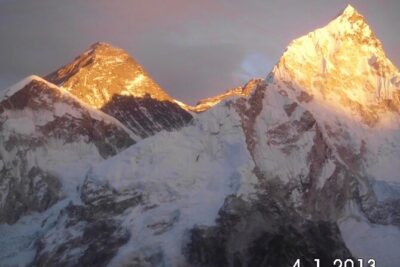
The final trekking morning takes you to Kala Patthar, a popular viewpoint with a 360-degree panorama of the Khumbu mountains, including Everest. You have about 30 minutes at the viewpoint before the return journey. This is the trip’s big visual payoff, and it comes after several days of walking at altitude.
After Kala Patthar, you fly back to Kathmandu by group-sharing helicopter. The flight saves you from retracing the route toward Lukla on foot and turns the return into a major part of the adventure. The included flight description refers to a helicopter from Gorakshep to Kathmandu, while the daily plan places the flight after Kala Patthar. Confirm the exact pickup and flight sequence with the operator before departure.
The helicopter is shared, not a private charter. Weather also matters: if poor conditions cancel the experience, you are offered a different date or a full refund under the stated policy. That is a sensible safeguard, but it cannot make mountain weather obey the timetable. Keep some flexibility in onward plans if possible.
On Day 10, a private vehicle takes you to the international airport for your flight home or onward journey. That final transfer is included, so you do not need to arrange it yourself.
What $3,400 covers, and what it does not
At $3,400 per person, this is a substantial purchase. Its value lies in bundling the core logistics of a demanding trek: Kathmandu accommodation with breakfast, flights between Kathmandu and Lukla, the helicopter return, trek lodging and meals, airport transfers, permits, an English-speaking guide and porter support. One porter is provided for every two trekkers, and porter costs include transport, food, accommodation, salary, equipment and insurance.
The package also supplies a duffle bag, down jacket, sleeping bag, walking pole, trekking map and trip achievement certificate. Those inclusions can reduce the amount of gear you need to rent or buy, but check that the supplied items suit your needs before relying on them. All government taxes, VAT and service charges are included.
The main extras are easy to overlook. Kathmandu lunches and dinners are not covered, nor are drinks during the trek. Personal costs such as internet, laundry, phone calls, hot showers and battery charging are also excluded. Tips for guides and porters are not mandatory, but are expected, so set aside money for them.
Past trips have had guides named Dipak, Ram and Ramesh, with Rabi mentioned as an assistant guide and Santos among the porters. The assigned team can differ, but the useful point is that the trek includes local guide and porter support rather than leaving you to navigate the route and carry all your gear alone.
Who should choose this trek
This trip suits you if you want to reach Everest Base Camp and Kala Patthar but would rather not walk the same route back. It also makes sense if you value having lodging, meals, permits, flights and a guide organized together, and are comfortable with a small group of up to 15 people.
You should be prepared for a physically demanding trip, long walking days and high altitude. The tour calls for moderate fitness, but that does not mean the route is casual. Give yourself time to prepare, and talk with the operator about the pace and altitude before booking if you are unsure whether the schedule fits your ability.
The trek is less suited to someone seeking a slow itinerary, a private helicopter or a fully inclusive holiday. The return flight is shared, Kathmandu meals and trek drinks cost extra, and the final flight depends on weather. Free cancellation is available up to 24 hours before the experience starts; if the operator cancels for poor weather or because the minimum number of participants is not met, the stated options are another date or a full refund.
Should you book it?
I would consider this trek if Base Camp is the goal and the helicopter return is worth paying for. The combination of a guided route, porter support, included trek meals and a return flight makes the price easier to understand, while Kala Patthar adds a viewpoint that Base Camp itself does not provide.
Before paying, ask the operator to confirm the day-by-day walking plan, the helicopter pickup point and what happens if weather disrupts the flight. If you are fit enough for the pace and can budget for the uncovered costs, this is a practical way to make the Everest journey without walking back to Lukla.
FAQ
How long is the Everest Base Camp trek with helicopter return?
The tour lasts approximately 10 days, including arrival in Kathmandu, the trek and the departure transfer.
What is the price per person?
The listed price is $3,400 per person.
What is included in the tour price?
Included items are Kathmandu accommodation with breakfast, airport transfers, flights between Kathmandu and Lukla, a group-sharing helicopter return, trekking accommodation and meals, guide and porter support, permits, listed trekking gear, taxes and service charges.
Are meals included in Kathmandu?
Breakfast is included at the Kathmandu accommodation. Lunch and dinner in Kathmandu are not included.
Are drinks included during the trek?
No. Drinks such as tea, coffee, boiled water, bottled water and soft drinks are excluded.
How many people can join the group?
The tour has a maximum of 15 participants.
Is the helicopter private?
No. The helicopter return is on a group-sharing basis.
What fitness level is required?
The stated requirement is a moderate level of physical fitness.
Are tips included?
No. Tips for guides and porters are not included. They are described as expected but not mandatory.
Can I cancel for a refund?
You can cancel at least 24 hours before the start time for a full refund. If you cancel later, the stated policy says the amount paid is not refunded.
More multi-day treks in Kathmandu
- Everest Base Camp Trekking – 2025/2026
★ 5.0 · 199 reviews - Everest Base Camp Trek
★ 5.0 · 193 reviews - Everest Base Camp Trekking
★ 5.0 · 146 reviews - Langtang Valley Trek
★ 5.0 · 140 reviews
Newly listed in Kathmandu
- Traditional Momo Making Class★ 5.0 · 10 reviews
- Walking tour of real Kathmandu through back streets.★ 5.0 · 3 reviews
- Kathmandu 2 Nights 3 Days Chitwan Jungle Safari Tour★ 5.0 · 9 reviews
- Visit Swayambhunath and Bauddhanath Stupa with Guide★ 5.0 · 5 reviews
- Walking tour of Kathmandu with awesome local guides★ 5.0 · 4 reviews
- Kathmandu Street Food Walking Tour – Eat Like a Local★ 5.0 · 3 reviews
- Private Manaslu Circuit Trek at Himalayas★ 5.0 · 3 reviews
- Kathmandu to Pokhara Vip Sofa Bus Ticket★ 4.0 · 4 reviews
Everest Base Camp Treks, compared.
Everest Base Camp Trek with Helicopter Return from Gorakshep to Lukla
Read our review →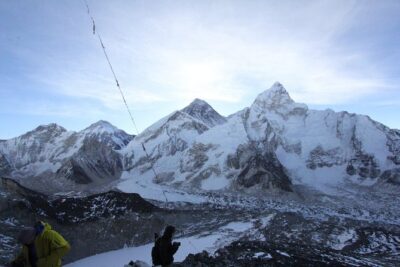
Browse the lists this tour appears in