
Reviewed · EVEREST BASE CAMP TREKS
Everest Base Camp trek- 11 days
Everest Base Camp is the high point, but the best part of this 11-day trek is the gradual change on the way there: from a flight into Lukla to Sherpa villages, monasteries, and views of Everest and its neighboring peaks. You get a demanding walk with practical support built in, rather than having to arrange every lodge, meal, and flight yourself.
I like two things in particular: the acclimatization day in Namche Bazaar gives you a break before the trail climbs higher, and the price includes flights between Kathmandu and Lukla, meals on trek, a licensed guide, and a porter. Those inclusions make the quoted $1,699 easier to assess than a bare trek price.
The main caution is the altitude and pace. The route reaches 5,545 meters at Kala Patthar, and the itinerary has only one scheduled acclimatization day. You should be comfortable with sustained walking and understand that the trek is not a casual sightseeing trip.
- Lukla flight included: Kathmandu to Lukla and back by air, with local airport transfers also covered.
- Namche is your breathing space: Day three is set aside for acclimatization at 3,435 meters.
- Two high points, two different views: Everest Base Camp is listed at 5,380 meters; Kala Patthar reaches 5,545 meters.
- Trek support is part of the price: A licensed guide, porter, trekking meals, accommodation, permits, and staff costs are included.
- Private group, not a shared departure: Only your own group takes part.
- Budget separately for Kathmandu: Your Kathmandu hotel, lunch and dinner there, insurance, visa, drinks, tips, and personal gear are not included.
From Kathmandu to Lukla, then down to Phakding
The trip begins in Thamel, Kathmandu, with a 7:15 a.m. start. Airport pickup and drop-off for the Lukla flight are included, as are the Kathmandu to Lukla and return airfares. The early start matters: you have a flight and a first walk to fit into the same day.
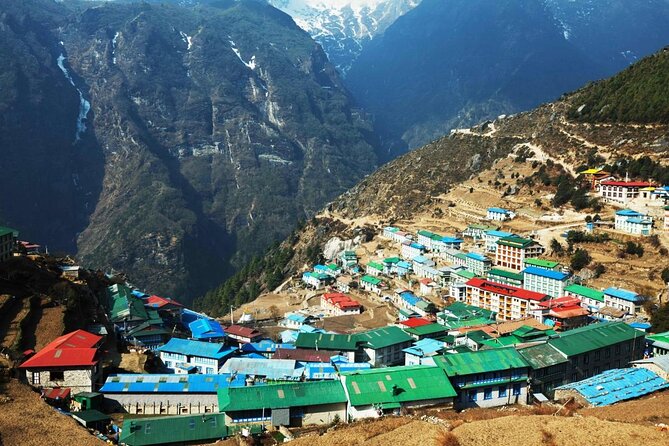
At 2,850 meters, Lukla is the gateway to the trek. From there, the route descends to Phakding, listed at 2,660 meters. It is a useful first day for getting used to walking with your kit and settling into the rhythm of village-to-village trekking, but do not mistake the descent for a reason to rush. You are still adjusting to a new altitude and a full schedule.
The operator provides a porter, normally one for every two clients. That takes much of the weight off your shoulders, though you will still want a day bag for the things you need while walking. Ask in advance what size and weight your porter will carry, since the exact baggage limit is not specified.
Namche Bazaar is more than a stop on the way up
Day two climbs from Phakding to Namche Bazaar, at 3,435 meters. The itinerary calls Namche the gateway to Everest Base Camp, and that is a fair description: it is a key stop before the trail continues into higher country. It is also described as a Sherpa town, so the route offers more than mountain scenery. You have a chance to see local daily life and the culture of the region as you pass through its settlements.
Day three is set aside for acclimatization in Namche. This is one of the itinerary’s most important choices. Rather than climbing higher every day, you have a scheduled pause before moving toward Tengboche and Dingboche. How you spend that day is not detailed, so ask your guide what the plan is and how much walking it involves.
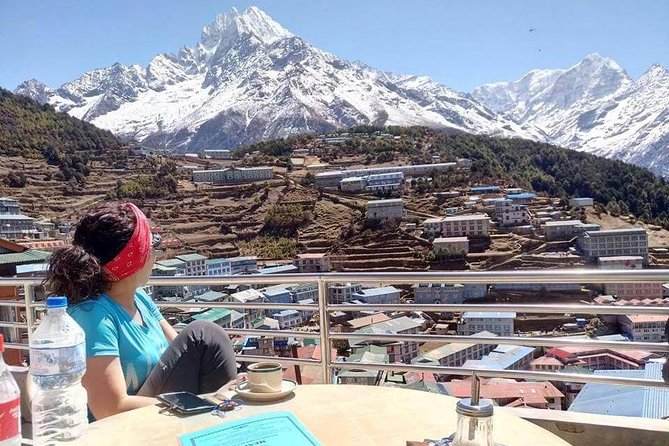
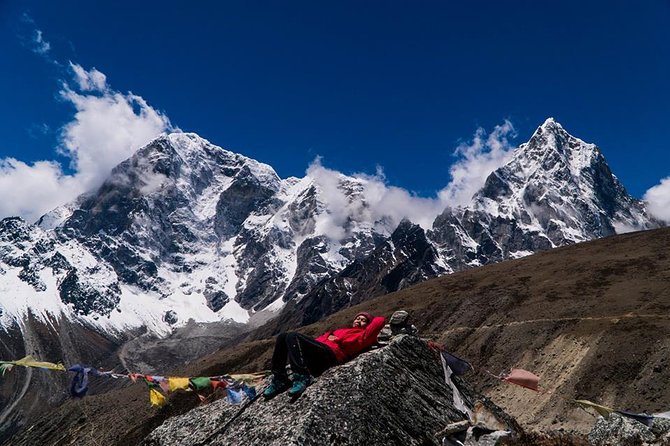
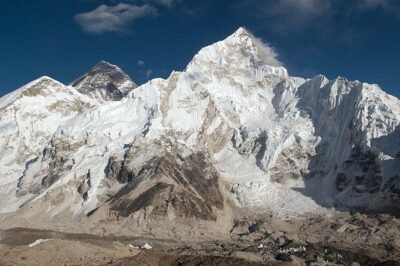
You may see Everest, Lhotse, Nuptse, Ama Dablam, and Thamserku from viewpoints along the route. The exact views depend on conditions and where you are in the valley, so treat them as a reward, not a guarantee on a particular morning. The broader appeal is that the mountains become part of the journey well before you reach Base Camp.
More Everest Base Camp treks in Kathmandu:
- Everest Base Camp Trek – 14 Days
★ 5.0 · 1,499 reviews - Everest Base Camp Trekking
★ 5.0 · 485 reviews - Everest Base Camp Trekking – 13 Day
★ 5.0 · 365 reviews
Tengboche and the climb toward Dingboche
On day four, you walk from Namche to Tengboche, listed at 3,890 meters. The stop’s defining cultural feature is Tengboche Monastery. The itinerary pairs it with mountain views, including Everest and nearby peaks. This is a good point to slow down and notice how the route mixes religious life, villages, and high mountain terrain.
Day five takes you from Tengboche to Dingboche, at 4,400 meters. By now, altitude is not an abstract number. The trek continues upward, and each day’s walking asks more of you than a low-altitude stroll. The tour specifies a moderate fitness level, but you should take that seriously: a solid walking base and the ability to keep moving day after day will make the experience more manageable.
Meals are included during the trekking period, with breakfast, lunch, and dinner provided. That is a real convenience in a remote itinerary, where planning each meal yourself would add another task. The exact menus and lodge facilities are not specified, and the accommodation is described only as the best available, not as luxury lodging. Go for the mountain route, not room-service expectations.
Lobuche and the high-country approach
Day six climbs from Dingboche to Lobuche, listed at 4,910 meters. It is another gain in elevation, and a short itinerary description cannot tell you how your body will respond. Keep your guide informed about how you feel, and ask how the group will handle the pace and any signs that someone is struggling. The itinerary includes a first-aid kit, but does not describe a detailed medical plan.
Lobuche sets up the following day’s push to Gorakshep and Everest Base Camp. You pass through increasingly high terrain, with the Khumbu Icefall among the sights highlighted for the trek. The Icefall is part of the route’s dramatic mountain setting, but the itinerary does not specify exactly where or when you will view it. Your guide can help explain what you are seeing as you go.
Everest Base Camp and the Kala Patthar viewpoint
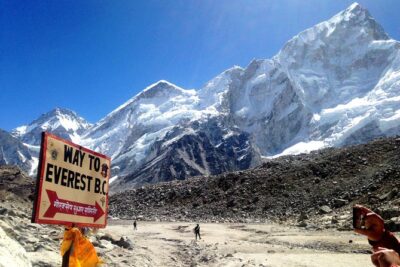
Day seven takes you from Lobuche to Gorakshep, then to Everest Base Camp at 5,380 meters, before returning to Gorakshep, listed at 5,180 meters. Reaching Base Camp is the trip’s signature milestone. It is also worth knowing what the name means in practice: this is a high-altitude trekking destination, not a summit climb. The itinerary does not include climbing Everest.
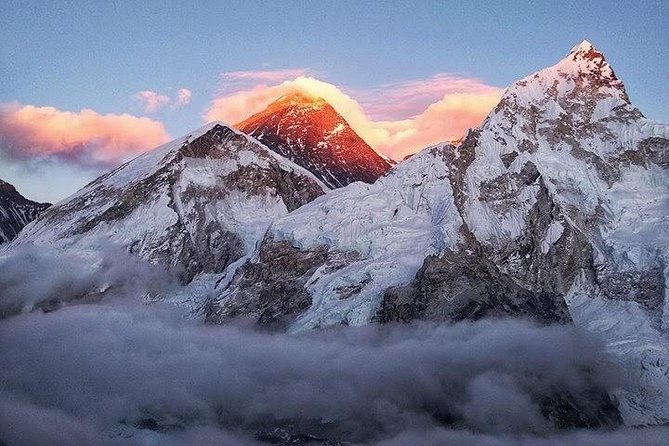
Day eight adds Kala Patthar, at 5,545 meters, followed by a descent to Pheriche at 4,320 meters. The tour highlights an early-morning sunrise view over snow-covered peaks, and Kala Patthar is the designated viewpoint for seeing Everest. Confirm the precise departure time with your guide, since the schedule gives the route but not the hour. An early start can be worthwhile for the views, but it also means you should be ready for a demanding morning at altitude.
The descent to Pheriche makes this a substantial day. You gain a memorable high viewpoint, then drop more than a thousand meters to the overnight stop. Take your time on the way down; tired legs and uneven trail are a poor combination. The reward is a change of pace after several days spent climbing higher.
More multi-day treks in Kathmandu:
- Everest Base Camp Trek -14 Days
★ 5.0 · 321 reviews - Everest Base Camp Trekking – 2025/2026
★ 5.0 · 199 reviews - Everest Base Camp Trek
★ 5.0 · 193 reviews - Everest Base Camp Trek with Helicopter Return from Gorakshep to Lukla
★ 5.0 · 161 reviews
The return to Lukla and Kathmandu
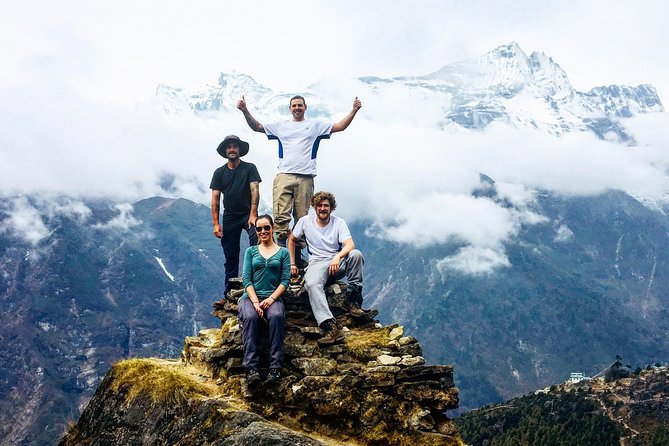
Day nine runs from Pheriche to Namche, at 3,435 meters. You are heading back down, but it is still a long trekking day, not a rest day. The route retraces ground you have covered, which can feel different in the opposite direction: familiar villages and landmarks now mark progress toward the end.
On day ten, the itinerary lists Namche to Phakding and Lukla, with Lukla at 2,835 meters. That is a long return leg, so ask the operator how the day is broken up and what walking time to expect. The itinerary names Phakding as a point along the way, but does not list it as an overnight stop.
Day eleven is the flight from Lukla to Kathmandu. Ground transportation back in Kathmandu is included, and the trip ends at the original meeting point in Thamel. Flights are a practical part of this package, not a side detail: they link the capital to the trail and save you from arranging that leg independently.
What $1,699 covers, and what it does not
At $1,699 per person, the package includes several of the big-ticket components: return airfare between Kathmandu and Lukla, trekking accommodation, full-board meals during the trek, a licensed guide, and a porter. It also covers guide and porter food, accommodation, insurance, salary, equipment, transport, and local taxes. Trekking permits, a TIMS card, first aid, government taxes, service charges, airport transfers, and the farewell dinner are included as well.
That is a substantial set of inclusions for an 11-day trek. The practical value is less about getting a low headline price and more about having core logistics handled together. One recent account described airport-to-airport coordination, pre-booked lodges and flights, and responsive help from Dipu. Other accounts name Deepu. Those spellings may refer to the same guide, but the company does not guarantee a specific guide in the details here, so confirm your assigned guide before booking.
The exclusions still matter. You pay for your Kathmandu hotel, lunch and dinner in Kathmandu, Nepal entry visa, international airfare, airport departure tax, travel insurance, drinks, tips, laundry, shopping, souvenirs, and personal trekking equipment. Add those costs to the package total before deciding that $1,699 is your full holiday budget.
The tour is private, which means your group does not share the departure with other customers. That can make communication and pace easier to manage, though the price may be more appealing if you are sharing it with companions. The operator notes that costs can change if the number of trekking days changes, so clarify how an itinerary adjustment affects the price.
Who should book this trek
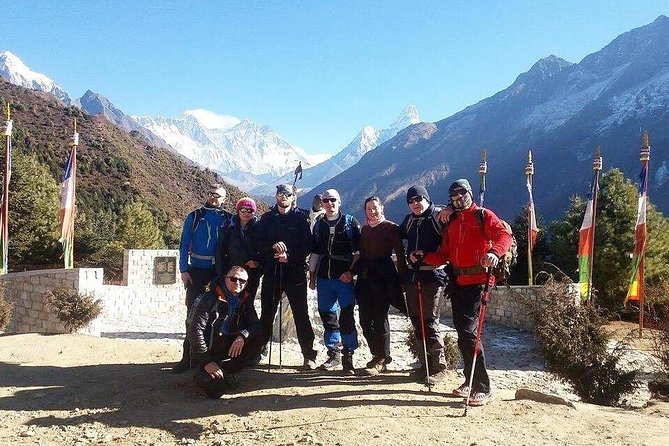
This trip suits you if Everest Base Camp is a serious goal, you have a moderate level of fitness, and you value having the main trek logistics arranged. The included guide, porter, meals, permits, accommodation, and Lukla flights reduce the planning load. The reported strengths of the operation are organization, communication, and support during the trek, with Dipu or Deepu named in several accounts.
It is a less suitable choice if you want a relaxed holiday with short walks, guaranteed comfort, or plenty of spare days. Eleven days leaves little slack in the schedule, and the route reaches very high altitude. Travel insurance is not included, so arrange your own before departure and make sure it fits your plans.
You should also ask the operator about the day-by-day walking hours, baggage limits, accommodation standard, and what happens if flights or trekking days change. These details are not specified here, yet they affect how comfortable and flexible the trip will feel. Booking confirmation requires passport name, number, expiry date, and country for every participant.
Should you book it?
If your priority is to reach Everest Base Camp and Kala Patthar with the main trekking arrangements taken care of, this is a strong package to consider. The inclusion of Lukla flights, meals, a porter, permits, and staff costs gives the $1,699 price useful substance, while the private format keeps the group to your party.
Book only if you are prepared for sustained walking at altitude and have budgeted for the costs left out. Before paying, confirm the guide, daily walking expectations, porter allowance, and plan for itinerary changes. Those answers will help you decide whether this tightly scheduled trek matches your fitness and comfort level.
FAQ
How long is the Everest Base Camp trek?
The trek is listed as 11 days. It starts with a flight from Kathmandu to Lukla and ends with a return flight to Kathmandu.
Where does the tour start and finish?
The meeting point is in Thamel, Kathmandu. The activity ends back at the same meeting point.
What time does the trek start?
The stated start time is 7:15 a.m.
Is the Lukla airfare included?
Yes. The package includes return airfare between Kathmandu and Lukla, plus pickup and drop-off for the Lukla flight at the local airport.
Are meals included?
Breakfast, lunch, and dinner are included during the trekking period. Lunch and dinner in Kathmandu are not included.
Is accommodation in Kathmandu included?
No. The package includes the best available accommodation during the trek, but not a hotel in Kathmandu.
Is this a private tour?
Yes. Only your group will participate.
What level of fitness is required?
A moderate physical fitness level is specified. The route reaches Kala Patthar at 5,545 meters.
Can I cancel for a full refund?
You can cancel at least 24 hours before the experience’s start time for a full refund. Cancellations made less than 24 hours beforehand are not refunded.
Newly listed in Kathmandu
- Traditional Momo Making Class★ 5.0 · 10 reviews
- Walking tour of real Kathmandu through back streets.★ 5.0 · 3 reviews
- Kathmandu 2 Nights 3 Days Chitwan Jungle Safari Tour★ 5.0 · 9 reviews
- Visit Swayambhunath and Bauddhanath Stupa with Guide★ 5.0 · 5 reviews
- Walking tour of Kathmandu with awesome local guides★ 5.0 · 4 reviews
- Kathmandu Street Food Walking Tour – Eat Like a Local★ 5.0 · 3 reviews
- Private Manaslu Circuit Trek at Himalayas★ 5.0 · 3 reviews
- Kathmandu to Pokhara Vip Sofa Bus Ticket★ 4.0 · 4 reviews
Everest Base Camp Treks, compared.
Everest Base Camp Trek with Helicopter Return from Gorakshep to Lukla
Read our review →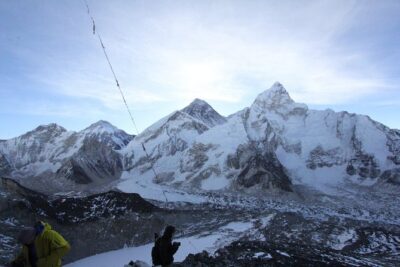
Browse the lists this tour appears in