
Reviewed · NEPAL TREKKING TOURS
Everest Three Pass Trek
Everest Three Pass Trek is the long way around the Khumbu, and that is the point. You cross Kongma La, Cho La, and Renjo La, then reach viewpoints above the trails for views of Everest, glaciers, and the Gokyo lakes. At these heights, the scenery is only part of the story: the trek asks a lot of your legs, lungs, and patience.
I like two things in particular: you get three high passes rather than a single out-and-back route, and the plan includes rest or acclimatization time in Namche and Gokyo. You also have a private group, a licensed English-speaking guide, and porters to carry your luggage.
The trade-off is real: you spend several days above 5,000 meters, and some trail sections are steep, rocky, or icy. The daily plan is ambitious, so I would ask the operator to clarify the route between Kongma La and the Kala Patthar section, and discuss your fitness and acclimatization needs before paying.
- Three passes, each above 5,300 meters: Kongma La reaches 5,535 meters, Cho La 5,420 meters, and Renjo La 5,360 meters.
- Private trek with a local guide: Your group travels with a licensed English-speaking guide and the required support staff and porters.
- Two major viewpoints: Kala Patthar and Gokyo Ri add steep uphill hikes to an already demanding trek.
- A different return route: The trek comes back toward Namche via Renjo La rather than retracing the whole approach.
- Meals and basic lodging are included: Expect guesthouses, mainly twin-share, and 14 breakfasts, lunches, and dinners.
- Flights connect Kathmandu and Lukla: The mountain flight saves days of walking, but weather can affect plans.
Three high passes, one demanding route
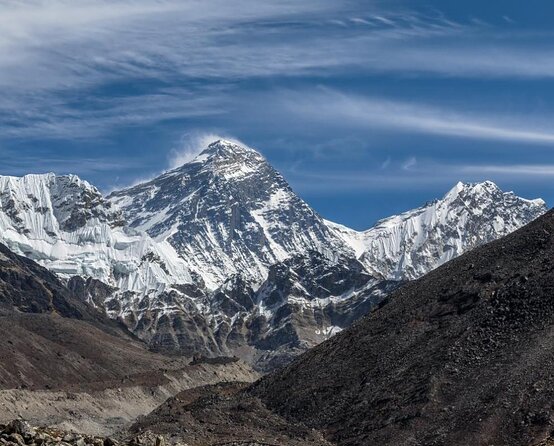
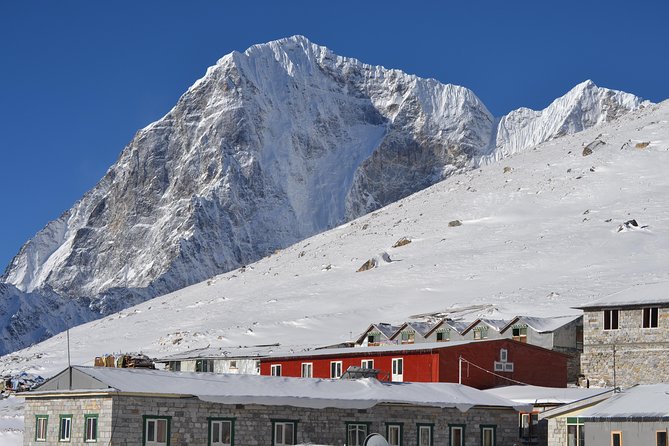
The Three Pass Trek links the main Everest-region trail with the high routes around Gokyo. You cross Kongma La, Cho La, and Renjo La, with the itinerary also taking you to Kala Patthar and Gokyo Ri. These are not little scenic detours. At more than 5,300 meters, even a short uphill stretch can feel slow, and the pass days require fitness, steady pacing, and a willingness to keep going when the trail gets rough.
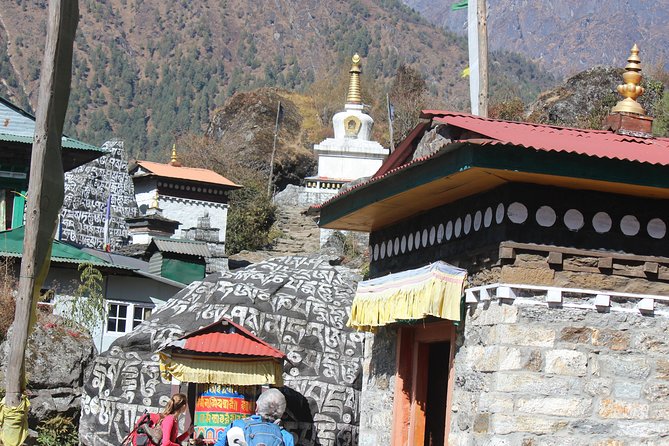
The route’s appeal is its variety. You follow rivers, pass Sherpa villages and monasteries, cross suspension bridges, and walk among glaciers and high-altitude lakes. It offers a broader view of the Khumbu than a straightforward trek to Everest Base Camp, but it also means more hard days and less room for a casual pace.
This is a private activity, so only your group joins the trek. That gives you more personal attention than a large group departure, though the itinerary still sets a demanding schedule. Speak with the company before booking if you want to know how it handles changes to the pace or route.
From Kathmandu to Namche Bazaar
Day one begins early, with a 6:15 a.m. start in Kathmandu and a flight to Lukla. The flight passes over hills and snow-capped peaks before landing at Tenzing-Hillary Airport, then you set off on foot. The trek’s first day is a useful warm-up, but do not mistake it for a gentle city stroll: you are already walking in mountain country.
On day two, the trail follows the Dudh Koshi River and crosses it several times on suspension bridges decorated with prayer flags. You enter Sagarmatha National Park and climb toward Namche Bazaar, the main Sherpa town on this route. This is one of the first days when the combination of altitude and uphill walking can make a modest distance feel substantial.
Day three is set aside for rest and acclimatization in Namche. The plan includes exploring town and walking uphill to Everest View Hotel, where the itinerary promises views of peaks including Nuptse and Everest. That outing is useful because it gets you higher before returning to sleep lower, but it is still an uphill walk. Treat it as part of the trek, not a day off with nothing to do.
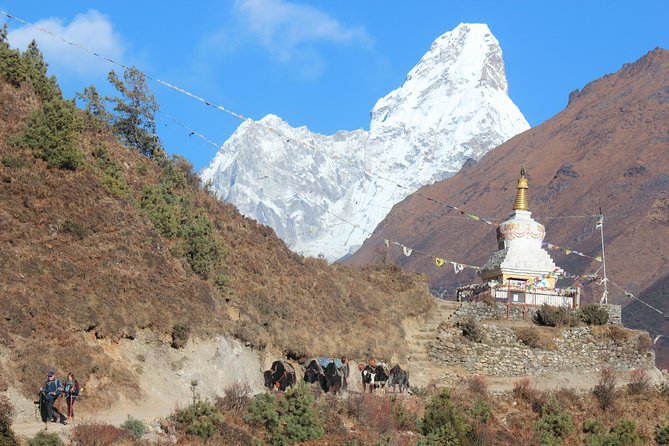
The itinerary then follows the Dudh Koshi upstream to Phunke Tenga before climbing above the Imja Khola to Tengboche. A brief stop at Tengboche Monastery brings a cultural pause to the walking, with the surrounding peaks providing a dramatic setting. The trail continues to Dingboche through Pangboche and rhododendron forest, with views of Ama Dablam, Lhotse, and Everest along the way.
More multi-day treks in Kathmandu:
- Everest Base Camp Trek – 14 Days
★ 5.0 · 1,499 reviews - Everest Base Camp Trekking
★ 5.0 · 485 reviews - Everest Base Camp Trekking – 13 Day
★ 5.0 · 365 reviews
Chhukung and the first pass at Kongma La
Instead of spending another night in Dingboche, the route moves to Chhukung. That shorter uphill day is designed to position you for the next challenge: Kongma La, the highest of the three passes at 5,535 meters. The itinerary describes a steep climb to the pass, followed by a descent toward the next overnight stop.
This is the first major test of the trek. The altitude is high, the terrain can be rough, and the effort is sustained. Your guide and support team matter here, but they cannot remove the physical demands. Bring a realistic idea of your walking ability, and ask the operator how it assesses your pace and condition on difficult days.
There is a point worth sorting out before departure. The day-by-day plan says you cross Kongma La and then walk toward Lobuche, followed by a day to Gorakshep, but the exact overnight stops and route connections are not spelled out in much detail. Ask the company to confirm the precise sequence, daily walking times, and what happens if weather or altitude slows the group.
Kala Patthar and the high trail toward Cho La
From Gorakshep, the plan calls for an early morning climb to Kala Patthar at 5,550 meters. It is an uphill viewpoint rather than a summit of Everest, but the payoff is a view over the valleys and the first sunlight on Everest’s peak. You should expect a demanding climb in thin air, and the early start means getting moving before the day warms up.
The following day takes you toward Gokyo by way of Cho La, at 5,420 meters. The trail climbs steeply on an ice-covered section, and the route notes that conditions can be difficult in places. This is a day to follow your guide’s instructions closely, keep your pace controlled, and avoid treating the pass as a race. The appeal is not just reaching the top: the crossing links the Everest side of the route with the Gokyo area.
The itinerary’s outline is brief about the precise path and overnight stop between Gorakshep and Gokyo. Before booking, get the operator to walk you through this section. That is especially important because the days include a high viewpoint and a high pass in close succession.
Gokyo Lakes and the crossing of Renjo La
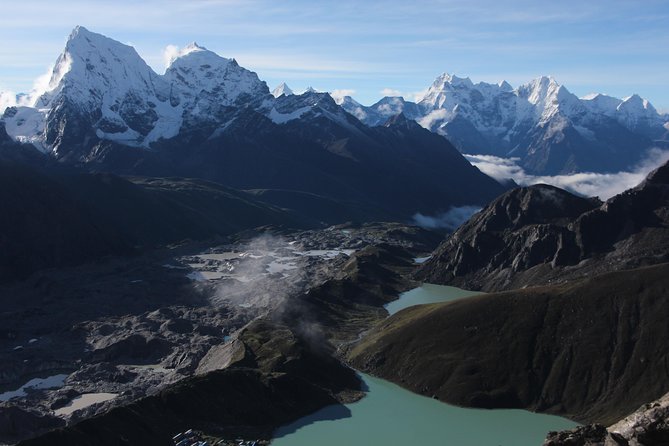
Gokyo gives you a rest day, with a morning hike to Gokyo Ri at 5,360 meters. From above the village, the route offers views of the valley and its small lakes, as well as surrounding peaks. It is a welcome pause in the schedule, though the hike itself is strenuous and reaches an altitude close to that of the passes.
Renjo La is the final pass, at 5,360 meters. The route starts early and climbs gradually on a snow-filled path. From the top, the itinerary promises views toward Cho Oyu, Everest, and the Gokyo lakes. This is a fitting finale: the scenery changes again, but the pass still calls for careful footing and a measured pace.
After the crossing, the trek returns to Namche on a comparatively easier trail. That contrast should feel welcome after the high passes, and the views of Everest and other peaks continue from a distance. The final walking day runs from Namche to Lukla through villages, forests, rivers, and suspension bridges. You finish back where the trek began, with a chance to explore the market before the flight to Kathmandu the next morning.
More Kathmandu tours in Kathmandu:
- Private Kathmandu Sightseeing Tour | UNESCO World Heritage sites
★ 5.0 · 756 reviews - Everest Base Camp Helicopter Tour landing at Everest View Hotel
★ 5.0 · 668 reviews - Half day cooking class in Thamel kathmandu
★ 5.0 · 607 reviews - Nagarkot Sunrise View and Day Hiking from Kathmandu
★ 5.0 · 471 reviews
What the $1,800 price includes, and what it does not
At $1,800 per person, the cost covers a substantial set of essentials for a 15-day private trek. The package includes Kathmandu-Lukla return airfare and airport tax, necessary land transport, national park entry and TIMS permits, a licensed English-speaking guide, porters, and the staff’s food, accommodation, salary, insurance, equipment, and transportation.
You also get guesthouse accommodation, mainly in twin-share rooms, plus 14 breakfasts, 14 lunches, and 14 dinners. A down jacket, sleeping bag, duffel or kit bag, and first-aid medical kit are provided, but the jacket, sleeping bag, and bag must be returned after the trek. That helps reduce the amount of gear you need to buy or carry, though you still need your own personal trekking equipment.
The price does not include international airfare, departure tax, alcoholic or other hot and cold drinks, laundry, hot showers, tips, or expenses not listed as included. Those exclusions can add up over two weeks, particularly if you want frequent drinks or hot showers. Ask for a full gear and expected-extra-cost list so you can budget beyond the headline price.
For a private trek with domestic flights, a guide, porters, permits, accommodation, and most meals, the price can represent solid value. The deciding question is not whether it is cheap, but whether the operator’s specific route plan and support arrangements fit your needs. Confirm the details of the high-pass days and what costs you will pay locally.
Guide support, fitness, and useful planning
The company’s Everest trips have been led by guides including Shiva and Jwala, with Shree involved in organizing trips. Other names associated with its teams include Nabracht, Bhim, and Ram. Those names are useful context, but the information does not guarantee who will lead your departure. Ask for the name and experience of your assigned guide, and how many porters and staff will accompany your group.
The company’s past trips have included early starts to avoid rain during a late-monsoon trek. That is a practical reminder that mountain weather can shape the day, especially when you are crossing high passes or flying to and from Lukla. The schedule notes that poor weather can cancel the experience, in which case you are offered another date or a full refund. It does not promise that every flight will run on time, so leave flexibility around your international connections.
You need a strong level of physical fitness. The route includes several high-altitude days, steep climbs, rocky paths, and an ice-covered section at Cho La. The listed first-aid kit is useful, but it is not a substitute for asking the operator how it manages altitude problems and emergencies. Discuss your health, prior trekking experience, and any concerns before you commit.
Book about 39 days in advance on average, though that is only a guide, not a guarantee of availability. Confirmation is provided at booking, and the start and end point is in Kathmandu. If you must cancel, the stated policy allows a full refund when you cancel at least 24 hours before the start; cancellations or changes inside 24 hours are not accepted.
Who should choose the Three Pass Trek?
Choose this route if you want a hard, varied trek and have the fitness to handle several days above 5,000 meters. It suits people who value mountain scenery, quieter high routes, and the satisfaction of linking three passes more than a relaxed holiday. The inclusion of acclimatization time in Namche and a rest day in Gokyo is helpful, but it does not make the trek easy.
If your main goal is simply to reach Everest Base Camp, this is a more demanding commitment than you need. The route includes Kala Patthar but is built around the passes and Gokyo, so make sure those are what you want. I would book after confirming the unclear day-by-day connections, the assigned guide, and the plan for altitude and weather delays. If those answers are clear and you are ready for serious high-altitude walking, this is a compelling way to see more of the Khumbu.
FAQ
How long is the Everest Three Pass Trek?
The trek lasts approximately 15 days. It begins and ends in Kathmandu, with flights between Kathmandu and Lukla.
How high are the three passes?
Kongma La is 5,535 meters, Cho La is 5,420 meters, and Renjo La is 5,360 meters.
Is the trek private?
Yes. Only your group participates in the activity.
What meals are included?
The package includes 14 breakfasts, 14 lunches, and 14 dinners. Drinks are not included.
What accommodation is provided?
The trek uses the best available guesthouses, mainly in twin-share rooms.
Does the price include flights and permits?
Yes. The price includes Kathmandu-Lukla return airfare, airport tax, the national park entry permit, and the TIMS permit. International airfare is not included.
What fitness level is required?
The stated requirement is a strong physical fitness level. The route includes steep, rough, and high-altitude sections, including passes above 5,300 meters.
Newly listed in Kathmandu
- Traditional Momo Making Class★ 5.0 · 10 reviews
- Walking tour of real Kathmandu through back streets.★ 5.0 · 3 reviews
- Kathmandu 2 Nights 3 Days Chitwan Jungle Safari Tour★ 5.0 · 9 reviews
- Visit Swayambhunath and Bauddhanath Stupa with Guide★ 5.0 · 5 reviews
- Walking tour of Kathmandu with awesome local guides★ 5.0 · 4 reviews
- Kathmandu Street Food Walking Tour – Eat Like a Local★ 5.0 · 3 reviews
- Private Manaslu Circuit Trek at Himalayas★ 5.0 · 3 reviews
- Kathmandu to Pokhara Vip Sofa Bus Ticket★ 4.0 · 4 reviews
Nepal Trekking Tours, compared.
Everest Base Camp Trek with Helicopter Return from Gorakshep to Lukla
Read our review →
Kathmandu to Annapurna Base Camp (ABC) 5-Day Trek
Read our review →Browse the lists this tour appears in