
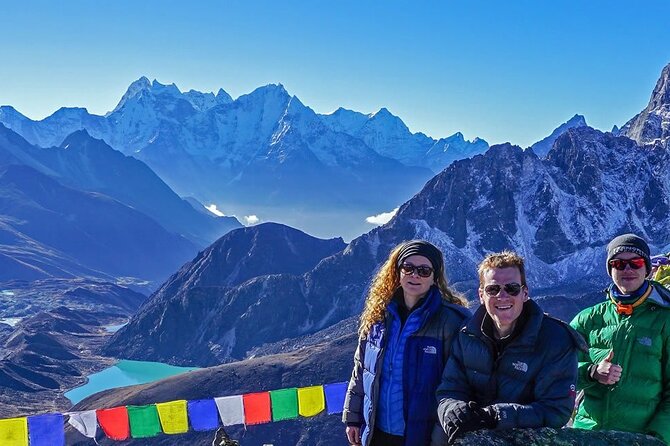
Reviewed · EVEREST BASE CAMP TREKS
Everest Base Camp Trek with Helicopter Return to Lukla – 10 Days
Everest Base Camp is the goal, but the return is the twist: after trekking to Gorakshep and hiking to Kala Patthar, you fly back to Lukla by helicopter. That replaces the long walk down with an aerial view of the route you just crossed, and makes this 10-day trip a compact way to reach the high Himalaya.
I like two things here: a licensed local guide and permits are included, so key arrangements are covered, and the route makes room for acclimatization in Dingboche before the highest part of the trek. The helicopter return and Kathmandu farewell dinner also give the trip a memorable finish.
The main consideration is the pace. Ten days is a short window for a strenuous, high-altitude trek, and all meals during the trek, porter service and high-altitude insurance cost extra. At $799, check exactly what is covered and how the schedule handles acclimatization before you book.
Key points to know
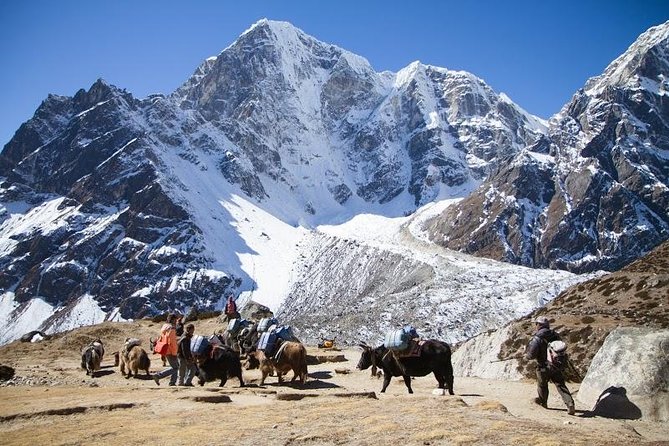
- The helicopter flies from Gorakshep to Lukla, giving you an aerial return after the trek.
- Kala Patthar is the sunrise viewpoint, while Everest Base Camp is the trek’s main destination.
- The route includes Namche Bazaar, Tengboche and Dingboche, with time set aside to acclimate in Dingboche.
- Trek meals and porter service are extra, despite permits, lodging and a guide being included.
- The group is capped at 15, and the activity calls for moderate fitness.
- Plan for flight flexibility: the return flight may operate from Kathmandu or Manthali to Lukla, and helicopter service depends on good weather.
The helicopter return changes the shape of the trek
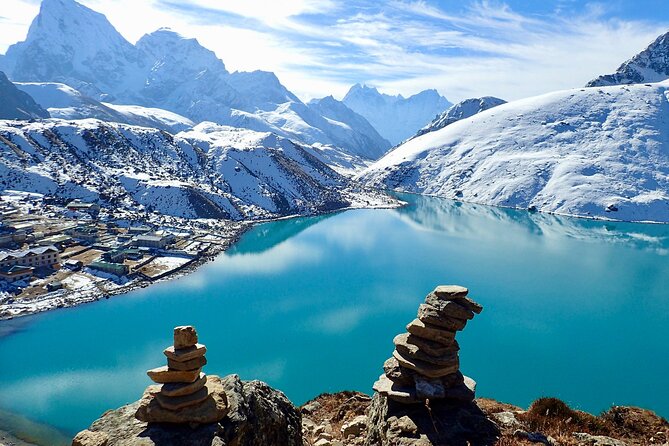
Most of the journey is on foot, through Sherpa villages, forests and along the Dudh Koshi River. The helicopter comes into play after the trek to Gorakshep, carrying you to Lukla instead of asking you to retrace the route on foot.
That is a meaningful trade-off, not just a flashy extra. You get a striking aerial perspective on the country you have crossed, and save time and effort on the return leg. But the flight is weather-dependent, so it should not be treated as a guaranteed shortcut on a fixed schedule. The tour offers a different date or a full refund if poor weather cancels the experience, but you should still ask how a weather delay could affect your onward plans.
The helicopter also does not make the trek itself easy. You still need to walk to Everest Base Camp and Gorakshep, then climb Kala Patthar for the sunrise view. The return flight trims the descent; it does not remove the physical challenge or the need to take altitude seriously.
More Everest helicopter tours in Kathmandu:
- Everest Base Camp Helicopter Tour landing at Everest View Hotel
★ 5.0 · 668 reviews - Everest Base Camp Helicopter Tour landing at Hotel Everest View
★ 5.0 · 218 reviews - Everest Base Camp Trek with Helicopter Return from Gorakshep to Lukla
★ 5.0 · 161 reviews
From Kathmandu to the trail
The trip begins with pickup at Tribhuvan Airport in Kathmandu, with a listed start time of 9:00 am. Private arrival and departure transfers are included, as are three nights of Kathmandu accommodation in a three-star hotel with breakfast. The schedule also describes time to explore Kathmandu, though it does not give a detailed city-tour plan.
A domestic flight takes you toward Lukla, either from Kathmandu or Manthali, depending on the arrangements. The listed package includes round-trip domestic flights, but the return helicopter is a separate leg from Gorakshep to Lukla. Confirm the flight routing and timing with the operator before travel, especially if you have a tight connection or a fixed departure from Nepal.
The trek begins at Lukla and follows a route through settlements and natural scenery, including Sherpa villages, forests and the Dudh Koshi River. You are not simply walking between mountain views: the villages and monasteries give the journey a cultural dimension, while the guide can help explain what you are seeing along the way.
Namche Bazaar, Tengboche and the climb higher
Namche Bazaar is one of the route’s most appealing stops. It is described as a charming Sherpa town, and a pause here helps break up the climb toward higher ground. On a trek where altitude becomes a central concern, a stop is valuable for more than scenery: it gives you time to settle into the rhythm of walking and notice how your body is responding.
Tengboche brings a different focus, with its monastery set among the mountain surroundings. It is a chance to slow down and take in the religious and cultural life of the region, rather than treating every stop as a checkpoint on the way to base camp.
The route then reaches Dingboche, where the schedule includes acclimatization before pushing higher. That is an important feature to clarify when you compare a 10-day trek with longer versions. The supplied plan does not spell out the number of nights or the exact daily walking hours, so ask for a day-by-day schedule and make sure the guide has room to respond if someone feels unwell. An itinerary that reaches the destination quickly is not automatically the right choice for every body.
The group limit of 15 offers a more manageable scale than a large departure, though it is not a private trek. The licensed English-speaking guide leads the group, and the package includes a medical kit. Neither replaces personal preparation, suitable insurance or honest communication about symptoms.
Everest Base Camp and Kala Patthar
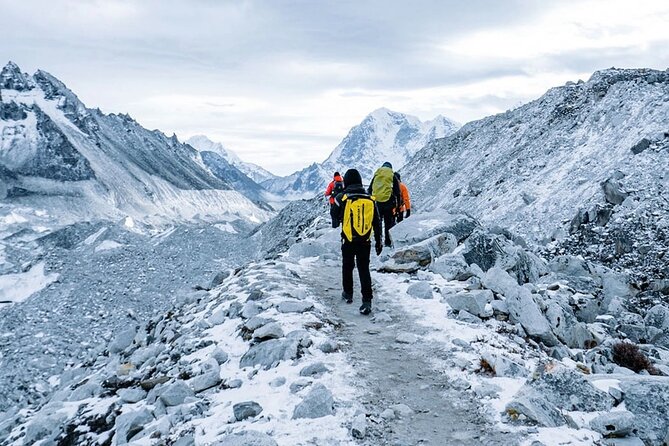
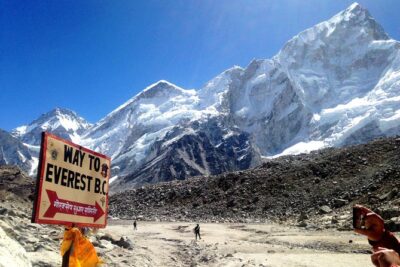
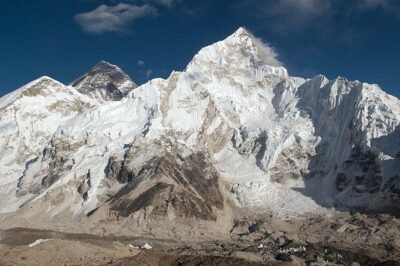
Everest Base Camp is the headline destination, reached after the route climbs through high-altitude terrain. The trek description promises views of Everest’s face and the surrounding peaks, but conditions and visibility can vary. The achievement is not only arriving at the camp; it is getting there on foot, step by step, through a region that has become increasingly demanding.
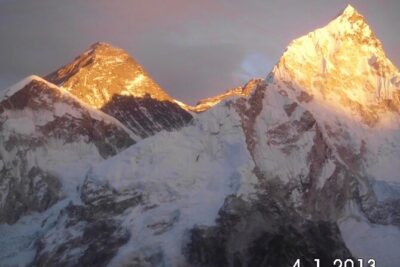
The next highlight is Kala Patthar, where the plan calls for a sunrise hike and wide views of the Himalaya. This is the moment to have warm layers, a headlamp and your camera ready, if those are part of your personal kit. The tour provides a sleeping bag, map and T-shirt, but does not specify the sleeping bag’s temperature rating or list a full equipment set. Ask what you should bring rather than assuming the included gear covers every condition.
Base Camp and Kala Patthar are distinct goals, and it is useful to know that both are part of the described trip. The route puts them close together in the final high-altitude portion, so you will want to conserve energy and follow the guide’s advice. A moderate fitness rating is not a promise that the trek will feel moderate at altitude.
More Everest Base Camp treks in Kathmandu:
- Everest Base Camp Trek – 14 Days
★ 5.0 · 1,499 reviews - Everest Base Camp Trekking
★ 5.0 · 485 reviews - Everest Base Camp Trekking – 13 Day
★ 5.0 · 365 reviews - Everest Base Camp Trek -14 Days
★ 5.0 · 321 reviews
Guesthouses, meals and what the price covers
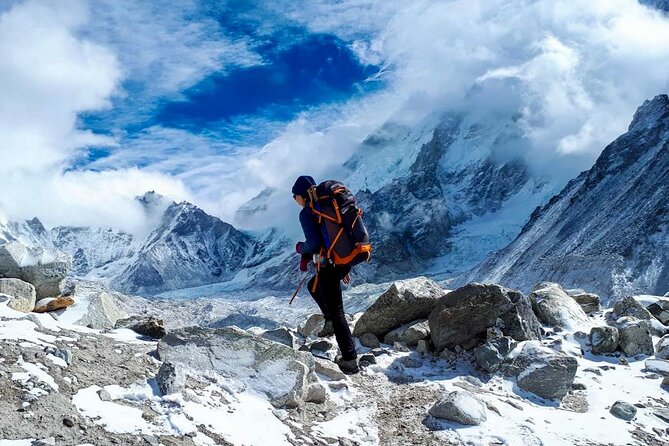
On the trail, you stay in standard guesthouses. Expect practical lodging rather than hotel comfort: the package calls them standard, and does not promise private rooms or particular facilities. Kathmandu accommodation is more clearly defined as a three-star hotel with breakfast.
The $799 price includes several costs that add up on a guided trek: permits for Sagarmatha National Park, TIMS and Pasang Lhamu entry; domestic flights; trekking accommodation; guide service; some gear; a first-aid kit; transfers; government fees; and the helicopter ride from Gorakshep to Lukla. It also includes a farewell dinner in Kathmandu with Nepali food and a cultural show.
The missing meals matter. Breakfast is included at the Kathmandu hotel, but lunch and dinner in Kathmandu are extra, and all meals during the trek are excluded. You should budget for those separately, along with snacks and drinks. Laundry, tips and personal expenses are also yours to cover.
A porter is optional, with one porter recommended for every two trekkers. If you would rather walk with a light day bag than carry your main load, ask about the porter price, weight limits and what luggage support is included. The package mentions luggage support in its overview, but the inclusions list does not spell out porter service, so confirm the practical details.
High-altitude evacuation insurance is not included, and the tour says your policy must cover both medical care and high-altitude evacuation. Do not treat that as a minor add-on. Verify the policy wording before departure, and check that your coverage matches the activities and altitudes involved.
The guide and the small-group feel
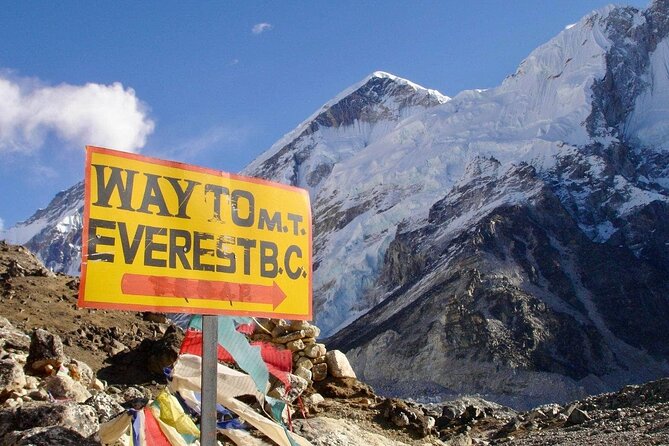
The guide is one of the most important parts of a trek like this. The package includes a licensed English-speaking guide, and the accounts associated with the operator repeatedly name Ram for his patience, flexibility and care for people’s condition. Ram is a name worth asking about when you book, but the information does not guarantee he will lead your departure.
Other guide names, including Rupak and Dambar, also appear in accounts of the operator’s Nepal treks. Those accounts describe guides helping with logistics, keeping groups encouraged and adjusting to different abilities. That is useful context, but you should confirm who is assigned to your specific trek and how the guide handles a participant who needs to slow down or stop.
The maximum group size is 15. A group of that size can provide company without becoming an expedition-sized crowd, but walking speed and comfort vary from person to person. If you are joining alone or have a wide range of fitness levels in your party, ask how the group is managed and whether the guide can adapt the pace.
Is 10 days enough for you?
This schedule combines the trek, a helicopter flight and Kathmandu time in a tight package. That can suit people with limited vacation time who want a guided route and do not want to walk all the way back from Gorakshep. The trade-off is less slack in the schedule than a longer trek may provide.
The stated fitness level is moderate, but that label should not be read as an easy-grade promise. You will walk for multiple days and climb to high-altitude destinations. The tour does not provide daily distances, walking hours or a detailed elevation profile, so ask for those specifics before committing. If you have doubts about your fitness or health, discuss the trip with a medical professional and be candid with the operator.
There is also a practical flight risk to weigh. Domestic flights and helicopter service depend on conditions, and the helicopter is specifically subject to good weather. Keep flexibility around onward travel where possible, and ask what happens if a flight is delayed rather than assuming the planned sequence will hold exactly.
Who should book this trek?
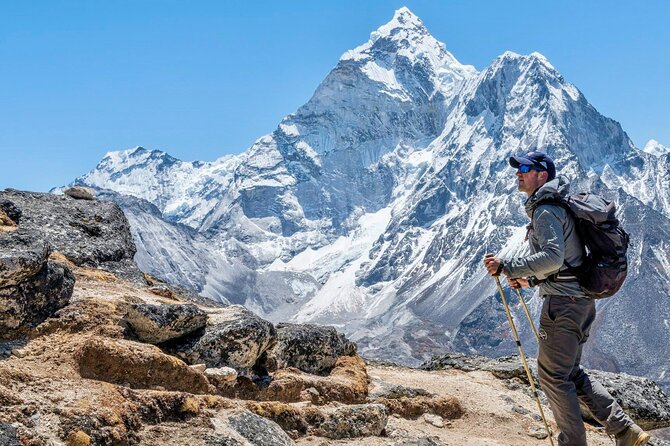
I would consider this trip if you want the classic Everest Base Camp route, a guide and permits arranged, and a helicopter return that cuts out the walk back to Lukla. The cultural farewell dinner is a nice closing touch, and the group cap of 15 may appeal if you want company without joining a very large party.
It is less suited to someone seeking a leisurely, highly comfortable holiday or a fully inclusive price. Guesthouses are standard, trek meals are extra, and the helicopter does not remove the physical demands of reaching base camp and Kala Patthar. If a slow acclimatization schedule is your priority, compare the 10-day plan with longer options and ask for the full day-by-day breakdown.
The overall rating is 4.9 out of 5, with 100 percent recommending the experience, based on 34 ratings. That is encouraging, but the most useful decision is still whether the pace, extra costs and weather-dependent flight match your needs. At $799, the package can offer good value if the included transport, permits, guide and helicopter are what you want. Get the meal budget, porter cost, flight plan and guide assignment clear before you pay.
FAQ
How long is the Everest Base Camp trek?
The experience lasts approximately 10 days.
Where does the tour start?
It starts at Tribhuvan Airport in Kathmandu, Nepal. The listed start time is 9:00 am.
Where does the helicopter fly?
The helicopter ride is from Gorakshep to Lukla.
Are domestic flights included?
Yes. Round-trip domestic flights between Kathmandu or Manthali and Lukla are included.
Are meals included during the trek?
No. All meals during the trek are excluded. Lunch and dinner in Kathmandu are also not included.
What accommodation is included?
The package includes a three-star hotel in Kathmandu with breakfast and standard guesthouses during the trek.
Is a porter included?
No. Porter service is optional. The tour recommends one porter for every two trekkers.
What permits are included?
The package includes Sagarmatha National Park, TIMS and Pasang Lhamu entry permits.
What insurance do I need?
You must have insurance that covers medical care and high-altitude evacuation.
More multi-day treks in Kathmandu
- Everest Base Camp Trekking – 2025/2026
★ 5.0 · 199 reviews - Everest Base Camp Trek
★ 5.0 · 193 reviews - Everest Base Camp Trekking
★ 5.0 · 146 reviews - Langtang Valley Trek
★ 5.0 · 140 reviews
Newly listed in Kathmandu
- Traditional Momo Making Class★ 5.0 · 10 reviews
- Walking tour of real Kathmandu through back streets.★ 5.0 · 3 reviews
- Kathmandu 2 Nights 3 Days Chitwan Jungle Safari Tour★ 5.0 · 9 reviews
- Visit Swayambhunath and Bauddhanath Stupa with Guide★ 5.0 · 5 reviews
- Walking tour of Kathmandu with awesome local guides★ 5.0 · 4 reviews
- Kathmandu Street Food Walking Tour – Eat Like a Local★ 5.0 · 3 reviews
- Private Manaslu Circuit Trek at Himalayas★ 5.0 · 3 reviews
- Kathmandu to Pokhara Vip Sofa Bus Ticket★ 4.0 · 4 reviews
Everest Base Camp Treks, compared.
Everest Base Camp Trek with Helicopter Return from Gorakshep to Lukla
Read our review →
Browse the lists this tour appears in