
Reviewed · NEPAL TREKKING TOURS
Everest Basecamp Trek: 14 days
Everest Base Camp is the headline, but the real reward is the gradual walk through the Khumbu: suspension bridges, Sherpa villages, monastery visits, and mountain views that grow closer by the day. This private 14-day trip includes flights between Kathmandu and Lukla, a licensed guide, porters, permits, and most meals.
I like two things in particular: the extra acclimatization time in Namche and Dingboche, which gives your body a chance to adjust, and the practical support of a guide and one porter for every two clients. The main consideration is the physical demand: this is a high-altitude trek, not a sightseeing tour, and travel insurance with emergency evacuation cover is your responsibility.
The useful details at a glance
- A private trek, not a shared group departure: Only your own group takes part, and the provider lists group discounts.
- Flights set the route in motion: Round-trip airfare between Kathmandu and Lukla is included. The departure airport may be Kathmandu or Manthali, depending on flight conditions.
- Two planned acclimatization stops: You spend a rest day in Namche Bazaar and another near Dingboche, with hikes listed for both.
- A guide and porters are included: Your English-speaking trekking guide is government licensed and first-aid trained. One porter is provided for every two clients.
- The $1,650 price covers a lot, but not everything: Accommodation, permits, flights, airport transfers, and most trekking meals are included. Kathmandu lunches and dinners, drinks, insurance, and staff tips are extra.
- The supplied rating is 5 out of 5, based on four reviews: That is encouraging, but four ratings are too few to establish a broad pattern of praise.
From Kathmandu to the Khumbu
Your trip begins with an airport welcome and a transfer to your hotel in Thamel, Kathmandu’s main tourist district. It is a practical first stop: restaurants, hotels, travel companies, and shops are close by, so you can get settled and take care of last-minute shopping before the trek.
The first day includes time in Thamel, but lunch and dinner in Kathmandu are not covered. Keep that in mind when working out the full cost. The two included Kathmandu hotel nights come with breakfast, while airport transfers are provided in a tourist vehicle.
On day two, you fly to Lukla. The short flight is part of the experience, with mountain views along the way, but the departure airport depends on conditions during your trip. The itinerary says flights may leave from Kathmandu or Manthali, so treat the location as something to confirm as your travel date approaches rather than assuming a fixed airport.
Lukla’s small airport serves as the starting point for many treks in the Everest region. From there, the route gets underway on foot. The day-by-day description moves into the Phakding-to-Namche trail on day three, though it does not spell out every part of the first walking day. If you want a precise account of daily walking hours and overnight stops, ask the operator to clarify before booking.
More multi-day treks in Kathmandu:
- Everest Base Camp Trek – 14 Days
★ 5.0 · 1,499 reviews - Everest Base Camp Trekking
★ 5.0 · 485 reviews - Everest Base Camp Trekking – 13 Day
★ 5.0 · 365 reviews
Namche Bazaar: a village and an acclimatization stop
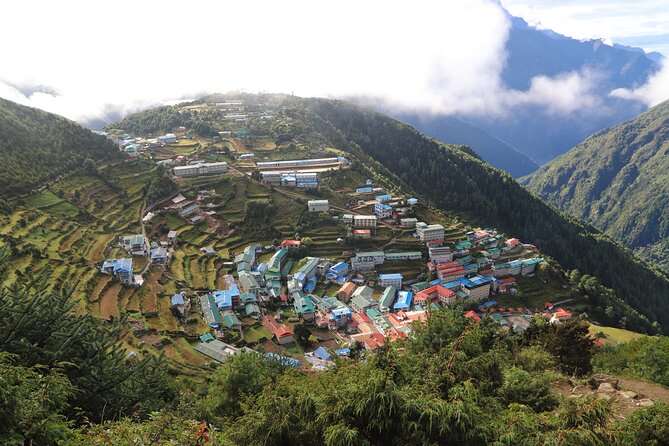
The route from Phakding to Namche Bazaar climbs through settlements and across several suspension bridges. The trail is described as tough, so expect an effortful walking day rather than a gentle introduction. Namche is a key place to pause: the itinerary gives it a full rest day for acclimatization, with a morning hike toward Syangboche.
That rest day is not spare time. You’re gaining altitude, and a slower schedule is an important part of making the trek more manageable. Namche also offers a contrast to smaller stops along the route, with hotels, restaurants, and tea houses. I like that the plan includes time to adjust instead of pushing straight onward.
The itinerary’s day labels need a little care here. It lists Namche as a two-day stop on day three, then gives a separate six-hour acclimatization day on day four. Read the plan as a Namche arrival followed by a full day there, but confirm the exact overnight count and walking schedule with the provider.
Tengboche, monastery time, and the approach to Dingboche
After Namche, the trail descends to the Dudh Koshi Valley before climbing toward Tengboche. The route passes Phungi Thanka and crosses the Imja Khola on the way up. This mix of descents and climbs is worth remembering: the trek is not a steady uphill walk, and downhill sections do not mean the day is easy.
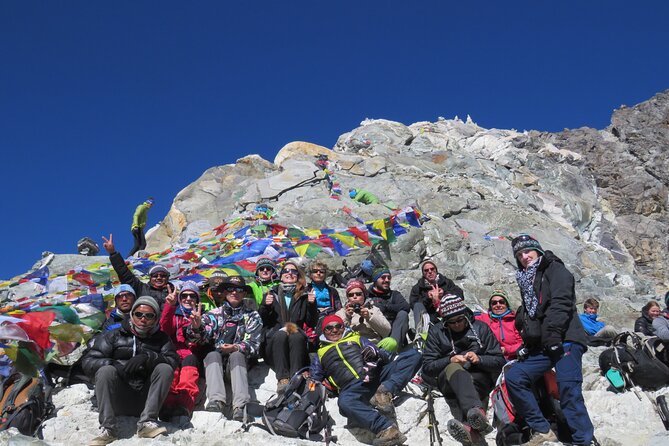
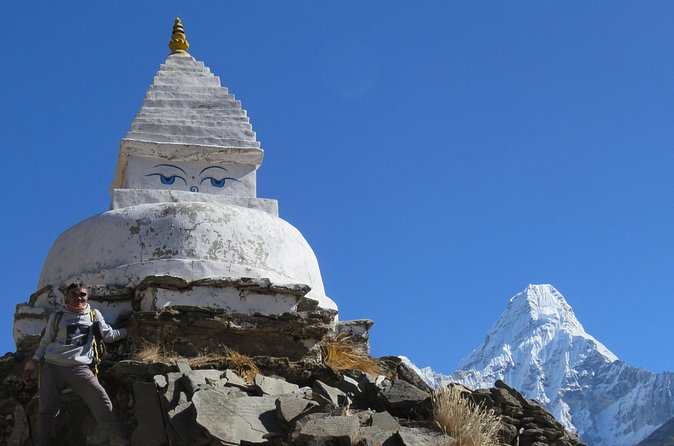
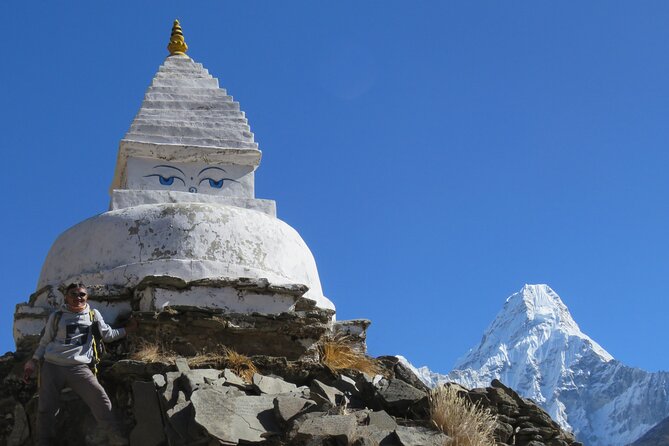
At Tengboche, the itinerary makes time to visit the monastery in the morning. You then descend toward the Imja River and pass through Pangboche, with prayer flags marking parts of the route. The schedule places this visit on day six, but its stop description does not clearly state the final overnight destination that day.
Day seven is another acclimatization day, this time with a short hike listed at Nangkartshang Peak. The itinerary presents the pause as a chance to adapt to the higher altitude and changing conditions. That extra time is valuable, though the listed one-hour stop does not explain the hike’s full duration or difficulty. Ask for the expected walking hours if you want to judge the day’s demands more closely.
The high route to Everest Base Camp
Leaving Dingboche on day eight, you cross open fields and climb toward Dughla along a glacial route. The trail grows steeper beyond Dughla, then continues toward the high stops ahead. The itinerary provides only a partial description of this day, so don’t rely on it for exact walking times or a complete list of overnight points.
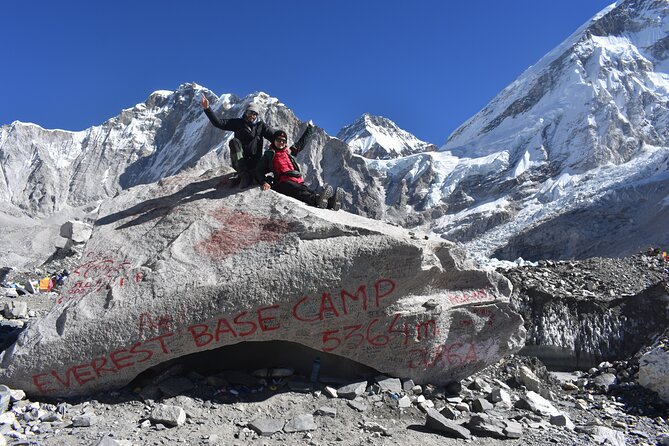
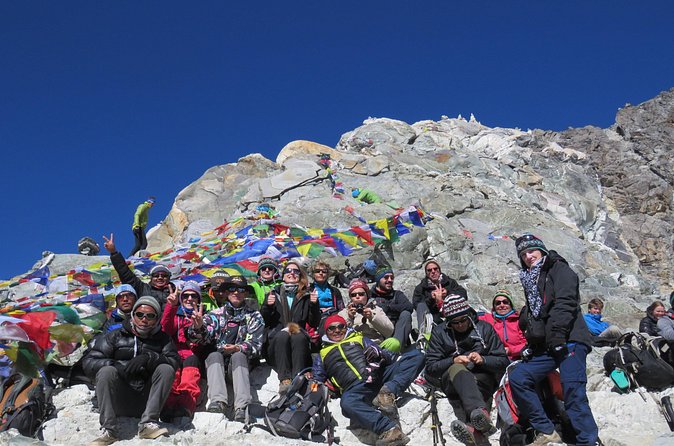
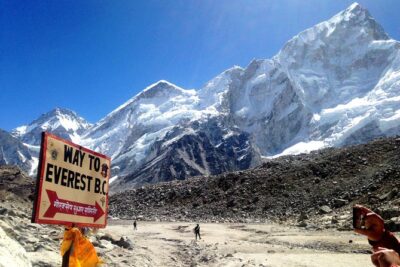
Day nine is the big milestone: the walk from Lobuche toward Gorak Shep and Everest Base Camp. The route climbs beside the Khumbu Glacier, and the plan allows about two hours at Base Camp. The destination is a major achievement, but it is useful to keep expectations grounded: the trek is about reaching the base of Everest, not climbing the mountain itself.
The schedule describes Gorak Shep as a former Everest Base Camp. That gives the place a useful bit of context as you approach the current camp. The itinerary does not explain how long the full day takes or where you sleep that night, so ask the operator for those details, especially if you are comparing this trip with other 14-day routes.
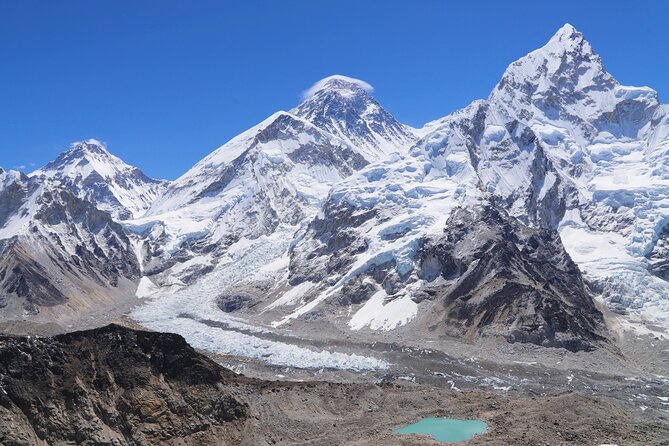
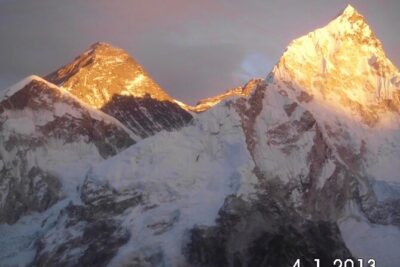
Before sunrise on day ten, you hike to Kala Patthar. It is presented as the best point on this route for a close view of Everest and the surrounding peaks. An early start is part of the plan, so be ready for a pre-dawn outing after several days of hard walking. The listed visit is two hours, but the schedule does not give a full account of the ascent and return.
More Kathmandu tours in Kathmandu:
- Private Kathmandu Sightseeing Tour | UNESCO World Heritage sites
★ 5.0 · 756 reviews - Everest Base Camp Helicopter Tour landing at Everest View Hotel
★ 5.0 · 668 reviews - Half day cooking class in Thamel kathmandu
★ 5.0 · 607 reviews - Nagarkot Sunrise View and Day Hiking from Kathmandu
★ 5.0 · 471 reviews
The return walk and flight to Kathmandu
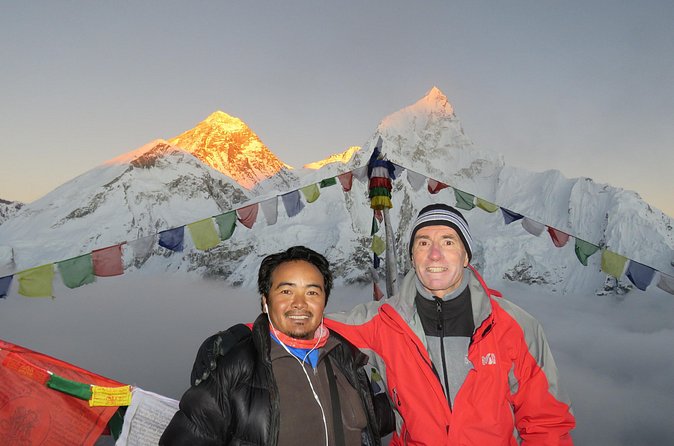
After the high point of the trek, days eleven and twelve retrace the route toward the lower villages. The first descent heads back toward Namche, passing Pangboche and Tengboche before crossing a suspension bridge. Day twelve continues down through forested paths and settlements, crossing the Dudh Koshi River several times.
Retracing your steps is practical, but the return should not be mistaken for a rest day. You’ll still be walking for much of the day, and the itinerary does not list daily hours or the exact overnight stops for these two days. It is sensible to ask for a full route plan before departure, rather than relying on the short stop descriptions alone.
On day thirteen, you fly back to Kathmandu and are driven to your hotel. The flight offers one last aerial look at the mountains, though the trip’s overall schedule depends in part on flights to and from Lukla. Day fourteen is for your airport transfer and onward departure. That final transfer is included, with timing arranged around your flight.
What $1,650 includes, and what it leaves out
At $1,650 per person, the price bundles several of the trek’s biggest costs: round-trip Kathmandu-to-Lukla airfare, permits, airport transfers, two nights in a tourist-standard Kathmandu hotel with breakfast, and 11 nights in twin-sharing guesthouses in the Everest region. A licensed English-speaking guide and porters are included, as are 11 lunches, 14 breakfasts, and 11 dinners.
That is a useful level of support for a remote, multi-day trek. You are not arranging each flight, permit, meal, and porter separately, and having one porter for every two clients can take some of the luggage burden off the walking group. The experience is private, so your group does not have to join strangers on the trail.
The listed inclusions and itinerary leave a few points worth checking. Kathmandu lunches and dinners are not covered, and all beverages, including bottled and boiled water, are extra. International flights, airport departure tax, tips, and travel insurance are also excluded. High-altitude emergency evacuation cover is specifically something you need to arrange yourself.
There is also a small accounting detail to confirm: the package lists two Kathmandu hotel nights and 11 Everest-region guesthouse nights, while the meal allowance lists 14 breakfasts. Ask the operator to explain how the overnight and breakfast counts fit the exact schedule. It is a sensible question before paying, not a reason by itself to rule out the trip.
Who should choose this trek?
This trip suits you if you want a guided, private route to Everest Base Camp with flights, permits, accommodation, meals, and porter support arranged together. The built-in acclimatization stops are a plus, and the combination of Namche, Tengboche, Base Camp, and Kala Patthar gives the route both cultural and mountain-focused moments.
It is less suitable if you want a low-effort holiday or need a fully itemized day-by-day walking plan before booking. The tour asks for moderate physical fitness, and the high altitude makes preparation and proper insurance important. The stated 5 out of 5 rating is positive, but it comes from only four reviews, so it offers a small sample rather than firm evidence of consistent service.
Should you book it?
I’d consider this trek if the $1,650 price fits your budget and you value having a private guide, porters, flights, permits, and most meals organized in one package. Before booking, get the exact daily walking schedule, overnight stops, flight arrangements, and clarification on the night and breakfast counts. Also arrange travel insurance with high-altitude emergency evacuation cover. If those details work for you, this is a well-supported way to take on one of Nepal’s most sought-after trekking routes.
FAQ
How long is the Everest Base Camp trek?
The experience lasts approximately 14 days, starting with arrival in Kathmandu and ending with an airport transfer on day fourteen.
What is the price per person?
The listed price is $1,650 per person. Group discounts are also offered, but the discount amount is not specified.
Is the tour private?
Yes. It is a private activity, and only your group takes part.
Are flights to Lukla included?
Yes. Round-trip airfare between Kathmandu and Lukla is included. Depending on flight conditions, the flight may depart from Kathmandu airport or Manthali airport.
What accommodation is included?
The package includes two nights in a tourist-standard hotel in Kathmandu and 11 nights in twin-sharing guesthouses in the Everest region.
Are meals included?
Breakfast is listed for 14 days, along with 11 lunches and 11 dinners. Lunch and dinner in Kathmandu are not included, and beverages are extra.
Is a guide included?
Yes. The trek includes a government-licensed, English-speaking guide who is trained in first aid. The guide’s name is not provided.
Is travel insurance included?
No. Travel insurance is not included. You are responsible for arranging insurance with high-altitude emergency evacuation coverage.
Newly listed in Kathmandu
- Traditional Momo Making Class★ 5.0 · 10 reviews
- Walking tour of real Kathmandu through back streets.★ 5.0 · 3 reviews
- Kathmandu 2 Nights 3 Days Chitwan Jungle Safari Tour★ 5.0 · 9 reviews
- Walking tour of Kathmandu with awesome local guides★ 5.0 · 4 reviews
- Kathmandu Street Food Walking Tour – Eat Like a Local★ 5.0 · 3 reviews
- Visit Swayambhunath and Bauddhanath Stupa with Guide★ 5.0 · 5 reviews
- Private Manaslu Circuit Trek at Himalayas★ 5.0 · 3 reviews
- Kathmandu to Pokhara Vip Sofa Bus Ticket★ 4.0 · 4 reviews
Nepal Trekking Tours, compared.
Everest Base Camp Trek with Helicopter Return from Gorakshep to Lukla
Read our review →
Kathmandu to Annapurna Base Camp (ABC) 5-Day Trek
Read our review →Browse the lists this tour appears in