
Reviewed · NEPAL TREKKING TOURS
Upper Mustang Trekking
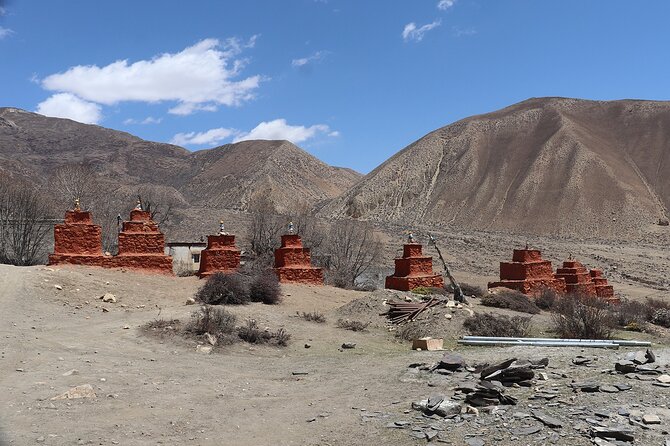
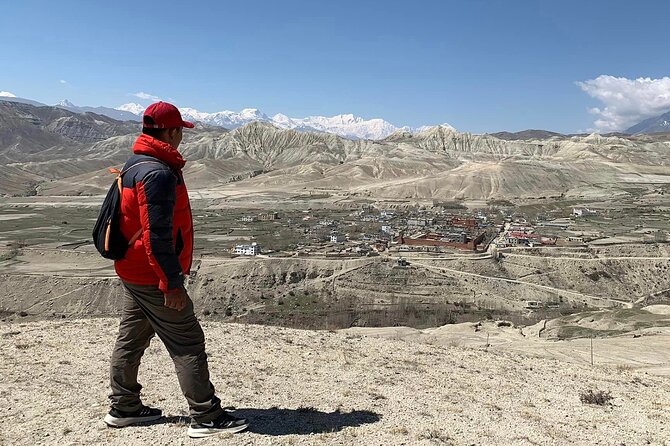
Upper Mustang is a trek through a dry, high valley where old villages, monasteries and the walled city of Lo Manthang sit beneath the Himalayan peaks. You’ll walk for much of the trip, travel with a licensed guide and porter, and need a restricted-area permit to enter the region.
I like two things in particular: Lo Manthang and its centuries-old Buddhist heritage give the trek a strong sense of place, while the route is described as less crowded than Nepal’s better-known trekking corridors. I also like that the $2,400 price includes the special permit, domestic flights, lodging and a guide.
One consideration: this is an 18-day trip with a strong-fitness requirement, dusty trails and potentially windy stretches. The day-by-day route description also has a gap on the return leg, so I’d confirm the exact overnight stops with the operator before booking.
Upper Mustang at a glance
- The restricted-area permit is included: The $500 permit covers 10 days in Upper Mustang, and you’ll need your original passport and a valid Nepal visa for the application.
- Lo Manthang is the cultural high point: You get a full day there to visit the monastery and former king’s palace.
- The trip combines road, air and walking: You travel by tourist bus between Kathmandu and Pokhara, fly between Pokhara and Jomsom, then trek through Mustang.
- The route has a dry, dusty character: Reviews describe the region as dusty, open and sparsely visited, not a lush forest walk.
- A guide and porter are included: The guide must hold a government license, and the arrangement is one porter for every two people.
- Route details need a quick check: The listed return days don’t line up cleanly, so ask for the confirmed sequence of villages and nights.
Why Upper Mustang feels different
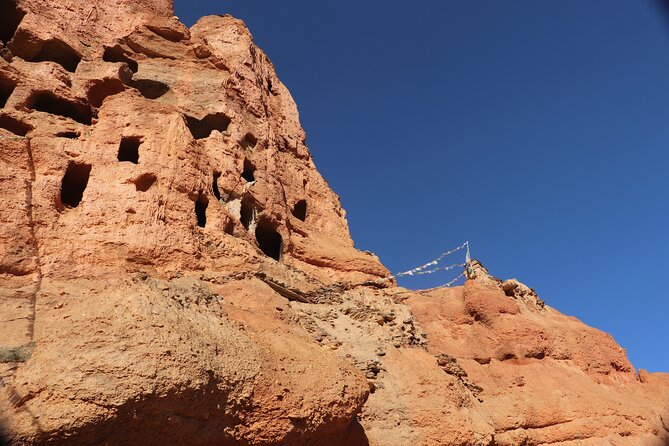
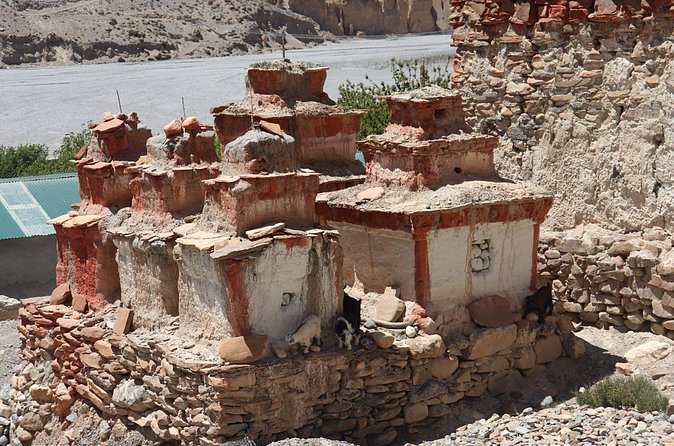
Upper Mustang sits in Nepal’s north, close to Tibet, and its culture reflects that borderland setting. The route leads through old settlements and monasteries, with Buddhist sites and local village life part of the experience rather than scenery viewed only from a trail.
The trek’s appeal is not about chasing the highest possible altitude. One account of the route describes elevations as rarely exceeding 4,000 meters, while the itinerary gives Jomsom’s elevation as 2,715 meters. The highest point is not specified, so ask the operator for the route’s maximum altitude and daily elevation changes before you commit.
You should also expect a dry environment. The walk follows open, exposed terrain and the Kali Gandaki valley, where wind can pick up later in the day. The itinerary specifically advises leaving early for the Kagbeni section because strong winds commonly arrive after noon. Dust and wind are part of the bargain here, not minor inconveniences to ignore.
More multi-day treks in Kathmandu:
- Everest Base Camp Trek – 14 Days
★ 5.0 · 1,499 reviews - Everest Base Camp Trekking
★ 5.0 · 485 reviews - Everest Base Camp Trekking – 13 Day
★ 5.0 · 365 reviews
From Kathmandu to the trailhead
Day 1 is an arrival and transfer day. A representative from Everest Trekking Routes meets you at Tribhuvan International Airport and takes you to a hotel. Three nights of three-star Kathmandu accommodation with breakfast are included, though the exact hotel is not named.
Day 2 is set aside for the Upper Mustang permit and, if you’re interested, sightseeing around Kathmandu Valley. You’ll need your original passport and Nepal visa for the permit process. That day is useful preparation, but it is not a full day of trekking, so don’t mistake the 18-day duration for 18 days on foot.
On Day 3, you take a tourist bus from Kathmandu toward Pokhara, leaving around 7 a.m. The description mentions a breakfast stop after about two hours, then continues along the Prithvi Highway. The road journey is a long transfer rather than a scenic walk, and the schedule does not give an arrival time. Two nights in Pokhara with breakfast are included, one before the flight to Jomsom and one after returning from the trek.
The bus is a practical, lower-cost way to cover the Kathmandu-Pokhara route, but it uses a good part of the day. If you prefer to avoid that road transfer, ask whether a different arrangement is possible and what it would cost; the listed package includes tourist bus travel both ways.
Jomsom, Kagbeni and the Upper Mustang gate
Day 4 begins with a flight from Pokhara to Jomsom, listed at 2,715 meters. From there, you walk roughly four to five hours to Kagbeni. Jomsom is part of the popular Jomsom-Muktinath route, so this opening stretch is less remote in feel than the days farther north.
Kagbeni is the key threshold. It is described as the main entry point to the restricted Upper Mustang area, where the special permit is checked. From here, the route turns toward the region’s older villages and more distinctly Tibetan Buddhist character.
On Day 5, you continue from Kagbeni to Chhusang. The itinerary describes a descent toward Kagbeni before entry, although the day’s precise trail sequence is not fully clear. Ask your guide or operator to explain the day’s walking plan, especially if you want to understand how the permit checkpoint fits into the route.
Villages, climbs and big mountain views
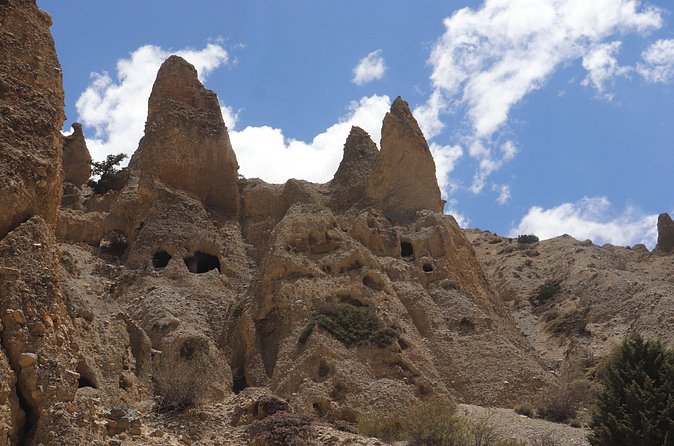
The next section links Chhusang, Samar, Syangboche and nearby villages. Day 6 is described as a five-to-six-hour walk from Chhusang toward Somare, with a mix of flatter trail and steeper climbing after Chele. The day includes an apple garden and village scenery, a welcome change from the more exposed stretches.
Day 7 brings a climb toward Syangboche, where the itinerary says you stop for lunch and rest. On clear days, views may include Dhaulagiri, at 8,167 meters, and Annapurna I, at 8,097 meters. Those peaks are a striking backdrop, though visibility depends on the weather, and the itinerary does not promise clear skies.
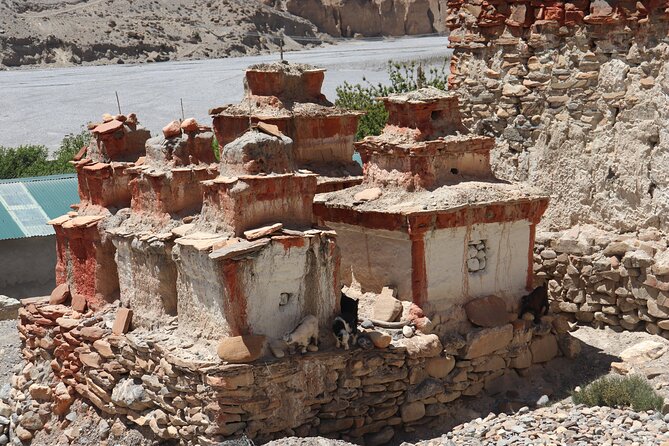
Day 8 passes through Ghiling and continues toward Tsarang, also spelled Charang in some references. The route includes farms and old monasteries, with Tsarang described as a large village. These stops matter because the trek is not simply a long walk between famous endpoints: the village architecture, working fields and religious sites give you a closer look at how people live in this dry region.
The itinerary’s wording on this stretch is not always precise about where each night falls. I’d ask for a written daily plan with walking hours, overnight villages and approximate elevations. That makes it easier to judge the effort and pack sensibly.
More Kathmandu tours in Kathmandu:
- Private Kathmandu Sightseeing Tour | UNESCO World Heritage sites
★ 5.0 · 756 reviews - Everest Base Camp Helicopter Tour landing at Everest View Hotel
★ 5.0 · 668 reviews - Half day cooking class in Thamel kathmandu
★ 5.0 · 607 reviews - Nagarkot Sunrise View and Day Hiking from Kathmandu
★ 5.0 · 471 reviews
Lo Manthang, the main event
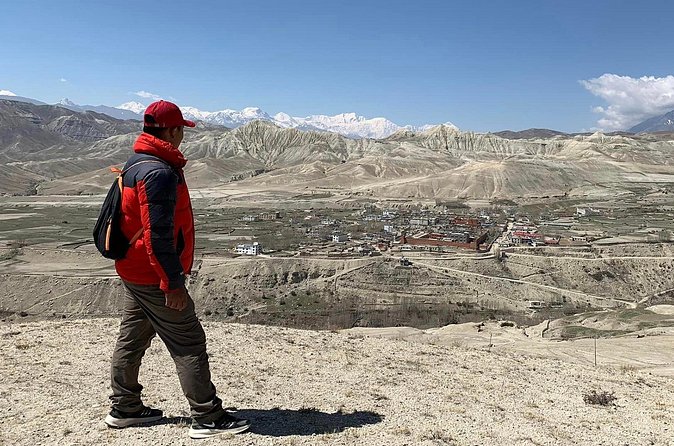
Day 9 is a five-to-six-hour walk to Lo Manthang, the walled city and the trip’s central cultural stop. The trail crosses rivers and bridges and passes through open, dry country. Reaching Lo Manthang after several days on foot gives the city a satisfying sense of arrival.
Day 10 is set aside to explore. The plan includes visits to a monastery and the former king’s palace, along with time to look around the town. This is the day to slow down and take in the buildings, religious art and local life rather than treating the city as a quick photo stop.
The city’s importance lies in its long-standing role as a center of Mustang’s Tibetan Buddhist culture. The tour description calls it a Himalayan kingdom, but it does not specify which monasteries or palace rooms are visited, or whether admission fees are included. If those details matter to you, ask before departure. You’ll still have the advantage of a full day in town, which is more useful than arriving late and leaving at dawn.
The return route and a detail to confirm
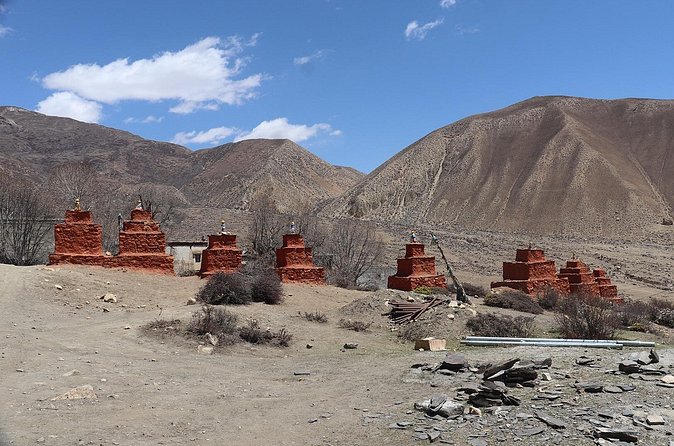
Day 11 starts from Lo Manthang and heads toward Dhakmar, with an uphill section toward a gompa and more monasteries along the way. Day 12 continues toward Ghami, described as a large village with a monastery, farms and apple gardens. These return days add variety instead of simply retracing every step.
There is, however, a notable mismatch in the written schedule. Day 13 is labeled as a walk from Syangboche to Chhusang, even though the preceding day places you in Ghami, and the sequence does not explain how you return to Syangboche. Days 14 and 15 then describe Chhusang to Kagbeni and Kagbeni to Jomsom.
That may be a simple editing problem, but it affects the route, walking time and overnight plan. Before paying, request a corrected itinerary showing each day’s start and finish village. It’s a practical question, not nitpicking: on a multi-day trek, you want to know where you’ll sleep and how far you’ll walk.
The stated plan for Day 14 is an early start from Chhusang toward Kagbeni, because strong winds can develop after noon. Day 15 is a shorter, easier walk to Jomsom. There may be time to look around town and buy local apple brandy, depending on your arrival and flight schedule.
Flights, return travel and what the price covers
Day 16 is the flight from Jomsom to Pokhara. The flight takes about 25 minutes, but the schedule can affect whether there is time for breakfast before you report to the airport. The itinerary says you’ll transfer to your Pokhara hotel after landing.
On Day 17, you take the tourist bus back to Kathmandu, a drive described as about seven hours. Day 18 is the airport drop-off for your departure. That final day gives you a buffer after the road journey, but it is still wise to avoid booking a tight international departure connection without checking the timing with the operator.
At $2,400 per person, the value comes from bundling several significant costs: the $500 Upper Mustang permit, the Annapurna Conservation Area permit, domestic flights, tourist buses, hotels in Kathmandu and Pokhara, trekking lodge accommodation, a licensed guide and a porter shared between two people. Airport and hotel transfers by private vehicle are also included, along with government taxes and service charges.
The meal allowance needs clarification. The package lists 17 breakfasts and 16 lunch and dinner, but that wording does not make clear whether 16 refers to meals of each type or a combined count. Ask what is covered on transfer days and in the trekking lodges, and budget for personal expenses, tips and any extra hotel nights. Those costs are not included.
The package price is easier to assess once you account for the restricted-area permit and flights. It is not an all-inclusive trip, but it does cover the main logistical pieces that can be hard to arrange separately. The private-tour format also means only your group participates, which can make a long trek easier to pace around your group’s needs.
Fitness, comfort and who should book
The tour requires a strong level of physical fitness. You’ll walk for several hours on multiple days, face uphill and downhill sections, and spend time at elevation. The itinerary gives some walking-time estimates but does not list daily distances, trail conditions for every day or the route’s highest point. Get those details before booking if you’re unsure how the effort compares with your experience.
The included porter helps reduce the weight you carry, but the arrangement is one porter for two people, not a personal porter for each trekker. Accommodation during the trek is in lodges or teahouses, rather than hotels. The description does not specify room standards, heating, showers or charging access, so it’s best to ask what to expect instead of assuming comforts.
I’d recommend this trip if you want a cultural trek with historic villages and monasteries, are comfortable with basic trekking accommodation, and can handle a demanding multi-day walk. It also suits someone looking for a quieter route than Nepal’s most familiar trekking circuits. If you mainly want lush forest, polished hotels or a short walking holiday, this is probably not the right fit.
The provider is Everest Trekking Routes Pvt. Ltd. Booking confirmation is stated to arrive at the time of booking, and pickup is offered. The cancellation terms allow a full refund when you cancel at least six full days before the start; cancellations two to six days ahead receive a 50% refund, and cancellations less than two days ahead are nonrefundable. Check the local-time cutoffs and any change restrictions before you book.
Should you book this Upper Mustang trek?
Book it if the combination of Tibetan Buddhist heritage, remote villages and a full day in Lo Manthang is worth 18 days of travel and walking to you. The included permit, flights, guide and porter make the $2,400 price more compelling than the headline figure alone suggests.
Before you commit, get the return route corrected in writing, confirm what the meal count means, and ask for daily distances and maximum elevation. If those answers suit your fitness and comfort level, this is a strong choice for a demanding trek where the villages and cultural setting matter as much as the mountain views.
FAQ
Is the Upper Mustang permit included in the price?
Yes. The package includes the $500 special Upper Mustang permit for 10 days, as well as the Annapurna Conservation Area permit.
How long is the trek?
The full experience lasts about 18 days, including arrival and departure in Kathmandu, road transfers, flights and trekking days.
What transport is included?
The package includes tourist bus travel between Kathmandu and Pokhara, domestic flights between Pokhara and Jomsom, and airport and hotel transfers by private car, van or bus.
Are a guide and porter included?
Yes. A government-licensed trekking guide is included, along with one porter for every two people.
What meals and accommodation are included?
The package includes three nights in a three-star Kathmandu hotel with breakfast, two nights in a Pokhara hotel with breakfast, and lodge or teahouse accommodation during the trek. It lists 17 breakfasts and 16 lunch and dinner, but you should confirm the meal count with the operator.
What is the cancellation policy?
Cancel at least six full days before the start time for a full refund. Cancellations two to six full days before receive a 50% refund, and cancellations less than two full days before are nonrefundable.
Newly listed in Kathmandu
- Traditional Momo Making Class★ 5.0 · 10 reviews
- Walking tour of real Kathmandu through back streets.★ 5.0 · 3 reviews
- Kathmandu 2 Nights 3 Days Chitwan Jungle Safari Tour★ 5.0 · 9 reviews
- Visit Swayambhunath and Bauddhanath Stupa with Guide★ 5.0 · 5 reviews
- Walking tour of Kathmandu with awesome local guides★ 5.0 · 4 reviews
- Kathmandu Street Food Walking Tour – Eat Like a Local★ 5.0 · 3 reviews
- Private Manaslu Circuit Trek at Himalayas★ 5.0 · 3 reviews
- Kathmandu to Pokhara Vip Sofa Bus Ticket★ 4.0 · 4 reviews
Nepal Trekking Tours, compared.
Everest Base Camp Trek with Helicopter Return from Gorakshep to Lukla
Read our review →
Kathmandu to Annapurna Base Camp (ABC) 5-Day Trek
Read our review →Browse the lists this tour appears in